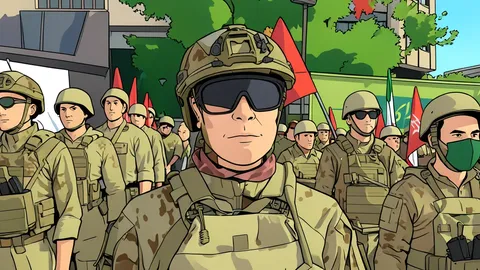
Seven Ethiopian Groups Form Anti-Government Coalition

The Alliance for Survival unites seven rebel factions to challenge Prime Minister Abiy Ahmed's leadership.
Key points
- Seven rebel groups, including Fano, OLA, and TPLF, have formed the Alliance for Survival coalition.
- The alliance aims to remove the federal government and establish a transitional administration.
- The coalition spans five of Ethiopia's twelve regional states, including Oromia, Amhara, and Tigray.
Seven armed factions in Ethiopia have announced the formation of a unified coalition named the Alliance for Survival. According to BBC reporting, this new alliance brings together diverse rebel groups with the stated objective of removing the federal government in Addis Ababa and establishing a transitional administration.
The coalition includes prominent movements such as the Amhara-based Fano militia, the Oromo Liberation Army, and the Tigray People's Liberation Front. These groups accuse Prime Minister Abiy Ahmed of presiding over widespread conflict and economic decline, asserting that the nation faces a genuine risk of disintegration. Federal authorities have not yet issued an official response to the announcement.
Coalition Spans Multiple Regions
The alliance represents a significant geographic expansion of opposition forces, covering five of Ethiopia’s twelve regional states. In addition to the major groups in Oromia, Amhara, and Tigray, the coalition includes smaller factions based in Ogaden, Afar, and Benishangul-Gumuz. This broadened front suggests a coordinated effort to challenge federal authority across a large portion of the country's diverse ethnic and geographic landscape.
The inclusion of these varied groups marks a shift from isolated insurgencies to a broader political and military front. By joining forces, these entities aim to leverage their combined reach and resources to pressure the central government. The formation of such a wide-reaching alliance underscores the depth of the political fragmentation currently affecting the region.
Context of Recent Conflicts
Ethiopia has endured years of intense armed conflict, particularly in the Oromia and Amhara regions, which are among the most populous areas in the country. Tensions have also resurfaced in the northern Tigray region, where a two-year civil war resulted in significant loss of life and mass displacement. Although an African Union-brokered peace deal ended that specific war in 2022, fears of renewed hostilities persist, with both sides frequently accusing one another of violating the agreement.
The dynamics of these conflicts have evolved over time. The Fano group, for instance, initially fought alongside federal forces during the Tigray war but subsequently launched an armed insurgency after refusing orders to disarm. Similarly, the government has been engaged in combat with the Oromo Liberation Army since 2018. This history of shifting alliances and prolonged instability provides the backdrop for the current coalition's formation.
Political Tensions and Elections
The announcement of the Alliance for Survival comes in the wake of a general election held in June, where Abiy Ahmed’s Prosperity Party retained a substantial parliamentary majority. However, the poll was overshadowed by ongoing conflict and limited opposition participation. The Fano and OLA groups rejected the election results, and the Tigray region, home to six million people, was entirely excluded from the voting process.
Prime Minister Abiy Ahmed has previously addressed security concerns, stating his confidence in Ethiopia’s defensive capabilities. He told lawmakers in July that the government does not fear for the country's sovereignty, even in the face of alleged external alliances or internal challenges. As the new coalition consolidates its position, the situation remains fluid, with observers watching for potential shifts in military strategy or diplomatic engagement in the coming months.