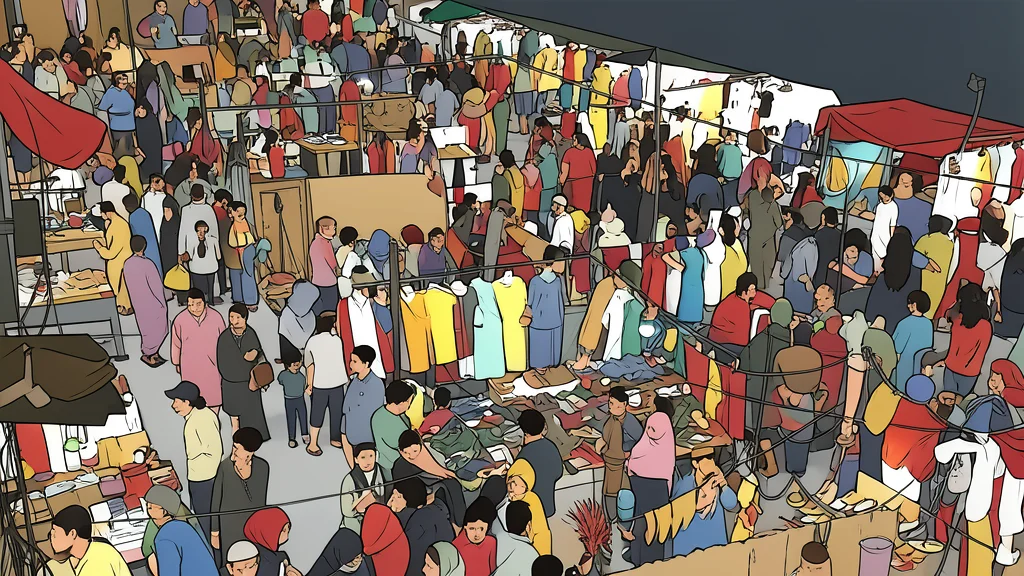
Protests in Brussels Highlight Refugee Safety Concerns in Libya

A recent demonstration outside the European Parliament reflects growing tension over the treatment of Eritrean refugees detained in Libya, prompting calls for a review of EU migration policies.
Hundreds of demonstrators gathered in Brussels on September 12 to demand the release of Eritrean refugees held in detention centers in Benghazi and Tajoura, according to the Horn of Africa desk at GN auto geopolitics/africa. The peaceful protest took place in front of the European Parliament, with participants urging the bloc to ensure that its migration frameworks do not compromise fundamental human rights.
Organizers of the event, including members of the De Eritrese Gemeenschap, emphasized that their demands were not for open borders but for a safer and more humane approach to migration. They specifically criticized the long-standing cooperation between EU institutions and the Libyan coast guard, arguing that such partnerships have inadvertently contributed to the prolonged detention of vulnerable individuals.
European leadership responds to migration pressures
In her annual State of the European Union address, European Commission President Ursula von der Leyen called for a unified European response to migration challenges. While noting that illegal border crossings have declined by 55% over the past two years, she announced plans for a new European Emergency Response Framework to manage mass movements of people at external borders.
The Commission President also highlighted the necessity of strengthening Frontex, the EU’s border agency, to better handle irregular migration flows. These measures aim to balance security concerns with the protection of individual rights, a balance that remains a subject of intense debate among member states and civil society groups.
Regional instability drives cross-border displacement
The situation in the Horn of Africa is further complicated by ongoing conflicts in Yemen and Ethiopia. According to the UN Office for the Coordination of Humanitarian Affairs, at least 125,000 people have been displaced in Yemen since September, with thousands fleeing to the northern coast of Djibouti. This sudden influx has placed significant strain on Djibouti’s limited humanitarian resources.
Meanwhile, in Ethiopia, the Ministry of Education announced the temporary relocation of university students from Tigray to other public institutions due to regional instability. However, observers have raised concerns that this move could be disruptive and costly, potentially weakening the educational infrastructure in the region. Mekelle University has stated that most of its campuses remain operational and have urged for decisions based on current capacity.
Sudan faces crisis in mining and security
In West Kordofan state, a series of shaft collapses at the al-Zaraa gold mine resulted in at least 70 deaths, with dozens more remaining trapped. This industrial disaster adds to the humanitarian challenges facing Sudan, where the Sudanese Armed Forces have also reported intercepting drone attacks targeting key infrastructure near the Ethiopian border.
As these crises unfold, the international community is watching closely for developments that could impact regional stability. The next few weeks will likely see further diplomatic engagement between the EU and African nations to address the root causes of displacement and ensure that humanitarian aid reaches those in need.