US Pushes for Sanctions Committee Revival at UN Security Council
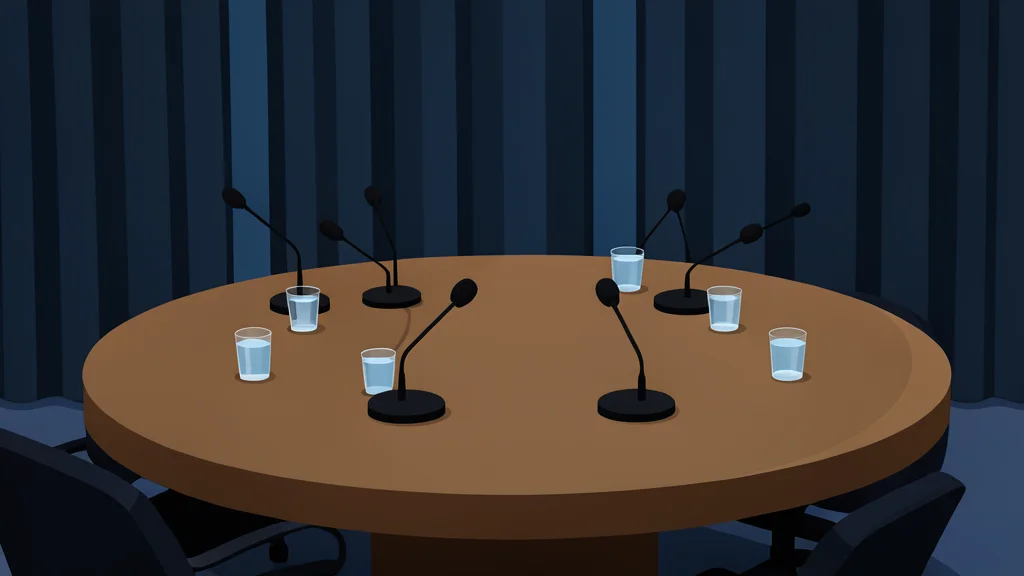
The United States is urging the Security Council to validate the 1737 Committee, a move that critics say is essential for monitoring Iran's nuclear activities.
Diplomats at the United Nations are facing a sharp divide over the future of the 1737 Committee, the body tasked with monitoring Iran's nuclear program. The United States has formally requested that the Security Council proceed with a vote to extend the panel's mandate, arguing that the committee is a legitimate and necessary mechanism for maintaining transparency in a region fraught with tension.
According to remarks delivered by the U.S. Alternative Representative for Special Political Affairs, several members of the Council are attempting to block the discussion in an effort to shield Iran from scrutiny. The U.S. delegation stated that it strongly rejects these assertions, emphasizing that Iran continues to openly defy basic obligations under international law. The upcoming vote is seen as a critical test of the Council's ability to uphold nonproliferation norms in the face of political disagreement.
Legitimacy of the 1737 Committee
The 1737 Committee was established to constrain and monitor Iran's nuclear activities, particularly after the country sought to operate its program outside the view of the international community. The U.S. delegation highlighted that the committee has already taken concrete steps, including maintaining a sanctions list, proposing members for the expert panel, and determining specific sanctions exemptions. These actions, according to the U.S. mission, demonstrate that the body is fully functional and legally grounded in previous Security Council resolutions.
Just one year ago, the Security Council voted decisively to permit the snapback of sanctions and the re-establishment of the committee. The U.S. position is that this momentum should not be lost to procedural delays. By validating the agenda and allowing the vote to proceed, the Council can ensure that the mechanisms for accountability remain intact. The U.S. delegation urged all members to join in adopting the agenda, framing the issue not as a political dispute but as a matter of institutional integrity.
Political Obstacles to Consensus
The push for the vote has encountered resistance from members who view the committee as a tool for pressure rather than cooperation. According to the U.S. statement, these members are motivated by a desire to protect Iran from the consequences of its actions. The U.S. delegation characterized this stance as an attempt to undermine the Council's authority and its capacity to enforce international norms. This divergence highlights the broader challenges the Security Council faces in balancing geopolitical interests with the need for effective multilateral oversight.
The debate over the committee's mandate reflects a deeper tension within the body between those who prioritize strict enforcement of nonproliferation treaties and those who advocate for diplomatic engagement. The U.S. mission, represented by Ambassador Jennifer Locetta, maintained a firm but procedural tone, focusing on the legal basis for the committee's existence. This approach aims to isolate the issue from broader strategic disagreements, presenting the extension of the mandate as a straightforward administrative necessity rather than a political statement.
Implications for Future Sanctions
The outcome of the upcoming vote will have significant implications for the sanctions regime surrounding Iran. If the committee's mandate is extended, it will retain the authority to update sanctions lists and manage exemptions, providing a structured framework for accountability. Conversely, if the vote is blocked, it could weaken the institutional mechanisms that currently support the snapback provisions. Analysts note that the stability of these mechanisms is crucial for maintaining leverage in future diplomatic negotiations regarding Iran's nuclear capabilities.
Looking ahead, the focus will shift to how the Council manages this procedural hurdle. The U.S. has made clear that it will continue to advocate for the committee's legitimacy, while opposing members are expected to continue their efforts to stall the process. The next steps will likely involve further diplomatic consultations and potentially a formal vote on the agenda item. The success of the 1737 Committee in the coming months will depend on the Council's ability to overcome these internal divisions and restore a sense of collective purpose to its nonproliferation efforts.