Seven Ethiopian Groups Form Anti-Government Coalition

Former rivals from Tigray and Amhara have united in a new alliance aimed at toppling Prime Minister Abiy Ahmed's administration.
Key points
- Seven armed groups, including former enemies from Tigray and Amhara, have formed a coalition to overthrow Prime Minister Abiy Ahmed.
- The alliance accuses the government of centralizing power and states it seeks to establish an inclusive transitional government.
- Analysts warn that geographical distance and political differences may prevent the coalition from operating as a unified military force.
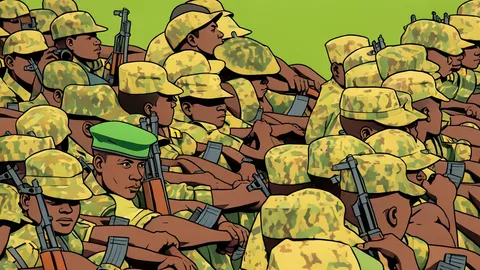
Seven armed groups in Ethiopia have formed a coalition seeking to remove Prime Minister Abiy Ahmed from power, according to reports from Business Insider Africa. The alliance, named the Ethiopian Peoples’ Forces Alliance for Survival, includes former battlefield enemies from the 2020–2022 civil war who are now united by their opposition to the federal government.
The grouping brings together organizations from Tigray, Amhara, Oromia, Afar, Benishangul-Gumuz, and the Somali region. In a joint statement, the members accused the current administration of centralizing power and marginalizing regional authorities, stating their goal is to establish an inclusive transitional government and initiate a national dialogue.
Former rivals join forces
The most notable members of the coalition are the Tigray People’s Liberation Front and the Amhara Fano National Movement. These two groups fought on opposite sides of the recent civil war, with Fano initially supporting the federal government against the Tigray forces. However, Fano later turned its weapons against the state, leading to thousands of deaths in the Amhara region since 2023.
Despite their shared hostility toward Addis Ababa, the alliance faces significant internal challenges. Analysts note that the groups remain divided by territorial claims, political differences, and geographical distance. Some member organizations have limited military strength and operate in remote areas, which may hinder their ability to coordinate effectively.
Accusations of foreign backing
The federal government has responded by suggesting the coalition is not entirely autonomous. Billene Seyoum, the Prime Minister’s spokesperson, stated that the groups have cooperated for some time with financial backing from Eritrea. Eritrea has repeatedly denied supporting Ethiopian insurgents, and no public evidence establishing such financing has been presented to date.
The federal administration maintains that it has already initiated a national dialogue to address Ethiopia’s longstanding political and ethnic divisions. Officials argue that the coalition’s stated goals for inclusive governance are already being pursued through these official channels, though the armed groups reject this assessment.
Threats to regional stability
The formation of this alliance creates a new challenge for the government by potentially connecting conflicts that were previously managed separately. Fighting has continued in Oromia since 2018 and in Amhara since 2023, while tensions are rising again in the north following the Tigray People’s Liberation Front’s return to political control.
Renewed violence could endanger the 2022 peace agreement and disrupt economic reforms. The country still faces approximately $20 billion in reconstruction needs from the previous war, making stability essential for recovery. Observers are watching to see if the coalition can maintain unity or if internal divisions will lead to its fragmentation.