Somalia and Turkey Renew Commitment to Military Training Partnership
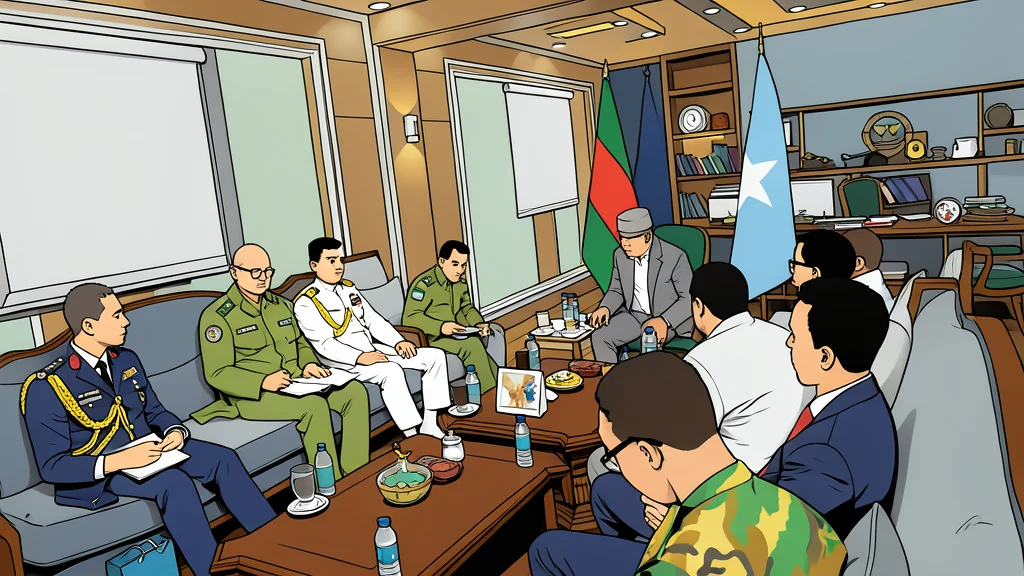
Somali and Turkish officials met to review the expansion of defence cooperation, highlighting the growing strategic reliance on Ankara for force development.
Key points
- Somali and Turkish officials met to review the expansion of defence cooperation and the training of the Somali National Army.
- Türkiye has delivered M48 and M60 tanks and T-129 helicopters to Somalia, marking the first heavy armored capability since 1991.
- Independent reports indicate that while elite units have improved, structural issues like clan divisions and ghost soldiers persist in the broader force.
Somalia’s Minister of Defence, Ahmed Moallim Fiqi, met with a senior Turkish military delegation in Mogadishu to assess the trajectory of their joint defence efforts. The discussion centered on the ongoing training of the Somali National Armed Forces, a cornerstone of the bilateral security relationship that has deepened significantly since the early 2010s.
The delegation was led by Major General Sabahattin Kalkan, Commander of the TURKSOM Military Training Academy. According to FTL Somalia, the meeting served to reaffirm Ankara’s commitment to supporting Mogadishu’s efforts to stabilize its security sector and enhance the professional capabilities of its military personnel.
Expanding the Scope of Security Support
The partnership has evolved beyond initial training mandates to include significant equipment transfers. In recent months, Turkish military transports delivered M48 and M60 Patton battle tanks to Mogadishu Port, providing Somali forces with heavy armored capability for the first time since the state collapse in 1991.
Türkiye has also supplied T-129 ATAK attack helicopters and various armored vehicles under a 2024 defence agreement. In July 2026, the Turkish parliament approved a two-year extension of its military mission, signaling a continued long-term engagement aimed at countering Al-Shabaab and maritime threats.
Assessing the Impact of Training
TURKSOM, operational since 2017, has trained over 5,000 Somali security personnel, including members of the Gorgor Commando Brigade. These units are frequently cited as among the most effective components of the government’s counterterrorism campaign, demonstrating marked improvements in individual soldier proficiency and tactical coordination.
However, independent assessments suggest that these gains remain concentrated within specific elite segments. Reports from the Hiraal Institute and the International Crisis Group indicate that structural challenges, such as clan-based divisions and inconsistent salary payments, persist at the institutional level, limiting the broader professionalization of the armed forces.
Challenges in Force Sustainability
The repeated high-level meetings between Mogadishu and Ankara highlight the degree to which the Somali National Army’s development depends on continued external engagement. While the training has produced capable units, the broader question of whether the force can become self-sustaining without ongoing Turkish support remains unresolved.
Observers note that the next phase of cooperation will likely focus on integrating these trained units into the wider command structure. The success of this integration will be a key indicator of whether the partnership can deliver lasting security stability for Somalia.