Uganda's Tooro Kingdom Faces Succession Crisis
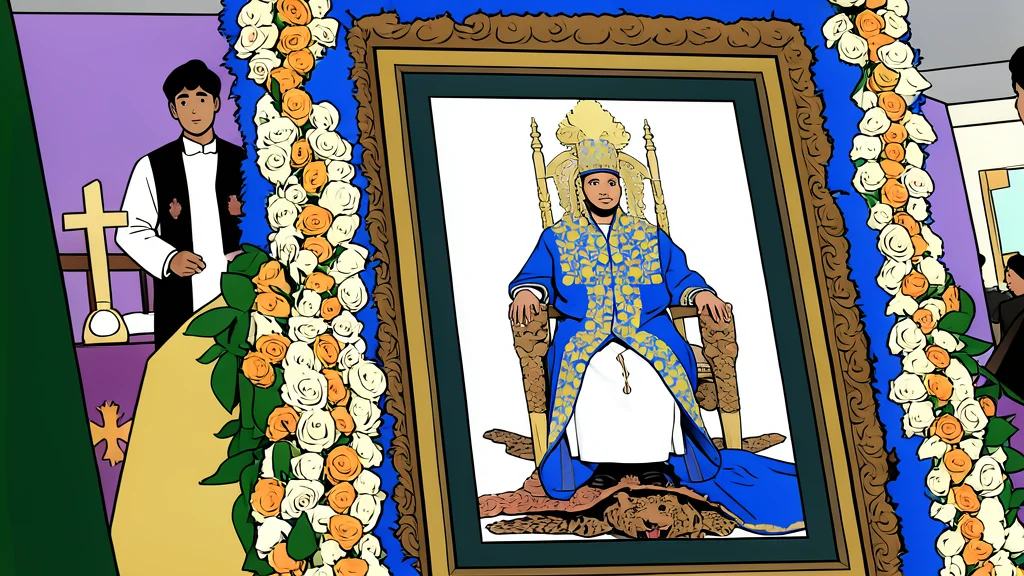
The death of King Oyo has triggered a rare constitutional dispute in Uganda's Tooro Kingdom, pitting clan elders against royal family claims over a potential heir.
The burial of King Oyo Nyimba Kabamba Iguru Rukidi IV in Fort Portal on September 12 marked the end of a brief but significant reign, yet it has opened a deeper fracture within the Tooro Kingdom. The ceremony, held at the Karambi Royal Tombs, was overshadowed by a bitter dispute regarding the legitimacy of the successor. While traditional protocols were observed, the underlying question of who rightfully holds the throne remains unresolved, dividing the royal family and the broader community.
According to reports from Al Jazeera English, the conflict centers on the interpretation of the late king’s wishes versus the authority of the Babiito clan. Prince Edward Rukidi Kijanangoma, a 56-year-old broadcaster, assumed power during the burial by casting nine coffee berries into the grave, a ritual symbolizing the transfer of authority. However, the late king’s mother and sister contest this handover, asserting that a will named a previously undisclosed son as the rightful heir, a claim that challenges the traditional decision-making process.
Clan Elders Cite Traditional Authority
The Babiito clan, responsible for safeguarding the royal lineage, maintains that customary processes supersede individual documents. Reverend Father Charles Oyo, a clan elder, stated that a will expresses a wish but does not determine kingship. According to the elders, the late king never introduced the alleged son through the required customary rites, and instead, the clan had formally backed Kijanangoma as the successor. This position places the clan leader, or Musuuga, above the written testament in the hierarchy of succession.
In response to the challenge, Princess Ruth Komuntale has accused the elders of attempting to seize the throne. She described the late king as a humble and peaceful man who worked hard for the kingdom, and she expressed concern that others are seeking to steal what he built. "I continue to stand with my brother," she said, referring to the alleged son. Her stance highlights the tension between the written will of the monarch and the collective judgment of the traditional authorities who have long governed the kingdom's internal affairs.
A Young Monarch's Untimely End
King Oyo’s path to the throne was marked by early tragedy, as he ascended at age three in 1995 following the death of his father. Recognized as the world's youngest reigning monarch at the time, he grew up in a palace that served as his classroom. Friends recall him as a kind and compassionate figure who enjoyed football and community life. His passion for the sport continued into adulthood, where he promoted local tournaments before his health began to deteriorate.
Oyo died on August 27 in the United States at the age of 34 while receiving treatment for cancer. His body was returned to Uganda for nine days of mourning, a period that allowed for the public expression of grief and the initial stages of the succession debate. The timing of his burial, coinciding with Empango, the anniversary of his coronation, added a layer of ceremonial significance to the proceedings, even as the political realities of his departure became increasingly apparent.
Government Mediation and Future Uncertainty
The Ugandan government has intervened in the dispute, engaging in talks aimed at resolving the conflict before the burial took place. According to sources, these discussions were an attempt to stabilize the situation and prevent further division within the kingdom. However, the lack of a clear resolution means that the uncertainty over the throne persists. The involvement of the state underscores the broader implications of the dispute, extending beyond the royal family to affect the stability of the region.
As the Tooro Kingdom looks forward, the central question remains who will be recognized as the legitimate successor. The revelation of the identity of the alleged son, if it occurs, will likely be a critical moment in this unfolding drama. For now, the kingdom is left in a state of limbo, balancing respect for tradition with the pressing need for clear leadership.