El-Sayed Protest Incident Resurfaces Amid Senate Race
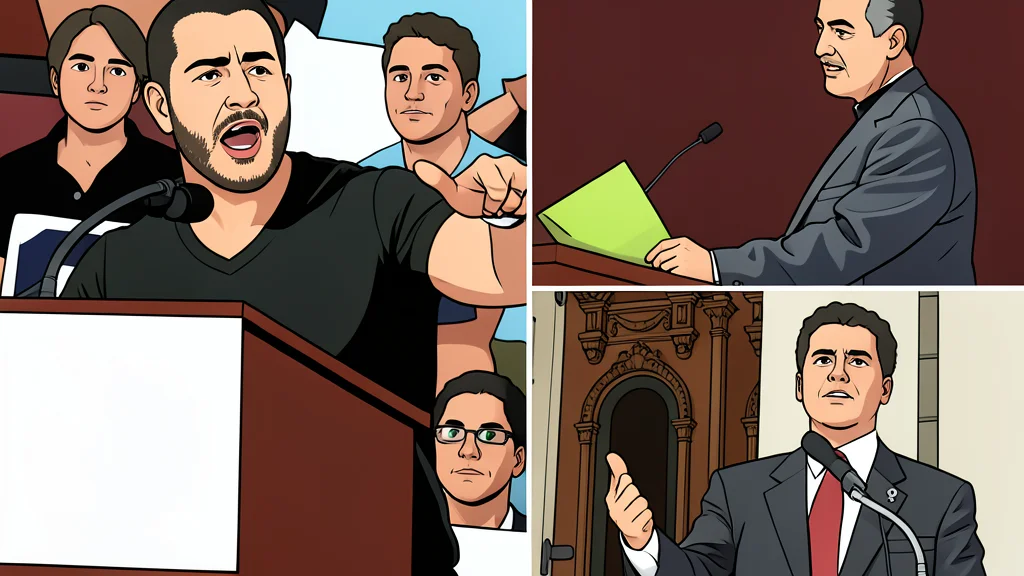
A 2007 protest by a Michigan Senate candidate against speakers describing their conversion to Christianity has resurfaced, prompting debate over the context of the event and the candidate's current political stance.
In the midst of a highly contested race for the U.S. Senate in Michigan, attention has shifted to a protest incident from 2007 involving candidate Abdul El-Sayed. According to a report unearthed by GN geopolitics/terror (en-US), El-Sayed, who was then a student leader, participated in a walkout against three speakers at the University of Michigan who identified themselves as former terrorists who had converted to Christianity.
The incident has reignited questions regarding the candidate’s historical associations and the broader context of campus discourse on extremism. While El-Sayed’s campaign insists the protest was against misinformation, opponents point to his role in the Muslim Students Association, an organization that faces scrutiny over alleged ties to the Muslim Brotherhood.
Campus Protest Context in 2007
The original event featured Walid Shoebat, Zachariah Annani, and Kamal Saleem, who spoke about their past involvements with groups such as the Palestine Liberation Organization and the Muslim Brotherhood before their religious conversions. At the time, student groups staged a walkout, arguing that the speakers were generalizing an entire demographic. El-Sayed, who served as vice president of the Muslim Students Association, supported the protest, stating in a 2007 interview that the group had achieved a positive outcome by challenging the speakers' narratives.
Organizers of the talk maintained that the purpose was to educate the public on the dangers of extremism rather than promote intolerance. However, critics of the speakers, including various civil rights organizations, questioned the authenticity of their backgrounds and noted that they had not faced legal consequences despite their claimed affiliations. The debate highlighted a tension between free speech on campus and the desire to challenge narratives perceived as misleading or harmful.
Campaign Response and Current Allegations
El-Sayed’s spokesperson, Cole Wozniak, responded to the renewed scrutiny by stating that the candidate has unequivocally denounced terrorism. Wozniak characterized the 2007 protest as a reaction to speakers who were widely condemned by national security experts for spreading misinformation and fabricating their backstories. The campaign argued that current political attacks are an attempt to divert attention from economic issues, such as high prices for goods and energy, which they attribute to federal policies.
Conversely, opponents highlight the candidate’s leadership role in the Muslim Students Association, an organization that has faced allegations of ties to the Muslim Brotherhood. The White House has recently requested that the State and Treasury departments evaluate whether certain chapters of the Brotherhood should be designated as foreign terrorist organizations. This designation process adds a layer of geopolitical complexity to the domestic political debate surrounding El-Sayed’s past affiliations.
Institutional Scrutiny of Student Organizations
The controversy is set against a backdrop of increased institutional scrutiny regarding student organizations with ties to groups designated as extremist. Testimony provided to the Senate Judiciary Committee noted that the Muslim Brotherhood built a presence in the United States through student unions, particularly the MSA, starting in the 1960s. This historical context has led to ongoing discussions about the role of such organizations in promoting ideologies that may conflict with national security interests.
As the Michigan Senate race intensifies, the intersection of personal history, institutional affiliation, and national security policy continues to shape the narrative. Voters and observers are now watching how these past events are interpreted in the context of current policy debates, particularly regarding the designation of foreign entities and the regulation of campus speech.