Legal Scholar Questions Erosion of Institutional Checks in US
A former FBI official argues that normalized political falsehoods are undermining democratic safeguards, creating a constitutional tension between free speech and accountability.
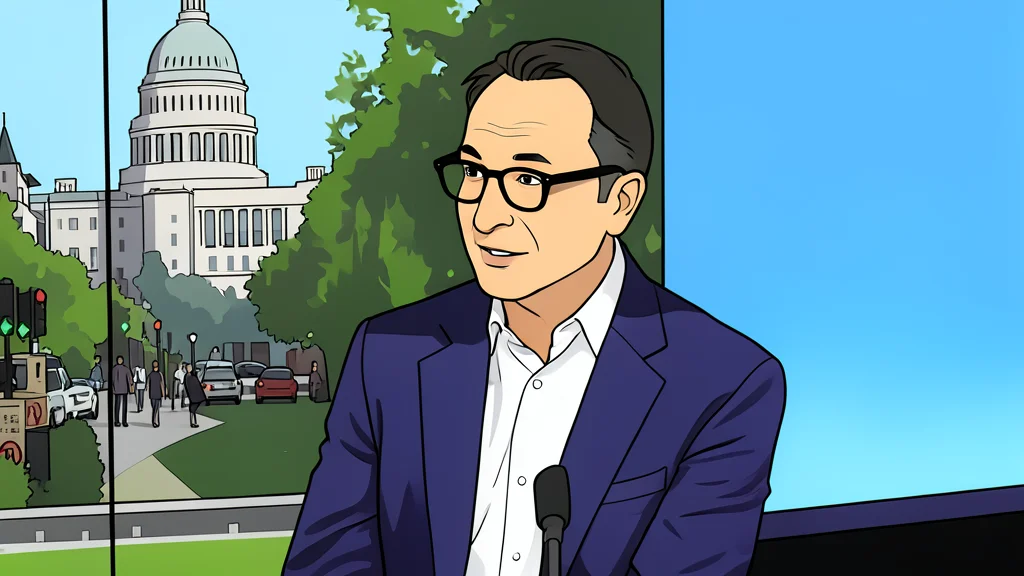
According to a discussion featured by France 24, Andrew Weissmann, a professor at New York University School of Law and former General Counsel of the FBI, has raised concerns regarding the state of democratic institutions in the United States. Weissmann, author of the book "Liar’s Kingdom," contends that the normalization of political deception is eroding public trust in government bodies. He suggests that when deliberate falsehoods become a standard tool of political utility, the foundational integrity of the system is compromised.
The central argument posits a disparity in legal consequences between elected officials and ordinary citizens. While citizens face serious legal repercussions for making intentionally false statements, Weissmann questions why political leaders appear to operate above such constraints. This dynamic, he argues, occurs alongside an expansion of executive power at a time when traditional mechanisms of oversight are under significant strain.
Institutional Strain and Executive Power
Weissmann describes the current situation as a constitutional crisis that challenges the balance of power within the republic. He notes that checks and balances are currently functioning primarily at the level of lower courts, while higher judicial and legislative bodies face increased pressure. This structural vulnerability allows for the potential dismissal of rule-of-law principles by those who hold autocratic tendencies, leaving democratic institutions exposed to the whims of individual leadership styles.
The scholar emphasizes that this is not merely a partisan issue but a systemic one. When deception is used to gain political advantage without facing legal or institutional consequences, the social contract between the state and its citizens is weakened. This erosion of trust can lead to a broader cynicism toward public institutions, making it harder for the government to maintain legitimacy and enforce laws uniformly.
Comparative Perspectives on Political Deception
To contextualize the US experience, Weissmann draws comparisons with other major democracies, including Brazil, Britain, France, and Germany. He examines how these nations handle the tension between freedom of expression and the need for accountability in political discourse. The comparative analysis seeks to determine whether democracies can impose meaningful consequences for intentional political lies without infringing upon the right to free speech.
The discussion highlights that different legal frameworks approach the definition of political falsehoods differently. Some countries maintain stricter standards for public officials regarding the truthfulness of their statements, while others prioritize broad protections for political speech. Weissmann suggests that the US model may be uniquely vulnerable when it fails to distinguish between robust political debate and deliberate deception intended to undermine governance.
Future Challenges for Democratic Norms
The forward-looking question remains how democratic institutions can adapt to preserve integrity without stifling political discourse. As executive power continues to expand and traditional oversight mechanisms face scrutiny, the legal system must navigate a complex landscape. The key issue is establishing boundaries that hold leaders accountable for intentional falsehoods while safeguarding the essential freedoms that define a free society.
Observers will likely watch for judicial decisions that clarify the legal standards applicable to political speech and executive actions. Additionally, legislative efforts to strengthen oversight mechanisms may provide insight into how the US intends to address these structural vulnerabilities. The outcome of these developments will shape the future of democratic accountability in the United States and potentially influence other nations facing similar challenges.