UN Reform Proposals Face Pushback on Reproductive Health

International researchers urge caution against merging UNFPA and UN Women, warning that such moves could dilute decades of progress in sexual and reproductive health rights.
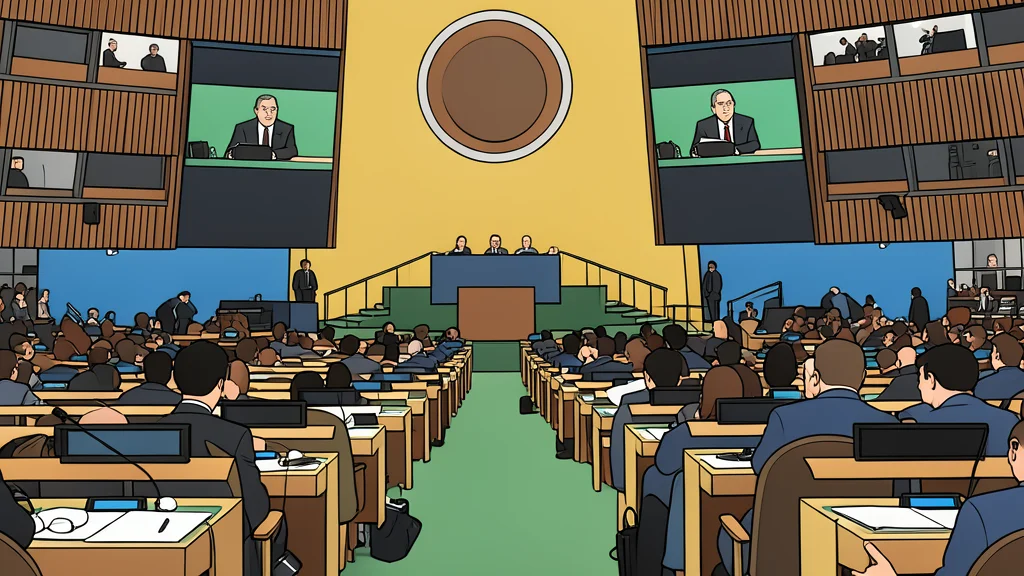
As delegates from 193 member states convene at the United Nations General Assembly to discuss development goals and institutional reforms, a significant debate has emerged regarding the future of global health mandates. A new collection of research published in The BMJ, developed in partnership with the CUNY Graduate School of Public Health & Health Policy, strongly opposes the proposed merger of the United Nations Population Fund (UNFPA) and UN Women. According to the researchers, this consolidation risks diluting the specialized focus required to sustain multilateral commitments to gender equality and sexual and reproductive health and rights (SRHR).
The analysis highlights a shifting geopolitical landscape characterized by reduced funding and increasing pressure on international norms that have historically protected women’s health. The collection argues that safeguarding SRHR, which includes access to contraception, safe maternal care, and comprehensive education, is not merely a medical issue but a fundamental pillar of broader development and gender equity. In the face of these challenges, experts suggest that governments, health professionals, and civil society must adopt new forms of leadership and advocacy to preserve these hard-won gains.
Institutional Stability Amidst Political Shifts
Clarisa Bencomo and colleagues argue that strong, specialized multilateral institutions remain essential for advancing gender equality. They contend that merging distinct mandates may weaken the institutional capacity to respond to specific health crises. This perspective is echoed by Terry McGovern, who warns that civil society must leverage historical evidence and multilateral frameworks to resist attempts to erode rights. The researchers emphasize that robust institutional structures provide the necessary buffer against political volatility, ensuring that health protections are not subject to the changing tides of domestic politics.
The discussion extends to the role of national governments in maintaining these standards. Greene and colleagues examine the experience of New York state as a case study in resisting federal regression on reproductive rights. Their analysis illustrates how state-level actions can both protect and limit access to care, offering insights into how local governance interacts with global norms. This local perspective underscores the complexity of implementing global health mandates in diverse political environments, where legal, fiscal, and judicial mechanisms play a critical role in shaping access to care.
Redefining Global Fiscal Architecture
Attiya Waris and her team propose that delivering sexual and reproductive health justice requires a reimagined global fiscal architecture. They advocate for the establishment of a new, independent, and neutral global body that prioritizes human rights obligations over political interests. This structural reform aims to create a stable funding environment that is less susceptible to the fluctuations of donor politics. By decoupling financial support from political conditionality, the researchers suggest that the international community can ensure more consistent and equitable delivery of health services worldwide.
Jaime M Gher and colleagues further emphasize the central role of civil society in this process. They argue that protecting meaningful participation and feminist leadership is essential for sustaining progress in SRHR. In an era of growing political and financial pressure, the capacity of civil society organizations to advocate for rights-based governance becomes a critical determinant of health outcomes. Their work highlights the need for robust advocacy networks that can mobilize resources and public opinion to defend these rights against systemic challenges.
Forward-Looking Strategies for Rights Protection
Chelsea Clinton, Vice-chair of the Clinton Foundation, noted that the new collection charts the scale of the risks involved while outlining concrete paths for protection. These paths include fiscal reforms, institutional strengthening, and community-led initiatives. The editorial accompanying the research urges health and political leaders to seize the current moment to build lasting systems for the governance, financing, and delivery of sexual and reproductive health. This call to action reflects a broader consensus that reactive measures are insufficient, and proactive system-building is required to secure long-term stability.
According to GN geopolitics/rights (en-US), the upcoming UN General Assembly sessions will be a critical juncture for determining the trajectory of these international health institutions. Observers will be watching closely for any formal resolutions or statements that address the proposed merger and the broader implications for global health governance. The coming months may reveal whether the international community chooses to preserve specialized mandates or pursue consolidation, a decision that will have lasting impacts on women's health and rights globally.