Rubio Presses Mexico on Cartel Cooperation Amid Sovereignty Tensions
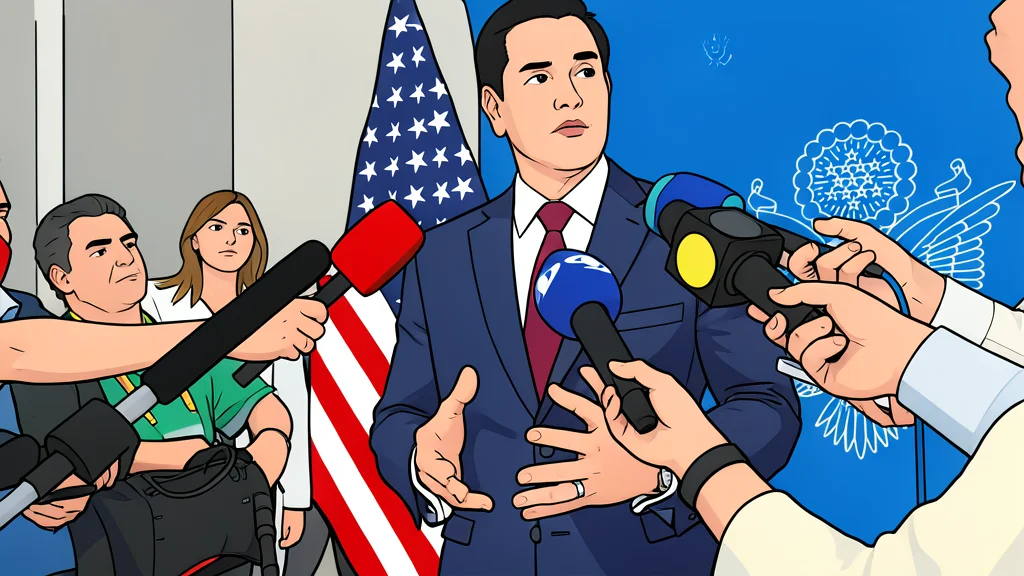
Secretary of State Marco Rubio used Mexico's Independence Day to highlight the need for intensified joint action against organized crime, a stance that has drawn sharp pushback from President Claudia Sheinbaum regarding national sovereignty.
Secretary of State Marco Rubio marked Mexico's 216th Independence Day with a message that prioritized security cooperation over diplomatic congratulation. While acknowledging the bilateral partnership, Rubio centered his remarks on the persistent threat of transnational organized crime. According to the statement, the United States and Mexico must continue to work aggressively to dismantle criminal networks that have destabilized the region.
The comments mark a continuation of a more assertive U.S. posture toward Mexican security policy. Rubio has previously described Mexico as a significant challenge due to the power of its cartels, suggesting that large portions of the country operate outside the effective control of the state. This framing positions the fight against 'narcoterrorism' not just as a local issue, but as a critical component of broader North American stability.
Escalating Rhetoric on Narcoterrorism
In his remarks, Rubio emphasized that the United States has worked with Mexico to degrade and dismantle organizations he described as holding the country hostage to their criminal whims. The Secretary of State described bilateral cooperation as vital to stopping fentanyl trafficking and confronting what Washington designates as narco-terrorist groups. This language reflects a shift in how U.S. officials are characterizing the security landscape in the Americas.
Rubio's statements followed earlier comments made at the U.S. Embassy in Quito, where he noted that vast territories in Mexico are controlled by criminal groups rather than the state. Although he acknowledged that Mexican authorities had taken more action than in the past, he argued that these efforts were still insufficient to address the scale of the threat. The Secretary of State stressed that Washington’s intent was to confront these groups in partnership with Mexican officials.
Sheinbaum Rejects External Pressure
President Claudia Sheinbaum responded to Rubio’s characterization by rejecting the premise that Mexico is failing in its domestic security responsibilities. She warned against using Mexico as a pawn in U.S. domestic political disputes, stating clearly that the nation must be respected. Her comments underscore the tension between U.S. demands for stronger action and Mexico’s insistence on sovereign autonomy in handling internal security matters.
The two governments have increasingly emphasized different aspects of the cross-border security problem. While Rubio presses for stronger Mexican action against cartels, Sheinbaum has called on Washington to address the root causes, including U.S. drug demand, weapons trafficking into Mexico, and the financial networks that support organized crime. This divergence highlights the complexity of finding a mutually acceptable path forward in the fight against illicit trade.
Future of Bilateral Security Cooperation
The exchange between the two leaders sets the stage for further diplomatic negotiations. According to the GN auto geopolitics/americas: Mexico cartel desk, the coming months will likely see intensified diplomatic efforts to align the differing priorities of Washington and Mexico City. Observers will be watching closely for any new initiatives that could bridge the gap between U.S. security demands and Mexican sovereignty concerns.
As the Independence Day celebrations conclude, the focus shifts to the practical implementation of security cooperation. The ability of the two nations to find common ground on the fight against organized crime will be a key indicator of the broader state of U.S.-Mexico relations. The coming weeks will reveal whether this rhetorical tension leads to tangible policy changes or further diplomatic friction.