Sheinbaum's Grito Highlights Migrants and Women in Mexico
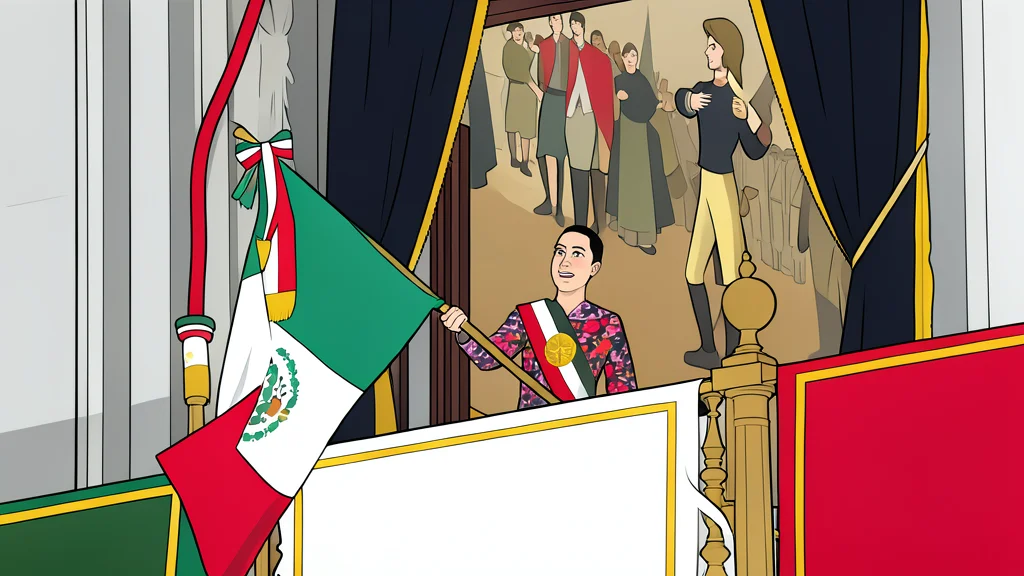
In her second annual address, President Claudia Sheinbaum expanded the traditional independence rituals to explicitly honor migrants and previously overlooked historical figures.
From the central balcony of the National Palace, President Claudia Sheinbaum delivered Mexico’s Cry of Independence on Tuesday night, marking the eve of the nation's Independence Day. Standing before a crowd of over 300,000 in the Zócalo, she marked her second year in office with a ceremony that sought to broaden the scope of national memory. According to GN geopolitics/migration (en-US), the event was characterized by a deliberate inclusion of groups that have historically been marginalized in official state narratives.
The president issued 21 distinct cries of 'viva,' each accompanied by reciprocal cheers from the assembly. While the ceremony followed traditional protocols, including the ringing of the Campana de Dolores, the content of the address signaled a shift toward emphasizing diversity and sovereignty. Sheinbaum, who made history a year ago as the first female president to deliver the Grito, used the platform to reinforce Mexico’s stance on internal dignity and external independence.
Expanding the circle of national heroes
A notable feature of this year's address was the explicit honoring of women insurgents and diverse communities. Sheinbaum specifically named Antonia Nava, an Afro-Mexican insurgent who had not previously been included in the standard list of independence heroes. The president also extended the cry to Indigenous and Afro-Mexican peoples, as well as to Mexican migrants living abroad. This inclusion appears to be part of a broader effort to validate the contributions of diverse groups to the formation of the modern state.
The selection of figures reflected a gendered and ethnic re-evaluation of the independence era. By highlighting names such as Josefa Ortiz Téllez-Girón and Gertrudis Bocanegra alongside traditional male figures like Hidalgo and Morelos, the administration underscored the role of women in the revolutionary struggle. This rhetorical move aligns with recent government policies that seek to center gender equality in public discourse.
Sovereignty and diplomatic context
The ceremony took place against a backdrop of ongoing diplomatic tensions. According to GN geopolitics/migration (en-US), Sheinbaum has consistently denounced what she describes as U.S. interference in Mexican affairs. During the Grito, the president issued an emphatic declaration in defense of Mexican independence and sovereignty. This emphasis on autonomy serves as a public reaffirmation of Mexico’s political stance regarding its relationship with its northern neighbor.
The call for 'a free, independent and sovereign Mexico' resonated with the broader political climate in which the government is navigating complex trade and security agreements. By framing the independence day celebration through the lens of sovereignty, the administration signals that domestic unity and external autonomy are central to its governing philosophy. This message was delivered to a wide audience, including senior government officials and international observers.
Peaceful celebration in the capital
The Mexico City government reported that the event proceeded without incident. Authorities stated that coordination between security agencies and responsible citizen participation allowed the commemoration to conclude in an organized manner. The absence of casualties or significant disruptions highlights the effectiveness of the security planning for such a large-scale public gathering. The ceremony was followed by a fireworks display and musical performances, including a set by the Grammy-winning band Intocable.
The forward question now lies in how these rhetorical expansions will translate into policy. Whether the explicit inclusion of migrants and Afro-Mexican communities in the national narrative leads to concrete legislative changes remains to be seen. Observers will watch whether the emphasis on sovereignty results in further diplomatic friction or a reinforced stance in upcoming international negotiations.