North Korea Declares Nuclear Status Irreversible Amid IAEA Review
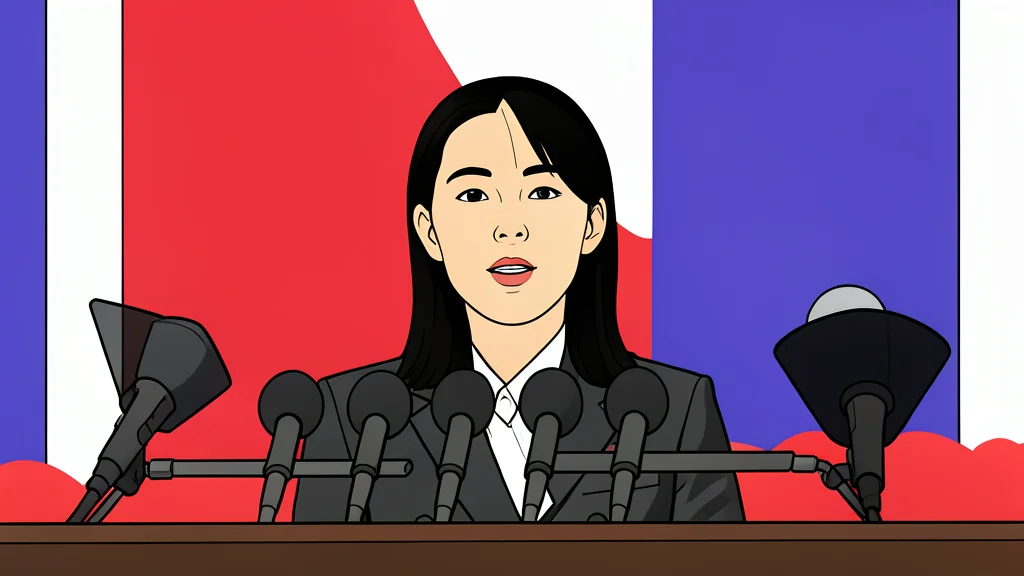
Pyongyang’s senior leadership has dismissed international calls for denuclearization as futile, asserting that the country's nuclear capabilities are now a permanent and absolute state attribute.
Kim Yo-jong, the senior official and sister of Supreme Leader Kim Jong-un, has stated that North Korea's position as a nuclear weapons state cannot be reversed by any force. In a statement released on Thursday, she rejected the International Atomic Energy Agency’s renewed calls for denuclearization, describing such international pressure as repetitive and ineffective. This declaration underscores a hardening stance in Pyongyang's diplomatic posture, signaling that negotiations based on the premise of dismantling nuclear arsenals are no longer considered viable by the leadership.
The comments were issued during the 70th session of the IAEA General Conference, where South Korea and several European nations raised concerns about violations of United Nations Security Council resolutions. According to reports from the Korean Central News Agency, Kim characterized these international appeals as "familiar silly talk" and "noises" that recur annually. She argued that the physical and legal settlement of the DPRK's nuclear position is final, implying that external diplomatic efforts will not alter the country's strategic capabilities or its will to defend its interests.
Context of International Criticism
The IAEA’s annual report, released ahead of the General Conference, highlighted ongoing expansions in North Korea’s uranium enrichment capacity and indications of reactor operations. Member states used the platform to argue that these activities pose a significant threat to the global nonproliferation regime. The agency and its member states urged Pyongyang to fulfill its international obligations, specifically those derived from UN Security Council resolutions, and to pursue complete denuclearization.
Kim’s response directly countered these assertions. She maintained that despite rhetorical denials from what she termed "hostile forces," the reality of North Korea's nuclear status is immutable. By framing the issue as a settled fact rather than a negotiable variable, the statement aims to insulate the regime from diplomatic pressure. This approach reflects a broader strategy of leveraging nuclear capability as a core component of state sovereignty and survival.
Signal of Diplomatic Stagnation
Notably, while the statement was distributed via state media, it was not published in Rodong Sinmun, the official printed daily of the ruling Workers' Party. This distinction may suggest a targeted message intended for international audiences rather than the domestic public. According to the GN geopolitics/nuclear desk, such rhetorical shifts often indicate a move away from dialogue frameworks toward a more confrontational or isolationist posture.
The rejection of the IAEA’s agenda marks a significant moment in the ongoing standoff between Pyongyang and the international community. By declaring the nuclear status "absolute," the leadership removes a key precondition for future diplomatic engagement. This stance complicates efforts to stabilize the region, as it suggests that nonproliferation goals may be viewed by North Korea as incompatible with its national security interests.
Forward Looking Strategic Implications
Observers should watch for further technical developments in North Korea's nuclear program, as the IAEA report suggests continued operational activity. Diplomatic reactions from major powers, particularly the United States and China, will be crucial in determining whether this rhetorical hardening leads to further sanctions or isolated incidents. The coming weeks will likely reveal if Pyongyang moves to test new capabilities or if diplomatic channels remain completely closed.