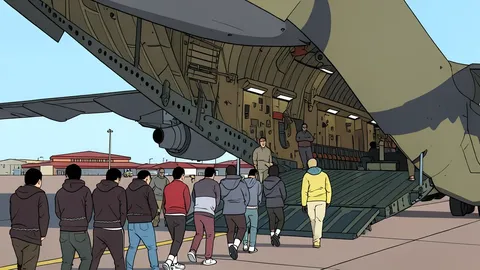
US Deportations to Third Countries Reach 25,000 via Secret Deals

A new investigation reveals the US has removed over 25,000 migrants to 35 nations using $410 million in payments and visa pressure.
Key points
- Over 25,000 migrants have been deported to 35 third countries under secret US agreements.
- The US has allocated $410 million to fund these deals, paying governments and UN agencies.
- Critics cite legal limbo and rights abuses, while the US uses visa restrictions as leverage.
The United States has removed more than 25,000 individuals to third countries under a series of confidential agreements since early 2025, according to a recent investigation reported by straitstimes.com. These arrangements involve the transfer of migrants who do not hold legal status in the United States and cannot be sent back to their countries of origin, effectively placing them in nations where they have no prior ties or legal standing.
The scale of this operation is significant, with data indicating that at least 25,447 people were deported to various destinations by the end of August. The vast majority of these transfers were directed to Mexico, while the remainder were dispersed across 27 other nations in Latin America, Africa, and the Pacific region. The administration has reportedly allocated $410 million to fund these operations, paying both foreign governments and international organizations to facilitate the relocations.
Financial incentives drive global transfers
The funding structure for these deportations involves direct payments to signatory governments as well as substantial contributions to United Nations agencies. Internal records suggest that $81 million was earmarked specifically for foreign governments, while the remainder was directed toward aid organizations. Notably, more than $178 million was allocated to the International Organization for Migration, and $123 million was designated for the UN Refugee Agency to support these processes.
Specific agreements highlight the economic nature of these deals. For instance, Palau, a small Pacific island nation, agreed to accept up to 75 third-country nationals in exchange for $7.5 million. Similarly, Eswatini has accepted 32 individuals since mid-2025 under a deal worth over $5 million, with reports indicating that the country has also taken in deportees with criminal records. These transactions appear to prioritize financial compensation over traditional diplomatic or humanitarian frameworks.
Pressure tactics and legal concerns
Critics argue that the United States is using visa restrictions and bans as leverage to compel African nations to accept deportees. An earlier investigation by AFP found that Washington pressured countries by threatening to limit travel visas, a tactic that has drawn significant criticism from human rights advocates. Lawyers have described the situation as a legal vacuum, where deportees are held without charge in countries where they possess few or no rights.
The negotiations have been managed by a relatively obscure State Department division known as the Office of Remigration, which was established in May 2025. This office has handled the bulk of the diplomatic discussions and payment arrangements. In one instance, Cameroon signed a memorandum of understanding to accept deportees, followed shortly by a separate five-year health assistance program worth nearly $400 million, raising questions about the linkage between humanitarian aid and immigration policy.
Future implications for migration policy
As the administration continues to refine these agreements, the focus will likely remain on expanding the network of receiving countries. With seven additional nations reportedly finalizing deals, the scope of this policy may widen further. Observers will be watching closely to see if the UN agencies involved can maintain their humanitarian mandates while participating in these state-funded transfers, and whether the legal challenges faced by deportees will prompt broader international scrutiny.