Wildfire Near Villa De Leyva Tests Colombia's Response Capabilities
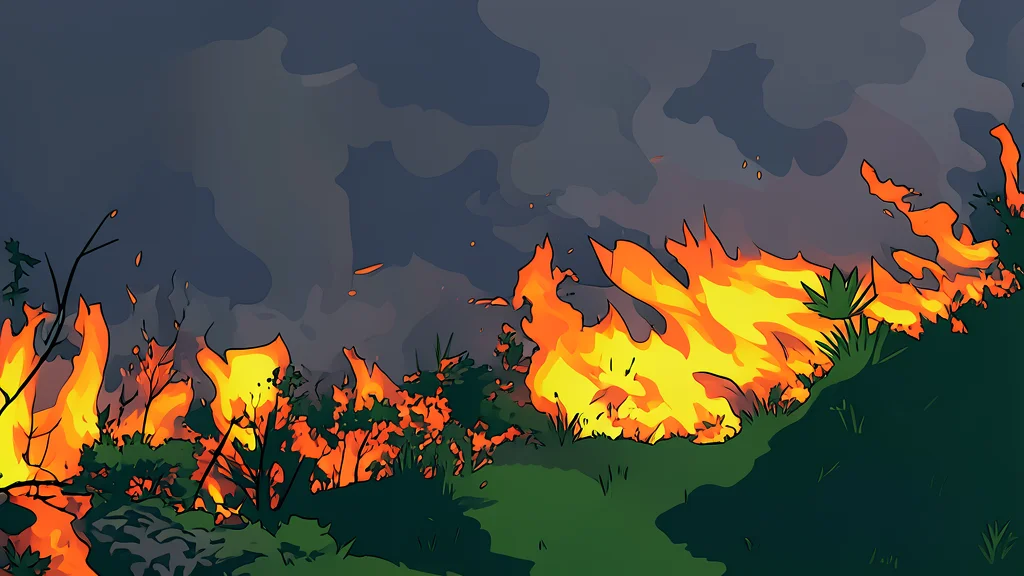
A significant wildfire in central Colombia is threatening the historic town of Villa de Leyva, prompting a coordinated national response amid record-breaking heat and drought conditions.
A large wildfire has ignited on the slopes above the historic town of Villa de Leyva in central Colombia, threatening its colonial architecture and cobblestone streets. According to local authorities, the blaze has already consumed forty hectares of native forest, sending thick plumes of smoke visible from the town's central square. The incident has drawn immediate attention from national leadership, with President Abelardo de la Espriella pledging to mobilize state resources to protect what he described as a historical jewel of the nation.
The fire is part of a broader crisis affecting the country, where eighteen active wildfires have been reported by Colombia’s National Unit for Disaster Risk Management. Officials attribute the intensity of these blazes to a combination of severe drought and record-breaking temperatures fueled by the El Nino weather pattern. This atmospheric phenomenon has drastically reduced precipitation in the northern part of South America, turning Andean vegetation into highly flammable material and creating conditions that are increasingly difficult to manage with standard firefighting techniques.
Coordinated national response efforts
In an effort to contain the spread of flames, the Boyaca department government has dispatched two aircraft to the site. A military helicopter is also being deployed to assist with aerial operations. On the ground, Interior Minister Rodrigo Lara stated that firefighters from the capital, Bogota, would join local crews from Tunja and Boyaca. This multi-agency approach aims to reinforce containment lines and secure the urban center, reflecting a significant escalation in the logistical complexity of the response.
The mayor of Bogota, Carlos Fernando Galan, confirmed that a dedicated team of firefighters would be sent to support the local efforts. This collaboration between regional and national forces highlights the severity of the threat posed by the San Marcos hillside fire. As the town receives over one million visitors annually, the potential for disruption to tourism and local infrastructure remains a primary concern for officials coordinating the emergency response.
Climate drivers intensify wildfire risks
While forest fires in the equatorial Andes typically peak during the dry season, this year's events are being exacerbated by the El Nino phenomenon. According to Al Jazeera English, the warming of the Pacific Ocean has shifted rain patterns, leading to extended periods of drought in countries like Colombia. This lack of moisture allows heat to rapidly evaporate ground water, leaving vegetation critically dry and prone to ignition. Experts note that this natural cycle is now supercharged by long-term climate change, creating extreme conditions that strain local ecosystems and emergency services.
Stephanie Roe, lead climate scientist with the World Wildlife Fund, warned that El Nino can bring devastating extremes on its own, but its current manifestation is occurring on a much warmer planet. She noted that this combination increases the likelihood that heat, drought, and fires will push communities and ecosystems beyond previous limits. In neighboring regions, such as Peru and Ecuador, the same phenomenon has triggered catastrophic flash floods and landslides, illustrating the varied and severe impacts of shifting global weather patterns.
Forward outlook for regional stability
As Colombia continues to battle multiple wildfires, the effectiveness of the current response strategy will be closely monitored. The ability to control the fire near Villa de Leyva will serve as a critical test for the country's disaster management infrastructure. With the dry season still ongoing and temperatures remaining high, officials anticipate that the risk of new ignitions will persist. The coming days will reveal whether the combined aerial and ground efforts can successfully secure the town and prevent further environmental damage.