Trump Redefines Washington Arch as Military Drone Hub
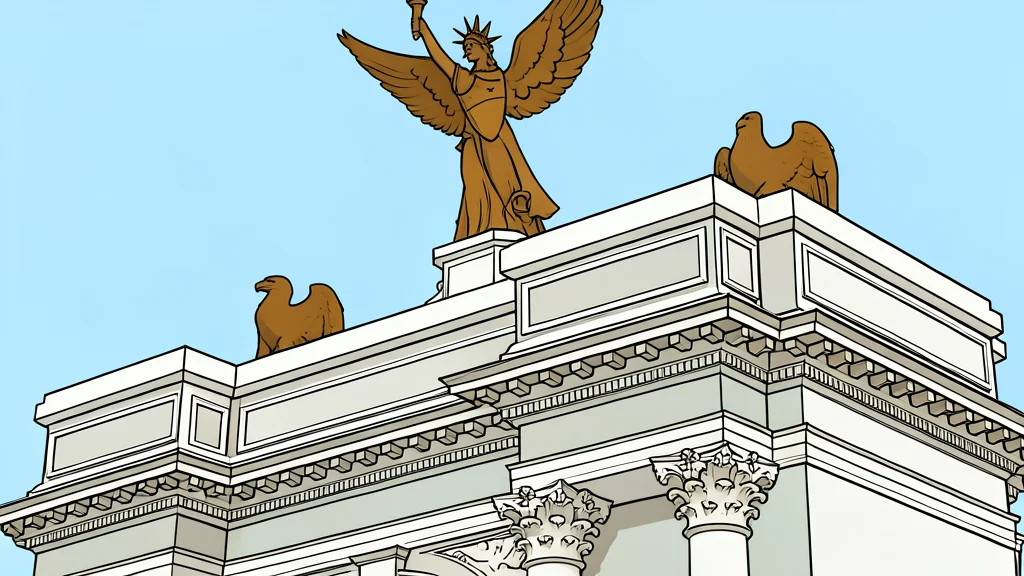
The planned Washington, DC, arch is now designated for drone storage and military use, marking a significant shift in the project's purpose amid ongoing legal and public disputes.
The United States president has announced that the monumental arch planned for Washington, DC, will double as a military facility. According to Donald Trump, the structure will house large numbers of drones and sniper equipment, a change he claims was made at the request of the military for national security reasons.
This announcement adds a new layer to a project that has already drawn criticism for its scale and location near key national landmarks. The redefinition of the arch as a military complex mirrors the justification used for a separate, controversial ballroom project at the White House, further complicating the legal and political landscape surrounding these capital improvements.
Military designation expands arch scope
Trump stated on his social media platform that the facility will allow for the rapid deployment of drones and the storage of ammunition. He described the site as unique globally, asserting that no similar facility exists elsewhere. While the original proposal focused on a 76-meter tall structure to mark the nation's 250th anniversary, the new details emphasize functional military utility over purely symbolic design.
The president did not provide specific architectural changes accompanying this new designation. However, the shift from a standalone monument to a combined military and ceremonial space raises questions about how the site will be integrated into the existing urban fabric of the capital, where height restrictions and view preservation are central concerns for planners and residents.
Legal challenges persist over views
Critics argue that the arch’s size and placement threaten to obscure the view between Arlington National Cemetery and the Lincoln Memorial. In February, three Vietnam War veterans filed a lawsuit claiming the structure would disrupt a symbolic visual alignment designed to represent national unity. They contend that any major monument in the capital requires congressional approval, a point that remains under judicial review.
A federal judge has ordered the administration to provide notice of any construction work, but a final ruling on the broader constitutional and statutory challenges has not yet been issued. The case highlights a growing tension between executive ambitions for capital reshaping and the established legal frameworks intended to protect the visual and historical integrity of the city.
Broader capital renovation controversies
The arch is part of a series of high-profile projects that have faced public opposition. Recent protests at the Kennedy Center for the Performing Arts, where demonstrators formed human chains, reflect broader anxiety over changes to iconic cultural venues. Trump has threatened to demolish the center if it is not renamed, citing funding concerns as a primary justification.
Similarly, the construction of a $400 million ballroom at the White House has proceeded after the Supreme Court allowed the project to continue despite lawsuits from preservation groups. Like the arch, this project has been framed by the administration in terms of national security. As reported by Al Jazeera English, these developments suggest a broader strategy to reshape the physical and symbolic landscape of the capital, prompting continued scrutiny from legal experts and the public.