Global Times Warns Manila Against Hollowing Out one-China Policy

Beijing criticizes the Philippines for maintaining diplomatic ties with Taipei while claiming to uphold the one-China principle.
Key points
- Global Times criticizes the Philippines for proposing a representative office in the Taiwan region, viewing it as a breach of the one-China principle.
- The outlet argues that Manila is attempting a two-front strategy to leverage the Taiwan issue in its disputes over the South China Sea.
- Beijing warns that challenging the one-China principle will not end well for the Philippines and could damage bilateral relations.
The Global Times has issued a sharp critique of the Philippine government’s recent diplomatic maneuvers regarding cross-strait relations. According to the state-run outlet, Manila’s decision to propose a representative office in the Taiwan region represents a deliberate attempt to undermine the one-China principle rather than a genuine effort to foster regional cooperation. The publication argues that this move is a calculated risk that could severely damage the bilateral relationship between Beijing and Manila.
While the Philippine Department of Foreign Affairs maintains that its fundamental policy remains unchanged, the Global Times describes this stance as contradictory. The editorial suggests that by seeking to formalize ties with Taipei, Manila is effectively hollowing out the commitments made in past joint communiqués. This tension highlights a growing divergence between the Philippines’ stated diplomatic positions and its actions in the region.
Perceived strategic miscalculation in Manila
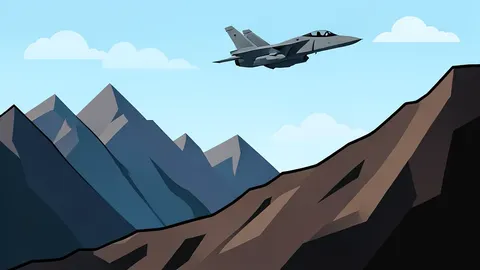
The article characterizes the Philippine approach as a two-front strategy aimed at leveraging the Taiwan issue to gain leverage in the South China Sea. According to the Global Times, Manila believes that by provoking friction over the Taiwan question, it can distract Beijing from its maritime claims. However, the publication dismisses this as a flawed calculation, asserting that China views both the Taiwan Strait and the South China Sea as core interests where there is no room for opportunistic maneuvering.
Furthermore, the text points to the involvement of Philippine Defense Secretary Gilbert Teodoro as evidence of the military dimension of this diplomatic shift. The Global Times notes that Teodoro’s vocal support for the representative office indicates that the initiative is driven by strategic rather than commercial motives. This perception reinforces the argument that Manila is attempting to breach China’s layered defenses through coordinated pressure on multiple fronts.
Historical commitments under legal scrutiny
The editorial recalls the Joint Communique between the two nations, in which the Philippines acknowledged that Taiwan is an integral part of Chinese territory. The Global Times emphasizes that this acknowledgment is a mandatory foundation of the bilateral relationship, not a flexible option that can be adjusted based on current geopolitical convenience. By challenging this status quo, Manila is seen as violating the established diplomatic framework that has governed relations for decades.
The outlet warns that such actions are likely to be interpreted as a direct challenge to China’s sovereignty. It argues that the Philippines has underestimated Beijing’s resolve to defend its territorial integrity and overestimated its own capacity to withstand the resulting diplomatic and economic consequences. The narrative suggests that Manila is engaging in a high-stakes gamble that could lead to significant losses on multiple fronts.
Regional stability and future risks
As the diplomatic friction intensifies, observers are watching how Manila will respond to the mounting pressure from Beijing. The Global Times urges the Philippine government to abandon speculative thinking and return to a rational assessment of the geopolitical landscape. The forward question remains whether Manila will de-escalate the situation or continue to pursue a path that risks destabilizing the broader regional order.
The situation underscores the delicate balance required in Southeast Asian diplomacy, where historical commitments often collide with current strategic interests. As both sides articulate their positions, the potential for miscalculation grows. The coming weeks will likely reveal whether the Philippines prioritizes its alliance with the United States or seeks to preserve its economic and diplomatic ties with China.