India Reports Reduced Chinese Troop Presence on Himalayan Border
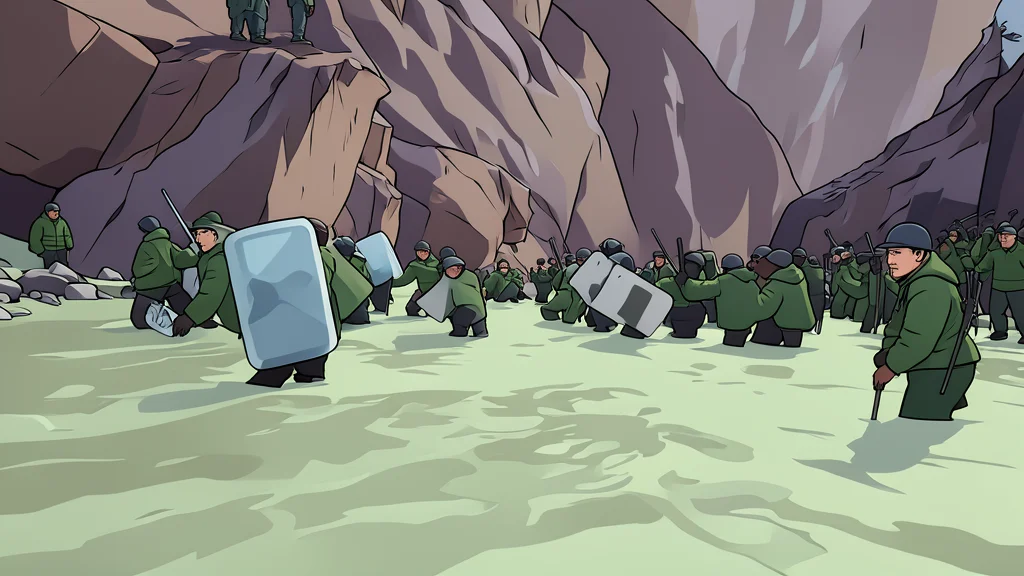
New Delhi's annual defense report indicates a significant withdrawal of Chinese forces from the Line of Actual Control, citing improved diplomatic relations and infrastructure development as key factors in the de-escalation.
India’s Defense Ministry has reported a substantial reduction in the number of Chinese troops deployed along the disputed Himalayan border in 2025. According to the ministry’s annual report for 2025-26, released on Monday, the deployment of People’s Liberation Army forces opposite India’s northern borders has decreased significantly. This shift is attributed to a series of positive developments in political, diplomatic, and military engagement between the two Asian powers, which have helped ease tensions that had persisted since the deadly clashes in 2020.
The Line of Actual Control, a roughly 3,500-kilometer frontier that remains largely disputed, had seen the amassment of tens of thousands of troops from both sides following the 2020 standoff. However, the latest official statement suggests that the intensity of the military presence has relaxed. The ministry noted that while specific figures for Indian troop levels were not disclosed, the Indian Army’s posture across all sectors remains robust and prepared to handle any emerging contingencies, signaling that de-escalation does not equate to a reduction in readiness.
Infrastructure Drives Strategic Depth
Beyond troop movements, the report highlights India’s accelerated construction of tunnels, roads, and other all-weather infrastructure in the high-altitude regions. These projects are described as critical for the rapid movement of troops, equipment, and supplies in difficult terrain. Analysts note that China has similarly expanded its own infrastructure on the opposite side of the border in recent years. This parallel development suggests that while immediate troop deployments may have scaled back, long-term military readiness and logistical capability remain central priorities for both nations.
Retired Brigadier Arun Sahgal, who directs the Forum for Strategic Initiatives in New Delhi, emphasized the necessity of maintaining a strong dissuasive posture. "Maintaining a strong dissuasive posture and preparedness along the borders is an imperative. We cannot scale down our defenses irrespective of troop numbers," he stated. This perspective underscores the view that physical infrastructure and strategic depth are enduring components of border security, independent of the fluctuating number of soldiers present at any given time.
Diplomatic Thaw Follows Xi Visit
The reported reduction in military tension coincides with a broader thaw in India-China relations. Chinese President Xi Jinping recently visited New Delhi for the annual BRICS summit, marking his first trip to India in seven years. During meetings with Indian Prime Minister Narendra Modi, both leaders expressed a commitment to stabilizing bilateral ties. Xi stated that China views the relationship from a strategic and long-term perspective, while Modi emphasized that peace and tranquility along the disputed border are essential for continued development.
India’s foreign ministry confirmed that the two leaders expressed commitment to a fair, reasonable, and mutually acceptable resolution of the boundary question. This diplomatic progress builds upon earlier engagements, including a meeting in Russia in October 2024, which helped facilitate an agreement to end the military standoff in eastern Ladakh. The current trajectory suggests that sustained dialogue is becoming a primary mechanism for managing the complex dynamics of the Indo-Chinese frontier.
Forward Watch on Border Stability
As the geopolitical landscape evolves, observers will closely monitor whether the reduced troop deployments hold steady or if further adjustments occur. The ongoing infrastructure projects on both sides of the Line of Actual Control will likely remain a focal point for military analysts. Additionally, the durability of the diplomatic momentum generated by recent high-level meetings will be tested by future interactions and any potential incidents along the frontier. The coming months may reveal whether this de-escalation marks a durable shift in border dynamics or a temporary pause in a long-standing strategic competition.