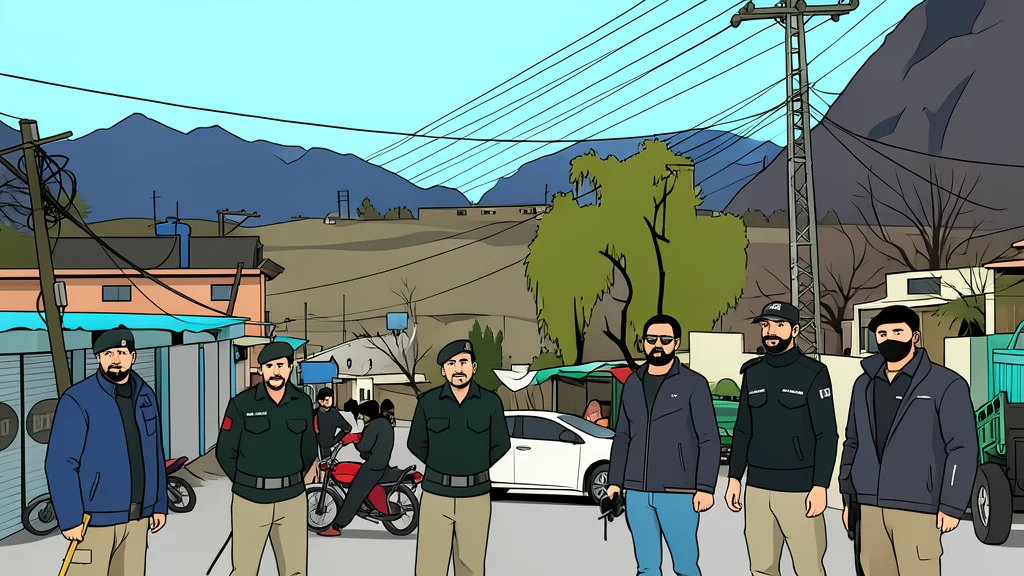
Kohat Attack Probe Reveals Planned Prolonged Siege
Investigators say attackers aimed to hold the police compound for hours, but a 21-hour operation ended the standoff with eight militants killed.
Key points
- Investigators say attackers planned a multi-hour siege of the Kohat Police Lines compound after an initial vehicle bomb.
- A 21-hour joint clearance operation resulted in eight terrorists being killed and a total death toll of 23.
- Drone technology was cited as a key tool in tracking militant movements and preventing them from spreading within the facility.
Initial findings from the investigation into the recent assault on the Kohat Police Lines suggest the perpetrators had a strategy far more complex than a single suicide bombing. According to the investigation team, the attackers did not merely detonate explosives; they intended to enter the compound and maintain a siege for several hours, aiming to scatter the police force and hold key buildings under their control.
The attack on Friday resulted in significant loss of life, with at least 21 people killed, including 15 police officials, when a vehicle laden with explosives was detonated near a mosque within the premises. Following the initial blast, armed militants stormed the complex, leading to a prolonged standoff that security forces described as one of the most intense engagements in recent years.
Planned siege strategy outlined
Sources indicate that the terrorists arrived equipped with hand grenades, sniper rifles, and other weaponry, suggesting a prepared plan for sustained combat inside the police lines. The official First Information Report filed by the police documents the use of these specific weapons during the assault, confirming that the attackers were not limited to explosives but were ready for a prolonged exchange of fire.
Investigative officials stated that the operation began when a rickshaw-style vehicle rammed into the area, causing a massive explosion that allowed seven armed terrorists, including a sniper, to advance toward key buildings. Their objective, according to the probe, was to disperse the police response and remain inside the compound for as long as possible, a tactic that relies on overwhelming the defenders through surprise and firepower.
Drone technology aids containment
Despite the attackers' intent to hold the ground, police personnel maintained their resistance despite sustaining injuries and facing heavy fire. A senior police officer told The Express Tribune that the use of drone technology played a crucial role in monitoring the terrorists' movements, allowing security forces to prevent the militants from spreading further within the facility.
The timely response from police and other security forces was pivotal in bringing the situation under control. By leveraging aerial surveillance, the forces were able to track the positions of the armed individuals, ensuring that the clearance operation could be conducted with precision and minimizing the risk of further civilian or officer casualties during the chaotic initial phase.
Casualties and ongoing inquiry
A joint clearance operation involving the police, the Counter-Terrorism Department, and the Elite Force lasted approximately 20 to 21 hours before the situation was fully secured. By the end of the operation, eight terrorists had been killed, while the total death toll rose to 23, including additional casualties reported during the clearance phase. Over 100 others were injured in the initial attack and subsequent engagement.
Authorities have stated that a comprehensive investigation is underway, examining all aspects of the incident, including the planning of the attack, the supply of weapons, and potential external links. A case has been registered with the CTD against unidentified terrorists, with charges including terrorism, murder, and attempted murder. The group Ittihadul Mujahideen Pakistan has claimed responsibility, prompting further scrutiny of cross-border dynamics and the movement of militants.