Albanese Launches Bid for UN Security Council Term
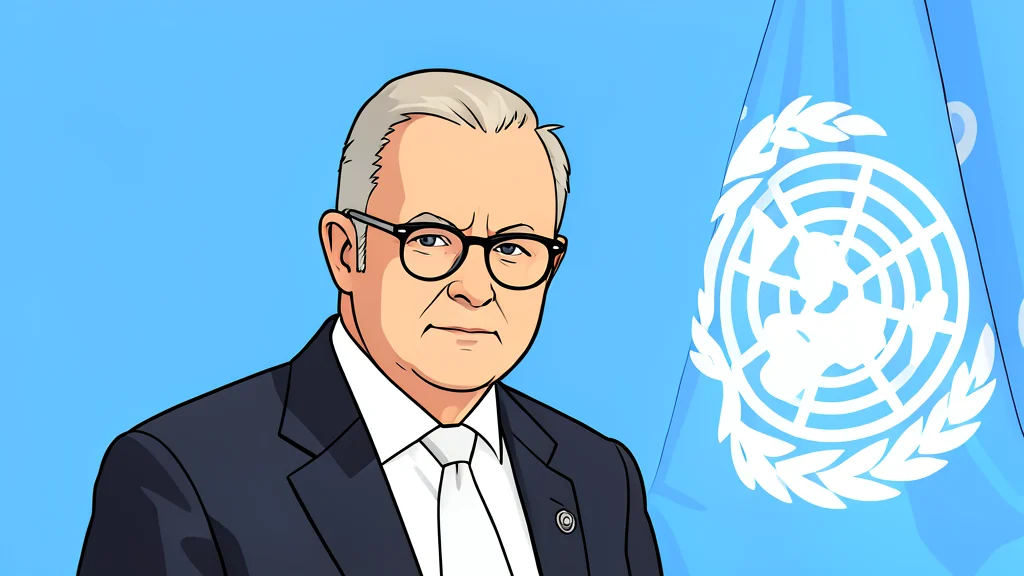
Australia formally seeks a 2029-2030 UN Security Council seat, aiming to leverage Pacific influence and middle-power diplomacy to win support.
Key points
- Australia formally bids for a UN Security Council seat for 2029 and 2030, with voting set for mid-2028.
- The campaign links global influence to domestic cost-of-living benefits, citing previous council tenure as a success model.
- The strategy relies on support from Pacific and ASEAN nations, highlighting social media bans and AI regulation as key policy assets.
Prime Minister Anthony Albanese has formally launched Australia’s bid to serve on the United Nations Security Council for the 2029 and 2030 terms, positioning the campaign as a means to safeguard domestic economic stability. According to the prime minister, active engagement in global governance directly influences cost-of-living pressures and inflation, making international leadership a domestic priority rather than a distant diplomatic objective. The formal application marks the beginning of a multi-year lobbying effort that will intensify during the upcoming UN General Assembly session in New York.
While the vote for the non-permanent seats is not scheduled until mid-2028, the diplomatic groundwork begins immediately. Australia, which has previously held a seat five times since the UN’s founding, is now competing against Finland from the Western Europe and Others Group. Even if the race remains limited to these two candidates, the government acknowledges that securing the position requires a two-thirds majority among all 193 UN member states, a threshold that demands broad and sustained international support.
Linking Global Governance to Domestic Stability
The prime minister argued that Australia’s participation in shaping global norms is essential for protecting the quality of life for ordinary citizens. He cited the country’s previous tenure in 2013 and 2014, during which Australia led the international response to the downing of Malaysia Airlines flight MH17, as evidence of the tangible impact such a role can have. Albanese emphasized that middle powers have a critical function in addressing conflicts and stabilizing global systems, a stance he linked to Australia’s broader engagement in issues ranging from the Middle East to the war in Ukraine.
Campaign Strategy and Regional Partnerships
According to aap.com.au, the campaign, branded as 'we listen, we partner, we protect,' will heavily leverage Australia’s strategic relationships in the Pacific and Southeast Asia. The government is optimistic about securing backing from ASEAN nations and Pacific Island states, viewing these alliances as a core component of its diplomatic strategy. The narrative will also highlight Australia’s proactive stance on emerging global challenges, specifically its position as the first nation to ban social media access for under-16s and its efforts to establish regulatory guardrails for artificial intelligence.
These policy initiatives are intended to demonstrate Australia’s commitment to protecting citizens from digital harms and technological risks, reinforcing the argument that the country’s values align with the needs of smaller and middle-sized nations. By foregrounding these specific policy actions, the government aims to differentiate its bid from other potential candidates and present a concrete vision of how council membership will translate into protective measures for its population.
Diplomatic Leadership in New York
To support the diplomatic push, the prime minister unveiled Siobhan McKenna as the next Australian consul-general to New York. Currently serving as chair of Australia Post and previously chair of the NBN, McKenna brings significant experience in financial and economic management. She is expected to take up the role later this year, a move that signals the government’s intent to strengthen its institutional presence in the host city of the United Nations.