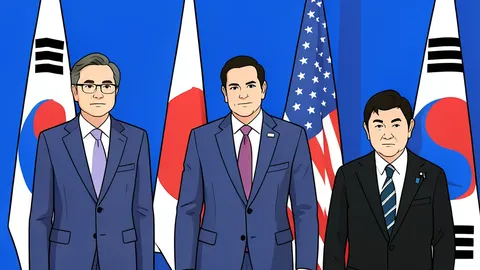
Korea, US, Japan Warn Beijing Against Unilateral Moves in Taiwan
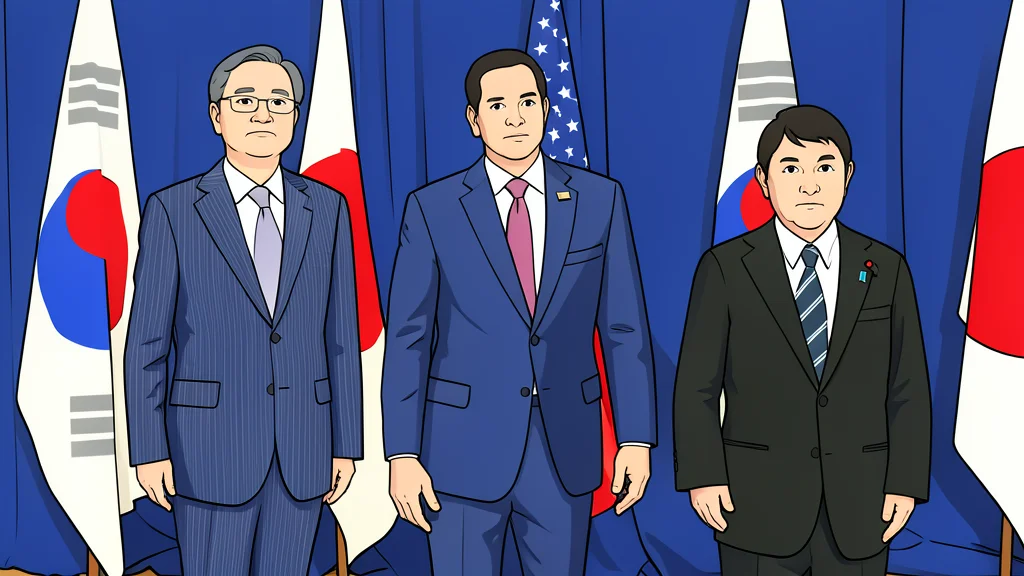
Trilateral ministers reaffirmed opposition to status quo changes in the Taiwan Strait ahead of Xi's US visit.
Key points
- Korean, US, and Japanese ministers opposed unilateral changes to the Taiwan Strait status quo.
- The trio launched a new trilateral economic security consultative body to protect supply chains.
- The meeting occurred three days before Chinese President Xi Jinping's arrival in the US.
Foreign ministers from South Korea, the United States, and Japan convened in New York on the sidelines of the United Nations General Assembly to articulate a unified stance on regional security. According to Seoul Economic Daily, the trio issued a joint statement explicitly opposing any attempts to unilaterally alter the status quo in the Taiwan Strait, a message delivered just days before Chinese President Xi Jinping is scheduled to arrive in the United States.
The meeting, held at the Lotte New York Palace Hotel, marked the third trilateral gathering of foreign ministers in three months. By coordinating their positions on the sidelines of the high-level session, the three nations signaled a sustained diplomatic effort to maintain stability in the Indo-Pacific region while addressing broader issues ranging from North Korea’s nuclear program to global supply chain resilience.
Coordinated stance on Taiwan stability
The joint statement emphasized the importance of peace and stability in the Taiwan Strait, urging a peaceful resolution of cross-strait issues. The ministers expressed support for Taiwan's meaningful participation in international organizations and reaffirmed their opposition to unilateral changes to the current arrangement. This coordinated messaging serves as a diplomatic check on potential aggressive actions by China, reinforcing the commitment of the three allies to international law and regional order.
Economic security and technology cooperation
Beyond geopolitical posturing, the ministers addressed critical economic concerns, including the need to secure critical supply chains against coercive practices. They opposed non-market policies that cause harmful overcapacity and market distortions, such as arbitrary export restrictions. To this end, the three countries welcomed the launch of a new trilateral economic security consultative body and agreed to strengthen early warning systems for supply chains in third countries.
The group also advanced plans for energy resilience, specifically by accelerating the deployment of small modular reactors in third countries under a memorandum of cooperation adopted in July. Additionally, the ministers highlighted the importance of jointly strengthening advanced technology stacks, with a focus on protecting and promoting critical emerging technologies such as artificial intelligence, quantum computing, and digital infrastructure.
Denuclearization commitment and future dialogue
In parallel with their statements on the Taiwan Strait, the ministers reaffirmed their resolute commitment to the complete denuclearization of North Korea in accordance with United Nations Security Council resolutions. They urged Pyongyang to return to talks, noting that the path to dialogue remains open. This consistent messaging underscores the allies' shared objective of preventing revenue generation for North Korea’s nuclear and ballistic missile programs while keeping diplomatic channels accessible.
As the 81st UN General Assembly progresses, the forward-looking question centers on how these trilateral commitments will be operationalized in the face of ongoing geopolitical tensions. Observers will watch for concrete actions regarding the new economic security consultative body and how the three nations navigate the delicate balance between firm opposition to unilateral changes and the maintenance of diplomatic engagement with Beijing.