Pakistan and China Activate 1963 Border Commission
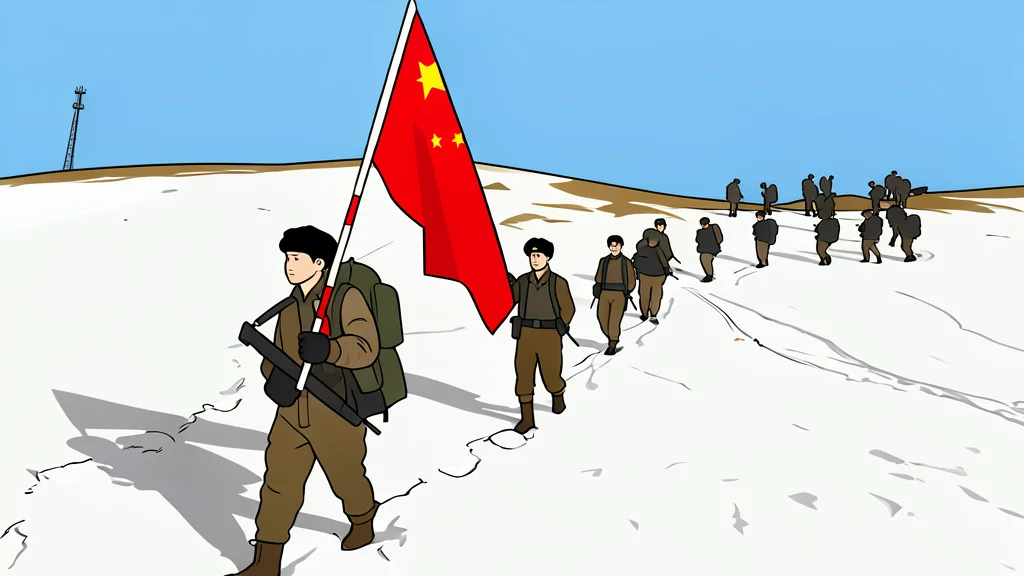
Delhi rejects the new joint body as illegal, citing its claim to the Shaksgam Valley territory.
Key points
- Pakistan and China have operationalized a joint boundary commission to manage their shared frontier.
- India rejects the commission as illegal, citing its claim to the Shaksgam Valley territory.
- Experts note the move revives a 1963 agreement mechanism, complicating India-China diplomatic efforts.
Pakistan and China have formally operationalized a joint boundary commission, a move that has triggered immediate diplomatic friction with India. The two nations announced the activation of the Pakistan-China Boundary Joint Commission, describing it as a significant step toward enhancing border management, joint surveys, and regional connectivity. This decision marks a concrete institutionalization of a boundary that India has long refused to acknowledge.
New Delhi responded with sharp rejection, asserting that the commission lacks any legal foundation. According to the Indian foreign ministry, the arrangement is invalid because it concerns territory that India claims as part of its sovereign domain. The dispute centers on the Shaksgam Valley, a region ceded to China by Pakistan in 1963, which India maintains was illegally occupied and transferred without its consent.
Historical dispute over Shaksgam Valley
The core of the controversy lies in the status of the roughly 5,180 square kilometer tract known as the Shaksgam Valley. India argues that this area was part of the former princely state of Jammu and Kashmir and that Pakistan had no legal standing to cede it to Beijing. Pakistani officials counter that the region remains a disputed territory and that India therefore has no standing to challenge the 1963 agreement.
Indian officials emphasized that the new commission disregards the complex history of the region. Randhir Jaiswal, a spokesman for the Indian foreign ministry, stated that the joint body is without legal basis. He reiterated that India does not recognize any boundary between Pakistan and China that involves territory claimed by New Delhi. This stance underscores the enduring diplomatic impasse between the two South Asian rivals.
Expert analysis on timing and treaty
According to Jabin T Jacob, a professor at Shiv Nadar University, the recent move is not an entirely new arrangement but rather the revival of a mechanism provided for in the 1963 Sino-Pak Agreement. He suggested that the timing may reflect China’s broader efforts to demarcate its boundaries and institutionalize exchanges along a frontier where Pakistan’s other borders have faced instability. Jacob noted that the 1963 treaty included a provision for renegotiation once the Kashmir dispute was settled.
Geopolitical implications for regional stability
The activation of the commission arrives at a sensitive moment as India and China seek to stabilize their relationship after years of military tensions along the Line of Actual Control. Meanwhile, Beijing and Islamabad are deepening cooperation along a neighboring stretch of the frontier. As reported by the BBC, experts warn that India’s limited ability to project its narrative in the international information environment may allow China to present its perspective globally with less resistance.
Observers suggest that the next steps will hinge on whether India can leverage diplomatic channels to challenge the legitimacy of the commission. The situation highlights the intricate web of historical claims and strategic interests that continue to shape relations in the Himalayan region. As the commission begins its work, the international community will likely watch closely for any further diplomatic escalations or shifts in the broader geopolitical landscape.