South Korea Rejects Troop Deployment in Hormuz Conflict
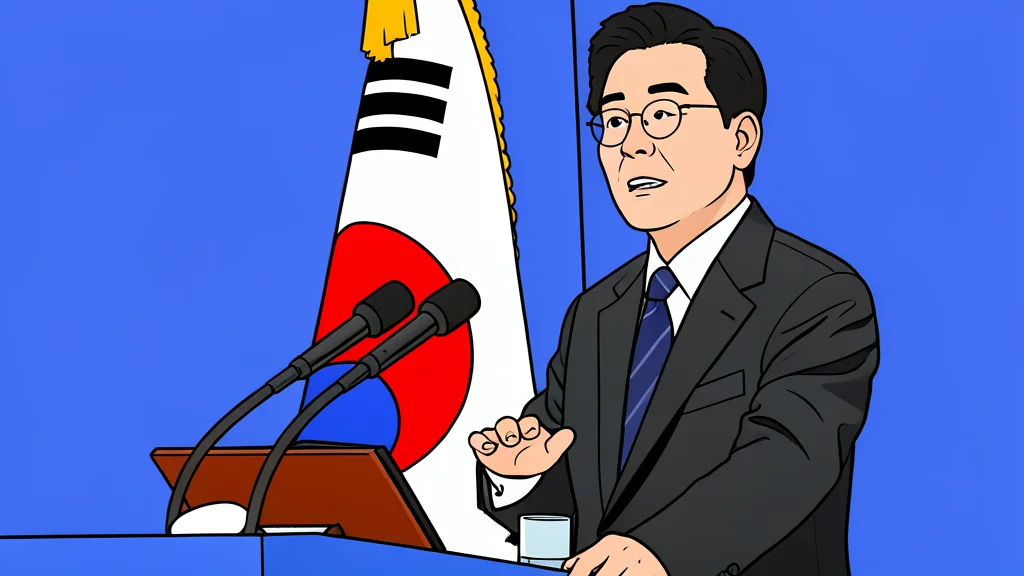
President Lee Jae Myung rules out military involvement in the US-Iran conflict, prioritizing national neutrality while protecting energy routes.
Key points
- South Korea has ruled out deploying troops to the Strait of Hormuz to avoid involvement in the US-Iran conflict.
- Seoul relies on the strait for 70% of its crude oil imports, making energy security a primary concern.
- US President Trump has criticized Seoul's stance and ordered a reduction in joint military exercises.
South Korea has officially ruled out the deployment of troops or military assets to the Strait of Hormuz, a decision that seeks to avoid direct entanglement in the escalating conflict between the United States and Iran. President Lee Jae Myung stated during a televised press conference on September 18 that the country’s longstanding principle of non-involvement in foreign wars remains intact and will continue to guide its foreign policy.
The administration faces a delicate balancing act, caught between domestic opposition to military engagement and mounting pressure from Washington to contribute to regional security efforts. According to Asia News Network, this dilemma has become a significant flash point in bilateral relations, particularly as Seoul attempts to safeguard its critical energy supply lines without provoking further instability in the region.
Strategic Interests in Energy Security
The urgency of the situation is driven by South Korea’s heavy reliance on the strait for its energy needs, with the country importing approximately 70 percent of its crude oil and over 50 percent of its naphtha through these waters. These resources are essential for key manufacturing sectors, including semiconductors, automobiles, and petrochemicals, making the safe passage of merchant ships a top priority for the Seoul government.
While President Lee has excluded combat roles, his government is reviewing ways to expand the non-combat activities of the Cheonghae naval unit, which has been deployed in the area since May. Officials indicated that technical support, such as mine clearance or logistics assistance, remains under consideration to protect commercial vessels and ensure the stability of vital trade routes.
Diplomatic Tensions with Washington
Relations with the United States have become increasingly strained, highlighted by President Donald Trump’s public criticism of Seoul’s refusal to join denuclearization efforts against Iran. Trump recently ordered a reduction in joint military exercises, citing their cost and what he described as an inappropriate signal to North Korea, a move that has complicated the traditional security partnership between the two nations.
Upcoming Diplomatic Engagements
Foreign Minister Cho Hyun is currently in Washington for meetings with US Secretary of State Marco Rubio, where the Strait of Hormuz is expected to be a central topic. Although media reports suggest Washington is pressing for a decision by November ahead of US midterm elections, the South Korean Defense Ministry has denied the existence of such a deadline, emphasizing that recent assessments in the UAE are strictly for situational awareness rather than troop deployment.