Routine Sea Replenishment Signals Continued US-Australia Presence

A recent logistical operation in the South China Sea highlights the sustained interoperability between U.S. and Australian naval forces, underscoring a long-standing commitment to regional stability.
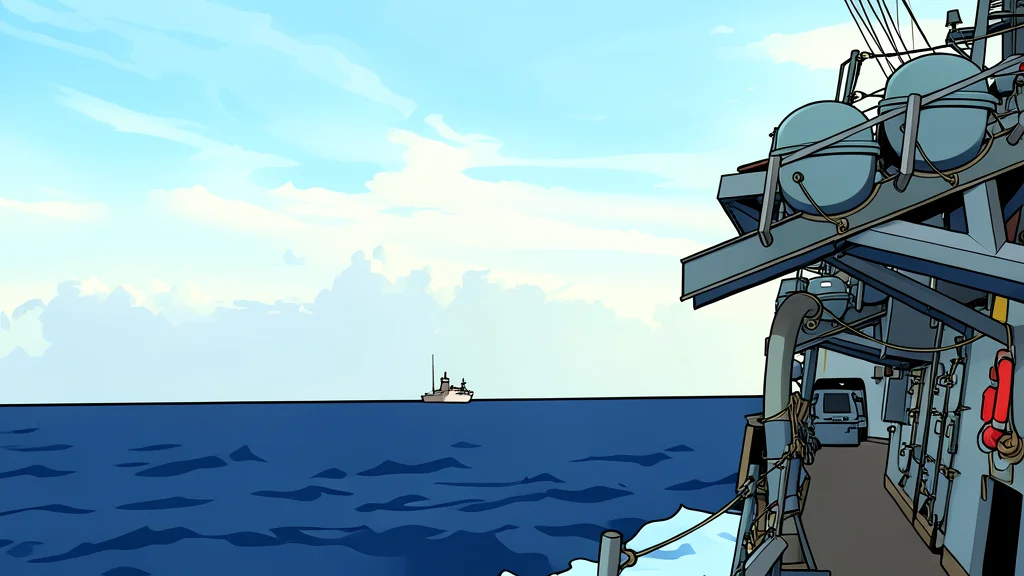
The U.S. Navy destroyer USS Benfold recently completed a replenishment-at-sea exercise with the Royal Australian Navy vessel HMAS Supply in the South China Sea. This routine logistical operation, conducted on August 27, 2026, demonstrates the operational readiness of both navies and their ability to sustain prolonged deployments in the region. According to official U.S. Navy communications, the transfer of supplies at sea is a critical component of maintaining force posture without the need to return to port.
The exercise took place while the Benfold was operating as part of Destroyer Squadron 15, the largest surface force assigned to the U.S. 7th Fleet. This squadron is central to American naval strategy in the Indo-Pacific, where it routinely coordinates with allies to ensure freedom of navigation. The involvement of the Australian replenishment oiler highlights the deep institutional ties that support such joint operations, allowing for seamless integration of logistical assets across national boundaries.
Logistics as a Operational Pillar
Replenishment at sea is not merely a logistical task but a significant indicator of naval capability. It requires precise coordination, strict safety protocols, and a high level of trust between the participating vessels. In this instance, crew members from both nations worked side-by-side, with U.S. personnel standing watch as signalsmen to ensure the safe transfer of fuel and other essential supplies. The success of such operations relies on shared procedures and mutual understanding, which are cultivated through repeated joint exercises.
For the 7th Fleet, the ability to sustain operations far from home ports is a key strategic advantage. By leveraging the capabilities of allied partners like Australia, the U.S. Navy can maintain a persistent presence in the Indo-Pacific. This arrangement reduces the logistical burden on any single nation and enhances the overall resilience of the coalition. The recent operation serves as a practical example of how alliance structures function in a real-world operational environment.
Strategic Context in the Region
The South China Sea remains a focal point for geopolitical and military activity. While the U.S. Navy describes these operations as routine and in support of a free and open Indo-Pacific, they are observed closely by regional actors and global powers. The presence of major naval assets in these waters is intended to demonstrate a commitment to international norms of maritime behavior. According to the source material, these interactions are part of a broader effort to preserve stability through visible, cooperative engagement.
The collaboration between the U.S. and Australian navies is a longstanding feature of their respective defense strategies. Australia’s participation in such logistical support roles underscores its role as a key partner in the region. This mutual support framework allows for a more flexible and responsive naval posture, capable of adapting to various scenarios. The recent operation, documented by U.S. Navy photo Mass Communication Specialist 2nd Class Oscar Diaz, reflects the routine nature of these interactions, which form the backbone of regional security cooperation.
Future Operational Prospects
As the 7th Fleet continues its forward deployment, the frequency and scope of joint exercises with allies are expected to remain a priority. The ability to conduct replenishment at sea ensures that warships can remain on station for extended periods, a capability that is crucial for deterrence and crisis response. Observers will likely watch for further signs of coordination between U.S. and Australian forces, as well as the reactions of other regional stakeholders. The continuity of these operations suggests a stable, if complex, dynamic in the maritime domain.
The forward question remains how these routine operations will evolve in response to changing regional dynamics. While the recent exercise was uneventful, it reinforces the structural readiness of the alliance. The focus now shifts to the next cycle of joint operations and the broader strategic communications that accompany them. The interplay between logistical capability and diplomatic signaling will continue to define the naval presence in the South China Sea.