Seoul Defends Hormuz Stance During Washington Talks
South Korea clarified its refusal to deploy combat troops to the Strait of Hormuz during high-level talks in Washington, a position the United States acknowledged without issuing specific demands.
During a bilateral meeting in Washington, D.C., South Korean officials clarified the Republic of Korea's position regarding military involvement in the Strait of Hormuz. A senior government source indicated that the discussion with U.S. counterparts resulted in a mutual understanding of Seoul's limitations, with no concrete demands for troop deployment raised by the American side. This exchange followed public criticism from the U.S. administration regarding Seoul's reluctance to contribute directly to regional security operations in the Persian Gulf.
President Lee Jae Myung recently emphasized that South Korea will not dispatch forces that would involve or intervene in active warfare. According to the GN auto geopolitics/asia-pacific: Korea Strait report, this stance was reiterated during the diplomatic engagements, where the focus shifted toward non-combat contributions to maintaining freedom of navigation. The United States expressed appreciation for this commitment while reaffirming the critical importance of cooperation in securing maritime routes.
Diplomatic Dialogue on Security Commitments
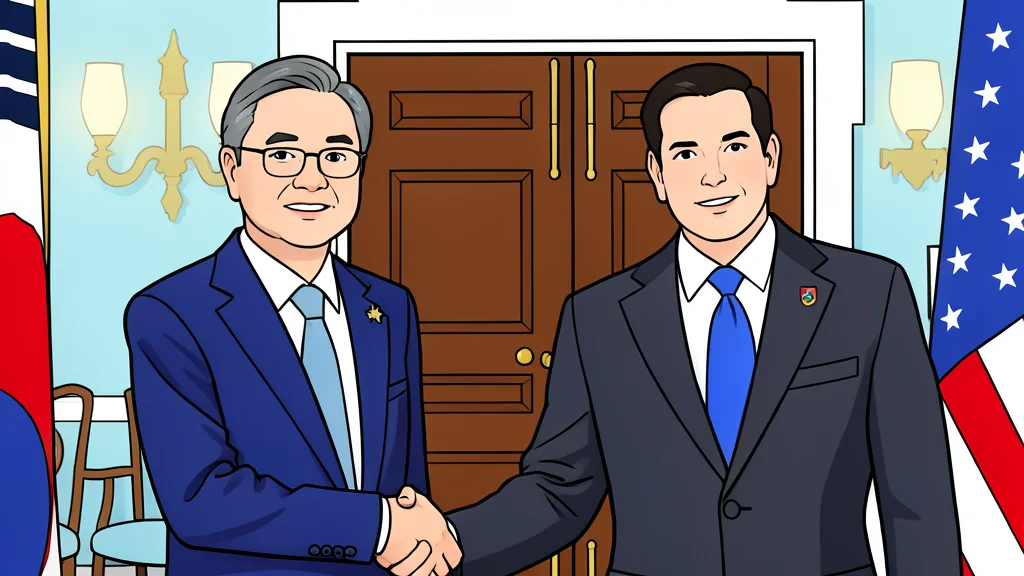
Foreign Minister Cho Hyun and U.S. Secretary of State Marco Rubio engaged in a roughly 50-minute conversation at the State Department. The meeting addressed the broader framework of the alliance, including the specific issue of Hormuz. Minister Cho stated that Seoul emphasized its dedication to making practical contributions alongside international partners to restore safe passage in the strait. The State Department confirmed that Secretary Rubio highlighted the necessity of continued cooperation to ensure the region's navigational stability.
The diplomatic atmosphere remained constructive, with both sides agreeing to maintain close communication channels. Officials noted that while the U.S. side expressed understanding of South Korea's domestic and strategic constraints, the dialogue served to align expectations regarding the scope of support. There was no indication of a rift in the alliance, but rather a clarification of the specific nature of South Korea's participation in regional security efforts.
Alliance Issues Beyond the Strait
Beyond the immediate geopolitical tensions in the Middle East, the visit included discussions on core alliance structures. Minister Cho met with Elbridge Colby, the Under Secretary of Defense for Policy, to address key issues such as the transition of wartime operational control and extended deterrence capabilities. Both nations agreed on the principle of concluding the transfer of wartime operational control promptly, although specific timelines were not finalized during these conversations.
These discussions underscore the dual focus of the alliance, balancing immediate regional security concerns with long-term strategic adjustments on the Korean Peninsula. The dialogue on extended deterrence reflects the ongoing effort to strengthen the nuclear umbrella and defensive postures against regional threats. By addressing these fundamental alliance mechanisms, both governments aim to ensure that their partnership remains robust and adaptable to evolving security landscapes.
Forward Looking on Maritime Stability
The next phase of engagement will likely focus on operationalizing the agreed-upon principles of non-combat support for maritime security. Observers will watch for concrete measures that demonstrate South Korea's practical contributions to free navigation without crossing the threshold into direct military intervention. The diplomatic trajectory suggests a continued emphasis on communication and coordination, ensuring that the alliance remains effective in managing complex regional challenges.
As the situation in the Strait of Hormuz remains fluid, the clarity provided by these talks may help stabilize expectations among partners. The commitment to close communication indicates that both Seoul and Washington intend to navigate these tensions through diplomatic channels. The focus will now shift to how these diplomatic assurances translate into specific, coordinated actions that support global trade and security without escalating regional conflicts.