Taiwan's Defense Exercises Face Growing Public Support
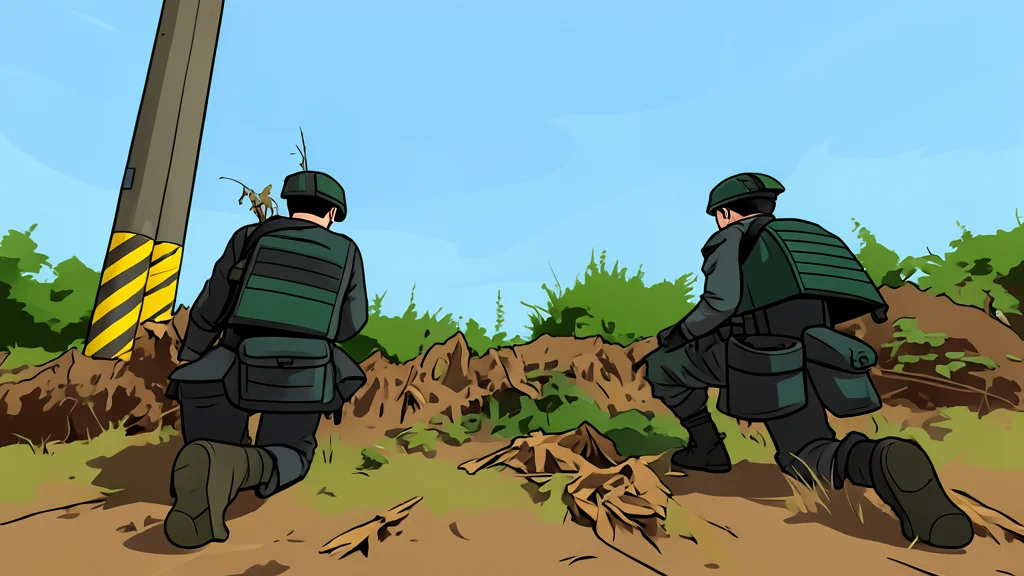
Recent surveys indicate that while approval for Taiwan's annual military drills is rising, a significant gap remains between public sentiment and actual understanding of the exercises.
Taiwan’s annual Han Kuang military exercises have moved further into the daily lives of citizens this year. According to recent reports, mobile internet speeds were deliberately reduced to simulate wartime disruptions, while physical barriers and barbed wire were deployed on key urban routes to rehearse defensive measures. Hospitals also conducted drills to shift operations underground. These actions signal a strategic shift where defense preparation is no longer confined to military bases but is increasingly integrated with civilian infrastructure and local government resilience.
This expansion of defense activities into civilian spaces has prompted a deeper inquiry into public perception. A nationwide telephone survey commissioned by the Institute for National Defense and Security Research and conducted by National Chengchi University’s Election Study Center sought to gauge how Taiwanese citizens view these preparations. The study, which interviewed 1,215 adults in late August, reveals a complex dynamic: while satisfaction with the exercises has reached a new high, the level of detailed public understanding remains surprisingly low.
Satisfaction Levels Reach New High
According to The Diplomat, the survey found that public satisfaction with the Han Kuang exercises reached 60 percent this year, marking the highest level in the series of annual polls. Previous data showed fluctuating approval, with figures hovering around 50 percent in recent years before dipping to 45.5 percent in 2023. The current result represents a noticeable increase over the 51.3 percent recorded in 2025. Additionally, the share of respondents who were unable to offer a clear evaluation of the exercises has declined to its lowest point in the survey history, suggesting that more people are now forming definite opinions about the drills.
Approval Does Not Equal Understanding
Despite the rise in approval, the survey highlights a significant disconnect between sentiment and knowledge. When asked directly about their comprehension of the exercises, only 2.3 percent of respondents claimed to understand them very well, while 22.6 percent said they understood them somewhat well. In contrast, nearly three-quarters of participants described their understanding as limited, with 46.1 percent stating they did not understand the exercises very well and 26.4 percent saying they did not understand them at all.
Experts note that forming an overall impression of a military event is distinct from grasping its specific operational details. The data suggests that while the public may support the general direction of national defense, they may not fully grasp the specific protocols or scenarios being rehearsed. This distinction is crucial for policymakers who rely on public support to sustain long-term defense strategies.
Challenges for Whole-of-Society Defense
The findings underscore the challenges inherent in a whole-of-society defense model. As military training becomes more integrated with urban resilience and civilian infrastructure, the expectation for public participation and awareness grows. However, the current data indicates that public support may be driven by broad national sentiment rather than detailed knowledge of the exercises' contents. For Taiwan’s defense strategy to be effective in a prolonged conflict, bridging the gap between high approval ratings and low levels of specific understanding will be a critical task for both the military and civilian authorities.