The Limits of Evidence in Predicting Taiwan's Response
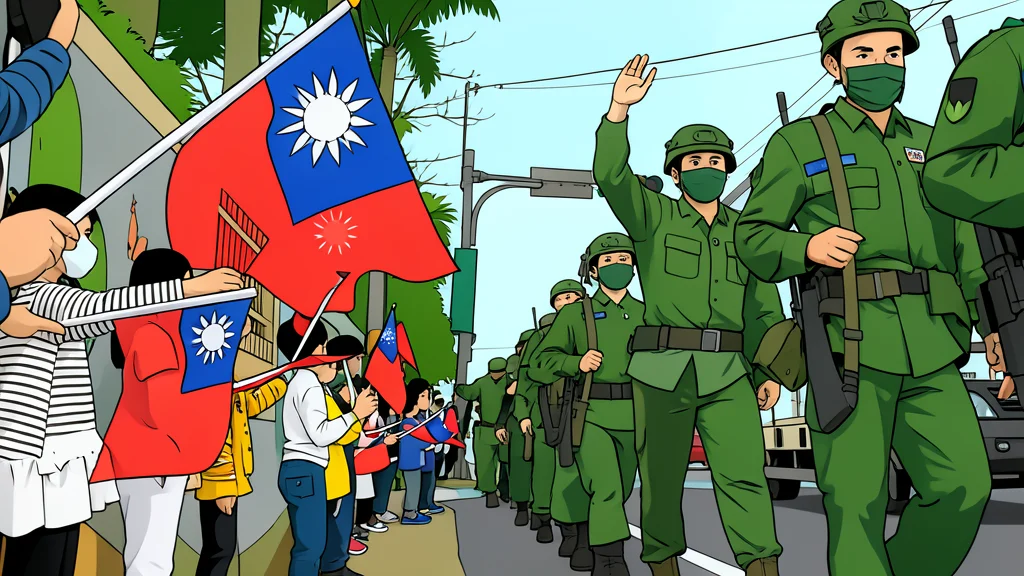
Debate over Taiwan’s potential willingness to fight reveals a significant gap between stated attitudes and the realities of crisis decision-making.
Recent discussions regarding Taiwan’s security posture have intensified following a prominent article questioning whether the island might surrender to pressure. This inquiry sparked a robust reaction from local analysts, political figures, and government officials who argued that the premise was factually flawed and misunderstood the nature of Taiwanese society.
The controversy highlights a broader tension in geopolitical analysis: the difficulty of predicting human behavior under extreme stress. While critics offer strong counter-arguments based on democratic resilience and recent historical experiences, neither side possesses definitive evidence to resolve the uncertainty surrounding a potential conflict.
Critics Question Foreign Perspectives
According to The Diplomat, the backlash against the initial report was swift and multifaceted. Local legislators and the National Security Council issued statements rejecting the idea that Taiwan would passively accept aggression. Many pointed to specific factual errors and a perceived lack of understanding regarding domestic politics. The core of the criticism was not merely about the content, but about the authority of the source. Critics argued that a foreign journalist with limited time in the region and no specialized background in local affairs lacks the depth necessary to make sweeping judgments about the collective will of the population.
Proponents of this view cited the Sunflower Movement, the rapid democratization process, and the effective management of the pandemic as proof of a society capable of mobilization. They argued that these instances demonstrate a strong civic identity and a willingness to defend national interests, contradicting the pessimistic narrative that the population is fragile or divided to the point of capitulation.
Polls Reveal Limited Predictive Power
Despite the strength of these historical arguments, they do not provide a clear answer to the central question. Opinion polls, often cited as key indicators of public sentiment, have inherent limitations when applied to existential threats. Expressing a willingness to defend one’s country in a survey is fundamentally different from making that decision in the midst of active hostilities. When infrastructure is damaged, casualties are mounting, and the outcome is uncertain, the psychological and physical costs become immediate and tangible. Stated intent in a calm environment may not translate into sustained action during a crisis.
Questions that involve concrete personal sacrifices, such as extended military service or increased taxation, offer a slightly more robust measure of commitment. However, even these responses are hypothetical. The gap between declaring a preference and enacting a painful reality remains wide, making it difficult to rely on survey data as a definitive predictor of military or societal endurance.
Historical Analogies Offer Mixed Signals
Observers often look to other nations for clues, drawing parallels between Taiwan’s situation and the resistances of Finland or Ukraine. These examples show that societies can display far more resilience than outsiders expect. However, the context of each conflict is unique. A useful cautionary example is Israel, which demonstrated extraordinary mobilization capabilities after the October 7 attacks, with hundreds of thousands of reservists reporting for duty. Yet, during the pandemic, the same society struggled to maintain compliance with long-term restrictions, showing that trust and willingness to follow directives can erode over time.
This duality suggests that societal resilience is not a static trait but a dynamic response to specific conditions. What to watch next is not just the rhetoric of analysts, but the incremental signals of societal preparation. The focus should shift from debating hypothetical outcomes to observing how institutions and citizens adapt to rising tensions, as these micro-level adjustments may offer the most reliable indicators of future behavior.