US Urged to End Strategic Ambiguity on Taiwan Status
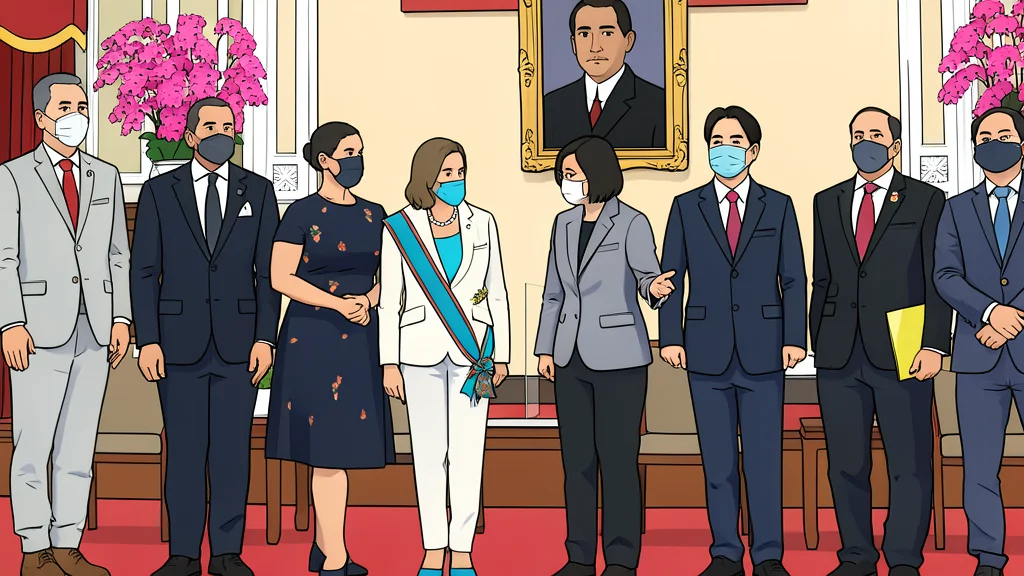
Foreign Policy argues that the United States should replace vague diplomatic posturing with clear rules to stabilize the Taiwan Strait.
Key points
- Foreign Policy argues that US strategic ambiguity on Taiwan has led to decades of diplomatic miscommunication and regional instability.
- The article contends that acknowledging the ambiguity of Taiwan's legal status is necessary to prevent catastrophic conflict in the Taiwan Strait.
- Washington is urged to adopt clear policies that prioritize the maintenance of the status quo and deter unilateral force.
The legal standing of Taiwan remains a source of persistent tension in international relations, with Beijing and Taipei holding mutually exclusive and rigid views on sovereignty. According to Foreign Policy, this fundamental ambiguity has been masked for decades by a global effort to accommodate both maximalist positions simultaneously, resulting in a diplomatic landscape defined by miscommunication and uncertainty.
The United States has historically attempted to navigate this complexity through a policy of strategic ambiguity, a stance rooted in the 1972 acknowledgment of Beijing’s position without fully endorsing it. However, the article suggests that this approach has become increasingly tangled and self-contradictory, leaving both the US and its counterparts to fill in the gaps with their own interpretations and worst-case scenario planning.
Diplomatic opacity creates regional risk
The current US posture is described as particularly opaque, with Congress and various administrations struggling to distinguish between the American one-China policy and Beijing’s one-China principle. Recent actions, including public statements by President Donald Trump following his May visit to China, have further muddied the water by casting doubt on long-standing commitments, thereby exacerbating the volatility in the region.
Call for clear strategic clarity
Foreign Policy argues that the United States should make a clean break from this ambiguity by openly embracing the reality that Taiwan’s status is, in fact, ambiguous. The article posits that acknowledging this uncertainty is not a concession but a practical necessity that has historically allowed all involved parties to maintain peaceful relations while serving the interests of their respective populations.
The primary recommendation is that the US should prioritize averting war by recognizing that the only viable resolution to the sovereignty dispute is a peaceful and voluntary agreement between Taipei and Beijing. Any unilateral attempt to resolve the issue through force or coercion is viewed as a path to catastrophic global conflict, making the maintenance of the status quo the most prudent option until such an agreement can be reached.
Avoiding catastrophic unilateral action
The analysis highlights that neither side can unilaterally impose its will without severe consequences; a successful invasion by China would devastate its economy, while a declaration of independence by Taiwan would likely trigger a devastating military response. Consequently, the US is urged to leverage its unique position to remove volatility from the Taiwan Strait by establishing clear, consistent, and unambiguous rules of engagement that deter aggression while preserving the peace.