Carney Frames EU Associate Membership as Shared Values Defense
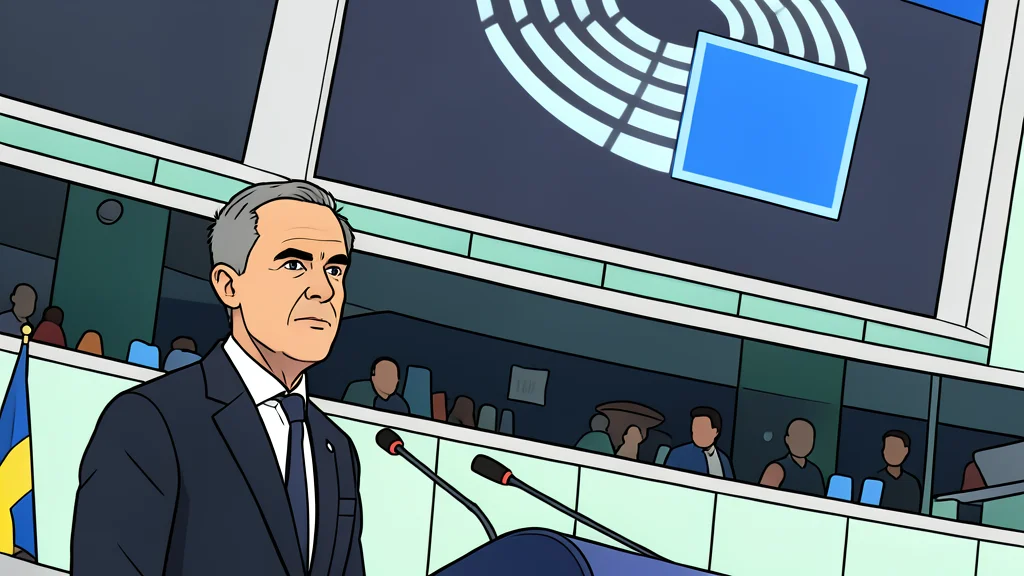
Prime Minister Mark Carney addressed the European Parliament, positioning Canada's potential associate membership as a reaffirmation of shared democratic values rather than a geopolitical confrontation.
Canadian Prime Minister Mark Carney delivered an address to the European Parliament in Strasbourg on Thursday, responding to the union’s recent offer for Canada to join as an associate member. According to the transcript provided by GN auto geopolitics/europe: European politics, Carney framed the move not as a strategic pivot against Washington, but as a continuation of a long-standing partnership rooted in common historical and cultural foundations. The speech was delivered amid heightened tensions, following U.S. President Donald Trump’s criticism of the proposal as a potentially hostile act.
Carney emphasized that accepting associate membership would enhance rather than compromise Canadian sovereignty. He explicitly refuted claims that Canada seeks to form a rival bloc to the United States, stating instead that the relationship is based on mutual respect and shared ideals. The Prime Minister argued that the current geopolitical landscape requires a new dimension in how transatlantic allies cooperate, one that is grounded in the daily defense of freedom and the rule of law.
Historical ties anchor political dialogue
To contextualize the political implications, Carney invoked the symbolism of the Goethe oak in Germany, a tree that survived the dark periods of the 20th century and stands as a monument to European cultural ideals. He drew a parallel to the Vimy Ridge oaks, which were planted in Canada by a soldier after World War I and later returned to France. This narrative underscores a view of the Canada-EU relationship as a cycle of renewal and shared heritage, rather than a transactional arrangement defined solely by trade agreements.
The Prime Minister described these bonds as deeply rooted in the lands and values of both sides, suggesting that the partnership transcends immediate economic interests. By referencing the historical continuity of these symbols, Carney aimed to ground the contemporary political debate in a longer tradition of cooperation and mutual support. This approach seeks to distinguish the proposed associate membership from zero-sum geopolitical maneuvers, highlighting instead a commitment to a just society and shared prosperity.
Defensive posture against perceived hostility
Carney’s remarks were a direct response to the sharp criticism from the White House, which characterized the EU-Canada move as a hostile act. According to reports, the Prime Minister stated that Canada is not seeking to create a great-power rival to the United States. Instead, he positioned the associate membership as a way to strengthen the rules-based international order, which he argued is essential for maintaining stability in a fragmented geopolitical environment. The speech served as a diplomatic rebuttal to accusations of disloyalty or strategic betrayal.
By framing the issue around the defense of human dignity and democracy, Carney shifted the focus from economic competition to ideological alignment. He suggested that the current rupture in global relations requires allies to stand firm on their core principles. This rhetorical strategy aims to isolate the U.S. criticism as a deviation from shared values, while reinforcing the legitimacy of the EU-Canada partnership in the eyes of European legislators and the public.
Sovereignty and shared security priorities
A central theme of the address was the preservation of national sovereignty within the framework of multilateral cooperation. Carney assured the Parliament that joining as an associate member would not dilute Canada’s autonomous decision-making capacity. He argued that the strength of the partnership lies in its voluntary nature and its commitment to the rule of law. This stance is designed to address concerns among European skeptics who may view deeper integration as a threat to national interests.
The Prime Minister also highlighted the importance of shared stewardship of the natural heritage and the belief that prosperity grows when it is shared. This broader vision of partnership extends beyond traditional security and trade issues, encompassing environmental cooperation and social values. By presenting the relationship as a holistic alliance, Carney seeks to build a durable foundation for future collaboration that can withstand political fluctuations and external pressures.