Finland Joins French Nuclear Deterrence Framework
Helsinki’s decision to participate in Paris’s Forward Deterrence initiative marks a significant shift in European security architecture, placing nuclear-capable assets closer to Russia’s western flank.
Finland has formally aligned itself with France’s expanding Forward Deterrence initiative, a move that integrates the Nordic country into a broader European nuclear framework. According to the GN geopolitics/nato desk, this development was announced following high-level discussions between French President Emmanuel Macron and Finnish President Alexander Stubb in September.
The decision follows France’s earlier announcement of a new approach to nuclear deterrence, which seeks to provide a European dimension to its independent arsenal without transferring control to partners. For Helsinki, this represents a continuation of the strategic pivot that began with its NATO accession in 2023, fundamentally altering its long-held posture of military non-alignment.
Strategic implications for Russian planners
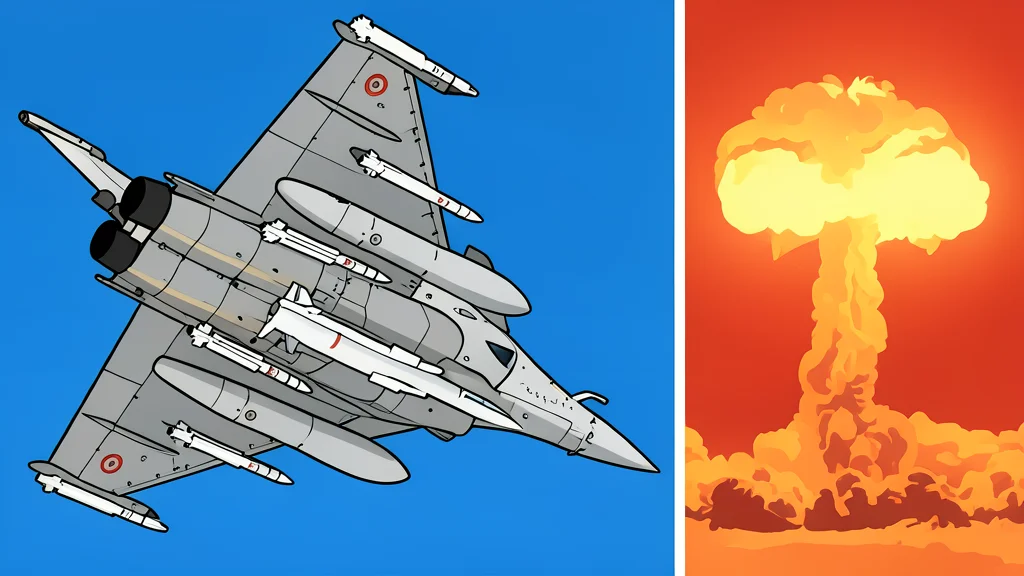
For Moscow, the geographic consequences of this arrangement may outweigh the immediate quantitative increase in weapons. French nuclear-capable aircraft operating from Finnish bases would introduce a Western European delivery system much closer to Russian territory than its traditional operating locations. This creates a new axis of threat that Russian military planners must now account for in their strategic calculations.
France is uniquely positioned for this role due to its independent nuclear arsenal and the combination of sea- and air-based forces. Although its fighter fleet may not represent the latest generation, it is equipped with long-range missiles that allow engagement of targets without exposing the aircraft to significant risk, a capability that adds a distinct layer to the deterrence equation.
Potential for expanded nuclear sharing
Finland has long been viewed as a prime candidate for a nuclear sharing agreement with the United States, particularly after procuring F-35A fighters in 2021. In 2025, U.S. officials indicated readiness to consider new agreements with additional NATO members, with Finland and Poland cited as leading candidates. In June, the Finnish government lifted a decades-long ban on hosting nuclear weapons, opening the door for both French and American forces to be present.
While France’s arsenal is not currently compatible with the F-35 and may be insufficient for large-scale sharing, a potential agreement with Washington could carry greater operational weight. This dual-track possibility suggests that Finland may eventually host nuclear capabilities from multiple NATO powers, further complicating the strategic balance in the region.
Evolving posture on the western border
The integration of Finland into these frameworks marks a profound transformation in its defense policy. Having shared a border of over 1,300 kilometers with Russia, the country now occupies a central position in NATO’s eastern flank. The move signals a shift from territorial defense to active participation in collective strategic deterrence, placing nuclear considerations at the heart of regional security.
As Europe reconfigures its military posture, the next steps will likely involve detailed technical discussions on compatibility, logistics, and command structures. Observers will watch closely for any announcements regarding specific U.S. agreements, which could cement Finland’s role as a key node in NATO’s nuclear infrastructure.