Germany's Political Landscape Shifts After AfD Electoral Gains
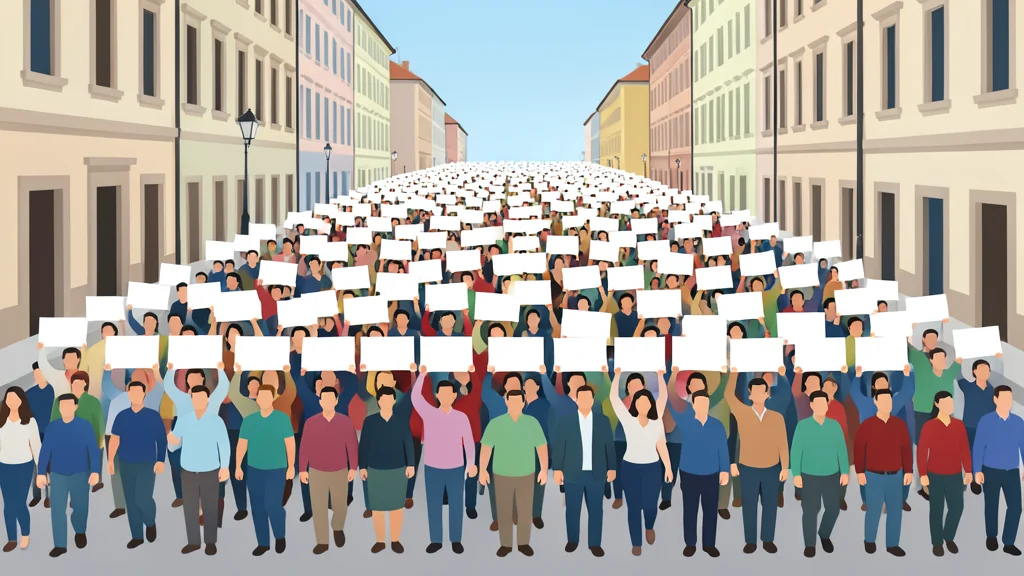
Large-scale demonstrations across German cities reflect growing societal tension following the Alternative for Germany's recent electoral success in Saxony-Anhalt.
Approximately 150,000 people gathered in streets across twenty German cities on Saturday to voice opposition to the Alternative for Germany, commonly known as the AfD. According to organizers, this coordinated movement was triggered by the party’s significant victory in last week’s state election in Saxony-Anhalt, where it secured nearly 44 percent of the vote. This result positions the AfD as the leading force in a region where it is now attempting to assemble a governing coalition, a move that would mark a historic shift in German politics.
The demonstrations, which took place in major hubs such as Berlin, Hamburg, and Munich, were largely driven by civic groups advocating for stricter measures against the party. Participants held placards with slogans calling for an immediate ban on the AfD, reflecting a broad segment of civil society that views the party’s rise as a threat to constitutional values. The scale of the protest underscores a deepening anxiety among citizens who feel a particular responsibility to safeguard democratic institutions against extremist influence.
Historical context shapes current political tensions
The emotional intensity of the protests is rooted in Germany’s historical experience with fascism, which many observers believe imposes a unique duty on current political actors to prevent the rise of similar movements. According to Christoph Bautz, head of the campaign group Campact, which helped coordinate the events, the mobilization represents a unified effort to block the AfD from gaining state power in Saxony-Anhalt. This perspective suggests that the current political crisis is not merely a partisan dispute but a fundamental challenge to the post-war democratic consensus.
While calls for a formal ban on the AfD have grown louder, legal and political obstacles remain substantial. German law sets high thresholds for banning political parties, and Chancellor Friedrich Merz, representing the centre-right CDU, has expressed skepticism about pursuing this route. Instead, the focus remains on whether the AfD can successfully form a government in Saxony-Anhalt, a scenario that has not occurred for an extreme-right party since the end of World War II.
Competing narratives emerge in capital city
In Berlin, the political divide was visibly stark as police reported several thousand protesters participating in anti-AfD demonstrations. Simultaneously, the AfD organized its own counter-rally in the capital, attended by Kristin Brinker, the party’s lead candidate for the upcoming regional elections. This juxtaposition of parallel events highlights the polarized nature of public discourse, with each side asserting its legitimacy and rallying supporters around opposing visions for the country’s future.
As the AfD seeks to bridge the three-seat gap to an absolute majority in Saxony-Anhalt, it is engaging in coalition talks with other groups and independent members of parliament. The outcome of these negotiations will be closely watched by European leaders, as the success or failure of this government formation could have broader implications for the political stability of the continent.
Future coalition efforts determine political trajectory
The immediate focus now turns to the next weekend’s elections in Berlin, where the AfD aims to consolidate its gains. According to France 24, the situation remains fluid, with the party’s ability to form a stable government in Saxony-Anhalt serving as a critical test of its broader political strategy. Observers note that the party’s anti-immigration stance and friendly posture toward Russia continue to complicate its relationship with mainstream political parties and international partners.
What to watch next is whether the AfD can secure enough support to form a government in Saxony-Anhalt, a development that would represent a significant milestone in German post-war history. The coming weeks will reveal if the party can maintain its momentum in other regional elections and whether the federal government will take further steps to address the rising political polarization. The resolution of these issues will likely define the direction of German politics for years to come.