NATO Chief Assesses Russian Calculations on Collective Defense Triggers
NATO Secretary General Mark Rutte asserts that Moscow understands the conditions for activating the alliance's mutual defense clause, even as the West maintains deliberate ambiguity about those specific thresholds.
Mark Rutte, the Secretary General of NATO, has stated that Russian President Vladimir Putin possesses a clear understanding of what actions would trigger Article 5 of the alliance's treaty. This assertion comes amid growing concerns over a series of hybrid attacks attributed to Moscow across European infrastructure. According to Rutte, the ambiguity surrounding the specific red lines is intentional and will remain so, serving as a strategic deterrent rather than a point of public negotiation.
In an interview with the Press Agency, Rutte emphasized that while the exact triggers for collective defense are not disclosed, the Kremlin is well-aware of the potential consequences of crossing such boundaries. He noted that the alliance possesses a comprehensive range of response options for incidents that fall below the Article 5 threshold, many of which may remain undisclosed to preserve their effectiveness.
Strategic Ambiguity in Defense Posture
The NATO chief explained that the alliance's response to Russian hybrid operations, such as sabotage campaigns and attempts to disrupt critical infrastructure, is designed to be multifaceted. He indicated that these responses would not always be symmetric or publicly announced. This approach allows for asymmetric measures, such as targeting the shadow fleet used for sanctioned oil transport or enhancing maritime security operations in the Baltic region, to counteract threats without necessarily escalating to full-scale military confrontation.
Rutte described these recent hybrid attacks as indicative of Russian desperation, particularly as Ukrainian forces have increased their ability to strike deep into Russian territory. By keeping the precise criteria for Article 5 activation secret, the alliance aims to maintain strategic uncertainty, ensuring that Moscow must account for the full weight of a collective response in its decision-making processes.
Concerns Over Two-Theatre Conflict
Beyond the immediate Euro-Atlantic security environment, Rutte warned of the potential for a broader geopolitical conflict involving multiple theaters. He suggested that if China were to launch military action against Taiwan, it could compel Russia to increase its aggression toward Europe. This scenario, which he termed a two-theatre situation, would place simultaneous pressure on the alliance from both the Indo-Pacific and the European front.
This perspective aligns with broader strategic assessments within NATO that link regional stability in Asia to security in Europe. The Secretary General argued that European nations must consequently enhance their own defensive capabilities to share the burden of deterrence. He emphasized that a strong US presence in the Indo-Pacific is essential for managing this complex interplay of global threats.
European Defense Autonomy and US Presence
Amidst reports that the United States may be reviewing its military footprint in Europe, Rutte stated that he was not concerned about potential reductions in American forces. He argued that the strategic logic remains consistent: the US needs to be robust in the Indo-Pacific to counter Chinese expansion, which in turn requires Europe to step up its own defense contributions. This shift underscores the ongoing debate within the alliance regarding the division of labor and the level of European self-sufficiency required in a changing geopolitical landscape.
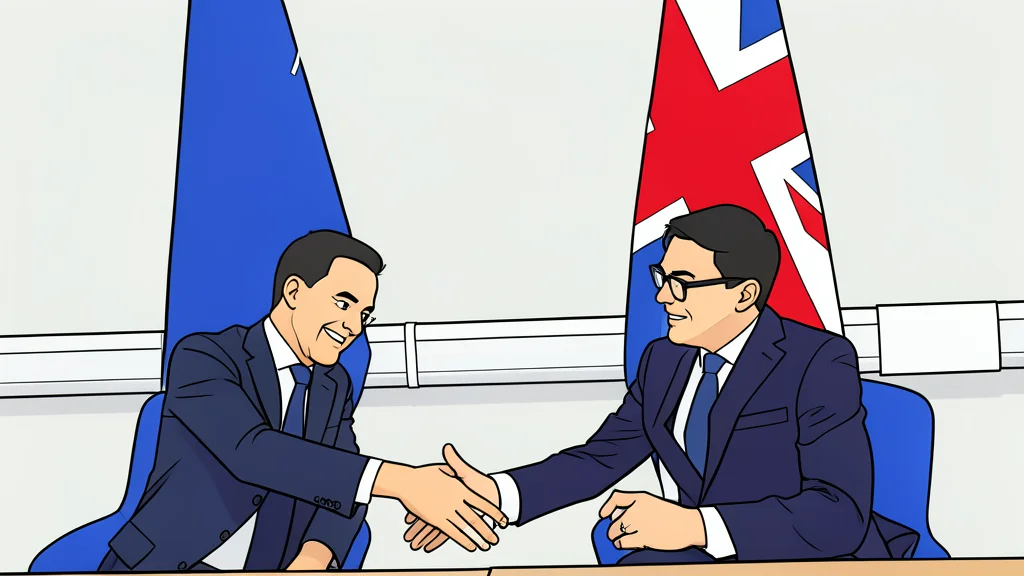
According to reporting by GN geopolitics/nato, Rutte’s remarks were made during a visit to the United Kingdom, where he met with senior British government officials. The discussion highlights the current focus of NATO leadership on balancing immediate hybrid threats with long-term strategic preparedness for potential multi-front conflicts. The alliance continues to emphasize that its deterrence posture is flexible, robust, and designed to adapt to evolving security challenges without provoking unnecessary escalation.