Scotland Police Face Scrutiny over Protest Arrests
Police Scotland is under pressure to clarify its stance on arrests made during pro-Palestine demonstrations, with critics highlighting a divergence from guidance issued to forces in England and Wales regarding the legality of specific slogans.
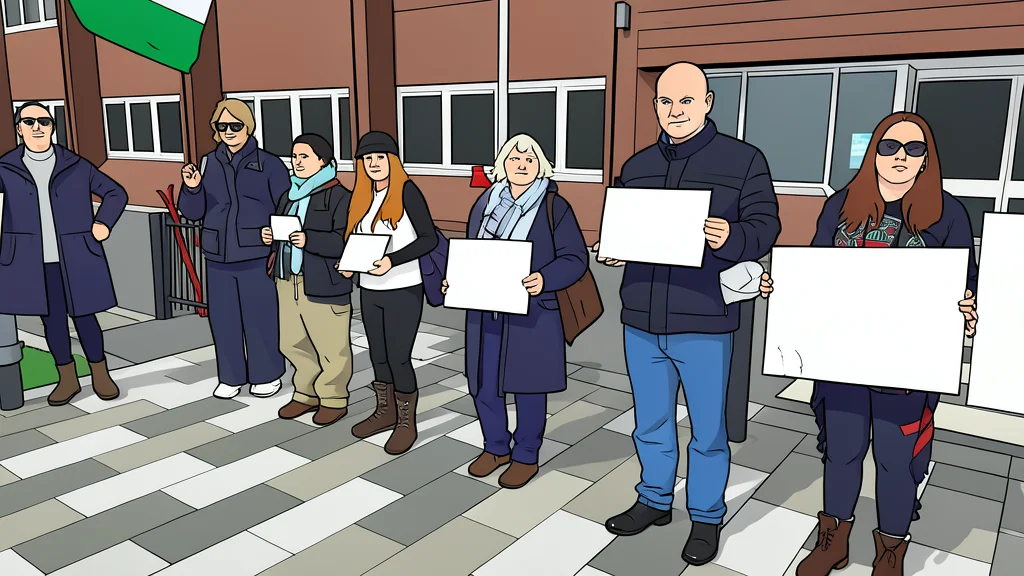
Police Scotland has come under intense scrutiny following the arrest of more than a dozen individuals for displaying a slogan supporting Palestinian rights. The phrase in question, 'Genocide in Palestine, Time to Take Action,' has sparked debate over whether it constitutes support for a proscribed group or remains a lawful form of political expression. While authorities in England and Wales have advised officers against making arrests based solely on this specific wording, Scottish police have proceeded with charges, citing national security concerns. This discrepancy has drawn sharp criticism from political figures and legal observers who argue that the approach north of the border appears inconsistent with established counter-terrorism guidance elsewhere in the UK.
According to reports from The National Scot, the force declined to confirm whether it had received specific advice regarding the slogan, invoking public interest exemptions related to law enforcement and national security. One of those facing trial, Andrew Thomson, submitted a Freedom of Information request seeking clarity on the internal guidance provided to officers. Police Scotland acknowledged that advice from the Crown Prosecution Service was sent to Counter Terrorism Policing Scotland in August 2025 but stated that it was not circulated to the wider organization. The force further indicated that disclosing whether the slogan was explicitly mentioned in internal documents could prejudice ongoing investigations and assist hostile actors, a claim that critics describe as an overreach that undermines transparency.
Divergence in Regional Counter-Terrorism Approaches
The core of the controversy lies in the differing interpretations of the Terrorism Act across the UK. In England and Wales, guidance last year advised that displaying the specific phrase should not be grounds for arrest, distinguishing between peaceful protest and support for violent extremism. However, Police Scotland’s decision to charge individuals under counter-terrorism laws suggests a stricter interpretation of the proscription of Palestine Action. Maggie Chapman, the justice spokesperson for the Scottish Greens, argued that this approach is authoritarian, particularly given that the UK government continues to support Israel. She emphasized that the distinction between carrying a banner and engaging in violent activity is crucial and that Police Scotland must clarify how they are interpreting the law.
The legal landscape remains fluid, with the proscription of Palestine Action currently under appeal at the Supreme Court. Until this appeal is resolved, the definition of what constitutes support for the group remains a point of contention. Legal experts suggest that the lack of uniformity in how different police forces handle similar slogans creates uncertainty for both protesters and law enforcement. The situation highlights broader tensions in the UK regarding the balance between national security and the right to peaceful assembly, especially in the context of ongoing geopolitical conflicts in the Middle East.
Political Pressure Demands Institutional Clarity
Political figures have called for Police Scotland to 'come clean' regarding the internal guidance provided to its officers. The argument is that a clear statement on whether the slogan is considered lawful would resolve much of the public confusion. Chapman stated that it should be a simple matter for the force to confirm its position, noting that a counter-terrorism tactics guide specifically stated that the slogan should not be grounds for arrest. The delay in providing this clarity has fueled accusations that the force is using national security as a blanket justification to avoid accountability for its handling of peaceful protests.
The broader implications extend beyond this specific case, touching on the principles of proportionality and due process. If the guidance provided to officers in Scotland differs significantly from that in England and Wales, it raises questions about the consistency of the rule of law across the United Kingdom. The public expects a uniform application of the law, particularly in matters involving fundamental rights. As the Supreme Court hears the appeal against the proscription of Palestine Action, the outcome could have significant ramifications for how similar cases are handled in the future, potentially setting a precedent for the treatment of political slogans in counter-terrorism contexts.
Looking Ahead to Supreme Court Ruling
The upcoming Supreme Court hearing regarding the proscription of Palestine Action is likely to be the next major development in this saga. The ruling will determine the legal status of the group and, by extension, the legality of supporting it. Until then, the arrests of individuals for displaying the slogan will likely remain a contentious issue. Watch for further legal challenges from those charged, as well as any additional disclosures from Police Scotland regarding their internal protocols. The resolution of this case will be a key indicator of how the UK balances counter-terrorism measures with the protection of free expression in politically charged environments.