Sweden’s Election Tests Political Alliances and Policy Priorities
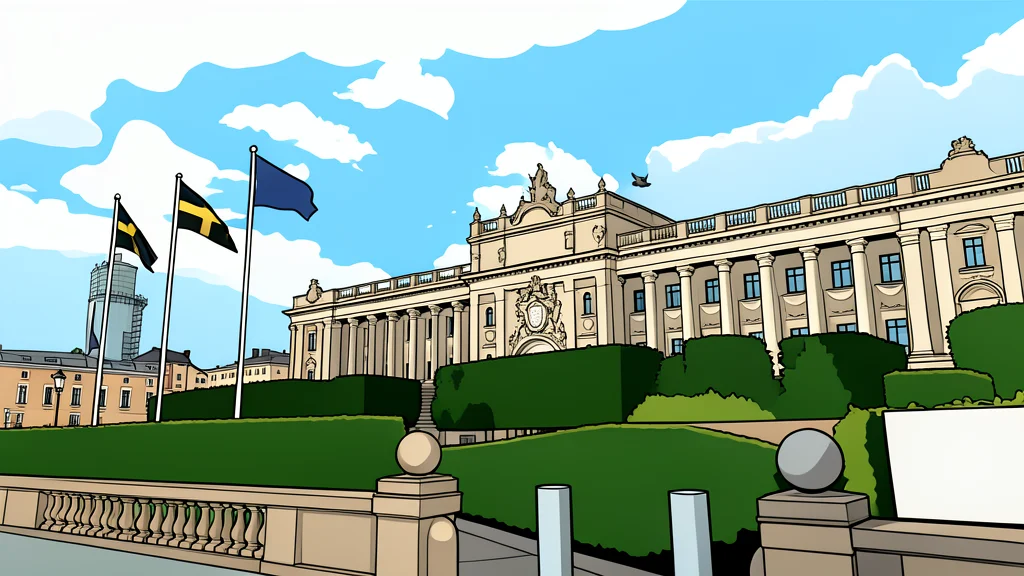
Swedish voters face a pivotal choice as the race tightens, with the potential for a historic shift in government composition and deep divisions within the opposition bloc.
Swedish voters are preparing for a closely contested parliamentary election that will determine whether Prime Minister Ulf Kristersson’s right-wing bloc can secure a second term. According to recent polling, the opposition holds a slight lead, but the margin has narrowed significantly in the final weeks of the campaign. The outcome could fundamentally reshape the country’s political landscape, particularly if the far-right Sweden Democrats (SD) manage to enter the cabinet for the first time in the nation’s history.
The election pits two broad political groupings against each other in a struggle for the 349 seats in the Riksdag. Kristersson leads a minority government supported by the Sweden Democrats, an arrangement that has allowed the far-right party to exert significant policy influence without holding cabinet posts. On the opposing side, former Prime Minister Magdalena Andersson seeks to return to power with a coalition of center-left and green parties, though internal disagreements threaten to complicate their path to government.
Mechanics of Proportional Representation
Sweden utilizes a proportional representation system where 310 seats are distributed across 29 constituencies, while 39 adjustment seats ensure the nationwide result reflects the national vote share accurately. A party generally requires at least four percent of the national vote to enter parliament, a threshold that has historically excluded smaller fringe groups. Voters do not directly elect the prime minister; instead, the speaker of the Riksdag nominates a candidate who is approved unless a majority of lawmakers votes against the proposal.
Coalition Dynamics and Party Divisions
The current governing arrangement, known as the Tido Agreement, allows the Sweden Democrats to support the government in parliament in exchange for policy concessions. This year, the Liberal party dropped its previous opposition to SD joining the cabinet, opening the door for a formal four-party government if the bloc wins. In contrast, the opposition faces a complex negotiation process, as the Centre Party has ruled out a government including the Left Party, creating what Swedish media has described as an impossible equation for the center-left alliance.
Key Issues in Final Campaign
According to GN geopolitics/politics (en-US), healthcare has emerged as the top concern for voters, with recent surveys indicating that a majority of respondents view it as the most critical political issue. The Moderates propose shortening healthcare waiting-time guarantees, while the Social Democrats pledge increased funding to match inflation. Migration and integration remain sharp dividing lines, with the Sweden Democrats calling for further restrictions, while several opposition parties favor easing recent measures. Climate policy also divides the parties, particularly over the pace and cost of the green transition relative to European Union targets.
As the final days of the campaign conclude, the focus shifts to how these competing visions for Sweden’s future will be translated into a stable government. The ability of the opposition to unify its four constituent parties will be a crucial determinant of the next four years of policy direction.