Ukraine's Push to Close the Ballistic Missile Gap
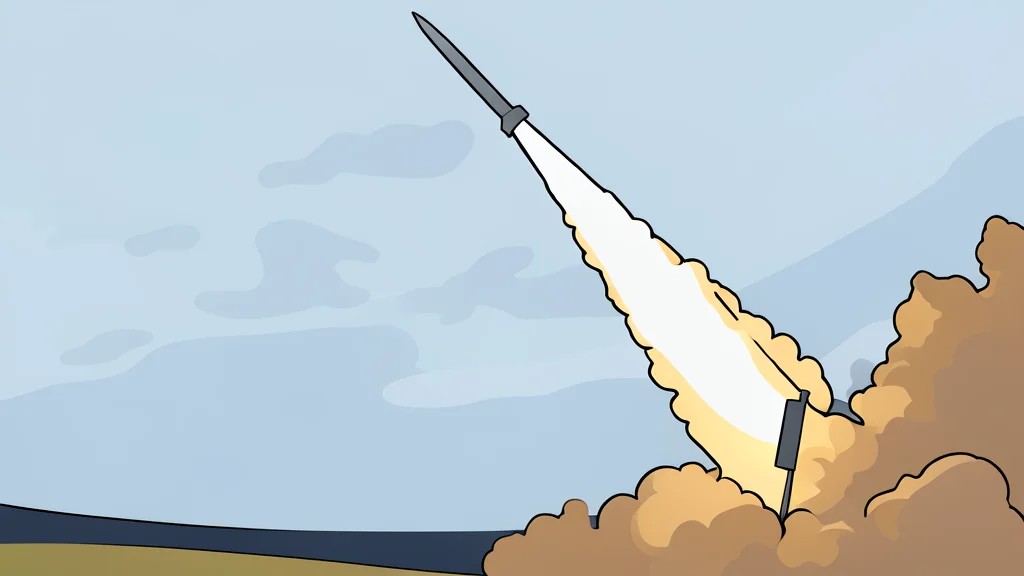
Kyiv is accelerating domestic production of short-range ballistic missiles to counter Russia's sustained long-range attacks, a shift that analysts say could alter the strategic balance.
Ukraine is moving to narrow a significant strategic deficit in ballistic missile capabilities, with two new domestic systems scheduled to enter service within weeks or months. While Kyiv has established a global lead in drone technology, it has historically lagged behind Russia in producing the high-speed munitions that have defined the long-range assault on Ukrainian cities.
The urgency of this shift is underscored by the disparity in production rates and stockpiles. According to President Volodymyr Zelensky, Russia currently manufactures approximately 120 ballistic missiles per month, a tempo that far outpaces the Western supply of interceptor missiles. This imbalance has left Ukrainian cities vulnerable to sustained barrages, particularly as winter approaches and air defense resources remain strained.
New Domestic Capabilities Emerge
Ukrainian defense firm Fire Point has announced that its FP-7 short-range ballistic missile is set to join frontline units shortly. Iryna Terekh, the company’s CEO, stated at a defense conference in Poland that the system is entering service within weeks. A longer-ranged variant, the FP-9, is currently undergoing flight tests. These developments mark a critical step toward reducing reliance on imported munitions and establishing a self-sustaining strike capability.
The strategic value of these weapons lies in their speed and trajectory. Ballistic missiles travel in high arcs at hypersonic speeds, making them difficult to intercept compared to slower cruise missiles. Fabian Hoffmann, a senior research fellow at the Norwegian Institute for Defence Studies, told the Kyiv Independent that these new systems could have a significant impact on the war's outcome if deployed in meaningful numbers. They would allow Ukraine to target time-sensitive assets, such as Russian missile launchers, with greater precision and speed.
Strategic Production Disparities
The gap between Ukrainian and Russian ballistic capabilities was stark at the start of the full-scale invasion in February 2022. According to the International Institute for Strategic Studies, Ukraine possessed around 500 Soviet-era Tochka missiles for approximately 90 launchers, with no capacity to produce more. These legacy systems were limited in range and accuracy. In contrast, Russia fielded 900 modern Iskander-M missiles alongside various aeroballistic and quasiballistic systems, providing a diverse and potent arsenal.
Russia has maintained this advantage by ramping up domestic production and sourcing munitions from North Korea. Ukrainian military intelligence assessed that by mid-2026, Russian stockpiles still held hundreds of Iskander and RM-48U missiles, along with significant numbers of Zircon and Kinzhal weapons. This sustained supply chain allows Moscow to conduct mass barrages while Ukraine struggles to match the volume of interceptor missiles produced by Western partners, such as Lockheed Martin.
Future Strategic Implications
The introduction of indigenous ballistic missiles represents a structural change in Ukraine's defense posture. By moving from a reliance on limited, legacy inventory to active domestic production, Kyiv aims to break the cycle of vulnerability that has characterized its air defense strategy. The next few months will be critical as the FP-7 enters service, offering a tangible test of whether Ukraine can effectively counter Russia's ballistic dominance.
Observers will watch closely for the operational tempo of these new systems and the extent to which they can be produced in bulk. The ability to strike Russian launchers and command centers with home-grown precision munitions could shift the initiative, potentially reducing the pressure on Ukrainian air defenses and altering the calculus of Russia's long-range attack strategy.