BRICS Summit Tests Bloc Unity Amid Global Conflicts
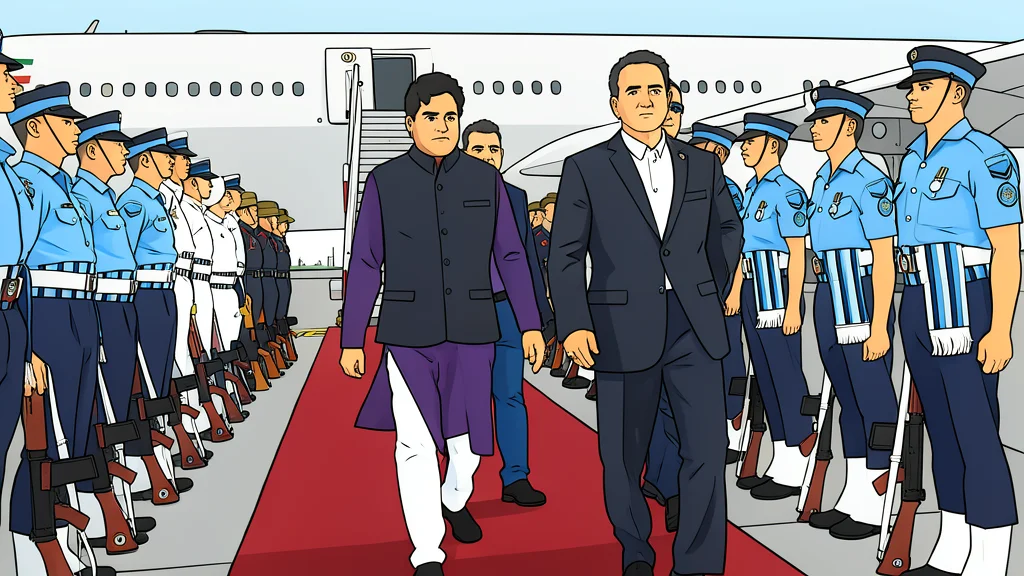
Leaders from the expanding BRICS bloc gather in New Delhi, navigating complex geopolitical rifts and economic ambitions.
Heads of state from the BRICS nations have convened in New Delhi for a summit that arrives at a critical juncture for the group. The gathering brings together leaders from Brazil, Russia, India, China, South Africa, and several recently added members, including Iran. According to The Independent, the primary focus of the agenda is on trade, investment, and the broader implications of ongoing global conflicts. The meeting serves as a platform for the bloc to assert a more prominent role in shaping the international agenda, particularly for emerging and developing economies.
The atmosphere surrounding the summit is charged with underlying tensions. The group is currently navigating a landscape defined by the war in Ukraine, the conflict in the Middle East, and rising friction between the United States and China. These external pressures test the internal cohesion of the bloc, whose members hold often competing geopolitical interests. As the largest grouping of major emerging economies, BRICS represents nearly half of the world’s population and a significant portion of global economic output, making its internal unity a matter of significant international interest.
Economic Decoupling and Institutional Reform
Central to the discussions is the push to reduce reliance on the U.S. dollar in international trade and payments. Members are reportedly advocating for the greater use of their own currencies in bilateral settlements. This economic strategy is paired with a broader call for reforms within global financial institutions, which many BRICS nations view as dominated by Western interests. The agenda also includes substantive dialogue on energy security, food security, technology transfer, and the resilience of global supply chains.
India’s Strategic Balancing Act
For India, the summit represents a delicate diplomatic exercise. New Delhi is hosting the meeting while maintaining a dual-track foreign policy that seeks to preserve longstanding strategic ties with Russia and Iran. Simultaneously, India is deepening economic, defense, and technological partnerships with the United States and Europe. Prime Minister Narendra Modi met with President Vladimir Putin and Iranian President Masoud Pezeshkian separately prior to the full session. This balancing act allows India to position itself as a neutral mediator while safeguarding its national interests amidst polarizing global conflicts.
Challenges to Collective Consensus
The ability of the bloc to present a unified front remains a key challenge. Recent months have highlighted divisions within the group, particularly regarding the war in the Middle East. According to reports, BRICS foreign ministers were unable to agree on a joint statement in May, forcing the chair to issue a summary instead of a formal declaration. With Iran directly involved in the ongoing regional conflict, the pressure on other members to align with a specific stance has intensified. The success of the New Delhi summit will largely be measured by whether the leaders can overcome these divergences to produce a cohesive joint statement.