Escalating Tariffs Strain North American Auto Supply Chains
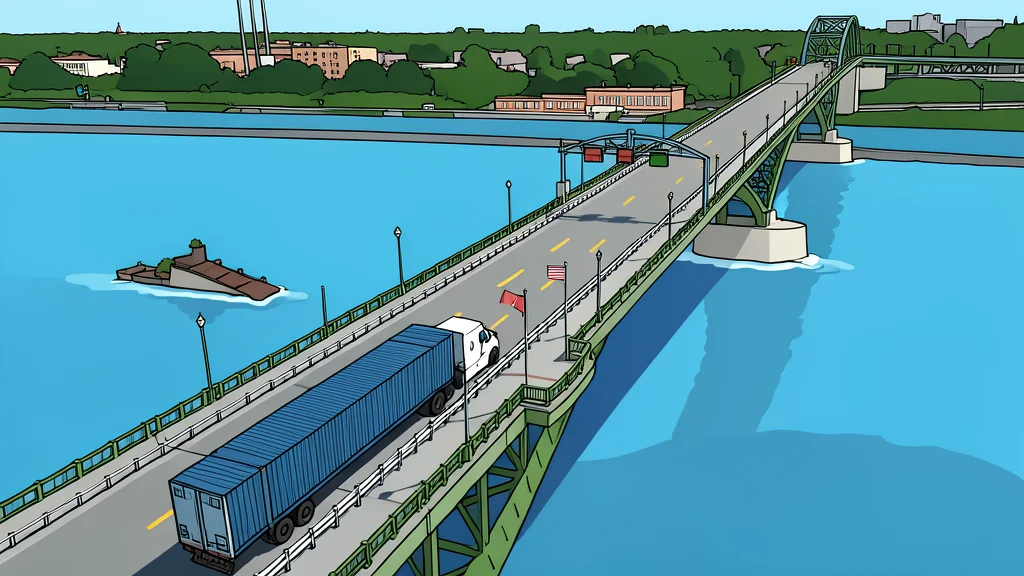
The recent trade dispute between the United States and Canada is introducing significant uncertainty for manufacturers who rely on a decades-old system of cross-border component assembly.
The auto-parts industry in North America is facing a period of heightened volatility as the trade relationship between the United States and Canada undergoes rapid restructuring. According to NPR World, the failure to reach a new bilateral agreement this summer has led to a swift escalation in tariff measures. In August, new duties were applied to aluminum and steel imports, while further threats of significant levies on vehicles and parts have been issued for implementation in the coming year. Canada has responded by imposing its own retaliatory tariffs on American goods, creating a complex web of financial penalties for companies operating across the border.
This situation poses a particular challenge for smaller suppliers that provide specialized components to major automotive manufacturers. While large firms may have the resources to absorb short-term costs or adjust long-term strategies, smaller businesses are more vulnerable to the financial strain. Industry consultants describe the current environment as damaging to planning capabilities, noting that these new tariffs arrive on top of years of disruption caused by pandemic-related shortages and the transition to electric vehicle production. The cumulative effect is described as a stack of compounding difficulties that make operational forecasting increasingly difficult for firms with limited margins.
Decades of integrated manufacturing
The current friction disrupts a supply chain model that has been refined over several decades. The integration of U.S. and Canadian auto industries began in 1965 with a pact aimed at consolidating the market and removing duties on products with sufficient regional content. This framework was later expanded to include Mexico through the North American Free Trade Agreement and subsequently revised by the United States-Mexico-Canada Agreement. These treaties established rules requiring a high percentage of North American content to allow goods to cross borders without penalty, fostering a deeply interconnected ecosystem.
Executives in the sector often describe the production process as a single, multi-stage workflow. A metal casting, for example, might begin in one country, undergo processing in another, and return to the first for final assembly. This cross-border movement is standard practice for many components, from steering wheel rods to complex sub-assemblies. Companies like Linamar Corporation, which operate facilities in the U.S., Canada, and Mexico, illustrate how difficult it is to reroute such intricate production lines in response to sudden policy changes. The specialized nature of each plant’s output means that altering supply chains is not a simple logistical adjustment but a major structural overhaul.
Strategic uncertainty for manufacturers
As the trade landscape shifts, manufacturers are forced to weigh the cost of absorbing new tariffs against the expense of restructuring their operations. Analysts suggest that the uncertainty is itself a significant hurdle, as companies hesitate to make long-term capital investments without a clear understanding of future trade rules. The prospect of higher duties on steel and aluminum, critical inputs for vehicle production, adds a layer of financial risk that complicates pricing strategies and inventory management. For many firms, the inability to predict the final regulatory environment is more disruptive than the tariffs themselves.
The forward-looking question for the industry is whether these trade barriers will lead to a permanent decoupling of North American supply chains or if diplomatic resolutions will restore the previous flow of goods. Watch for further announcements regarding the implementation dates of threatened tariffs and any subsequent negotiations between U.S. and Canadian trade officials. The decisions made in the coming months will likely determine whether the integrated model of the last fifty years can be preserved or if the industry must fragment into separate national markets.