Canada Invites UK to Join New EU Economic Alliance
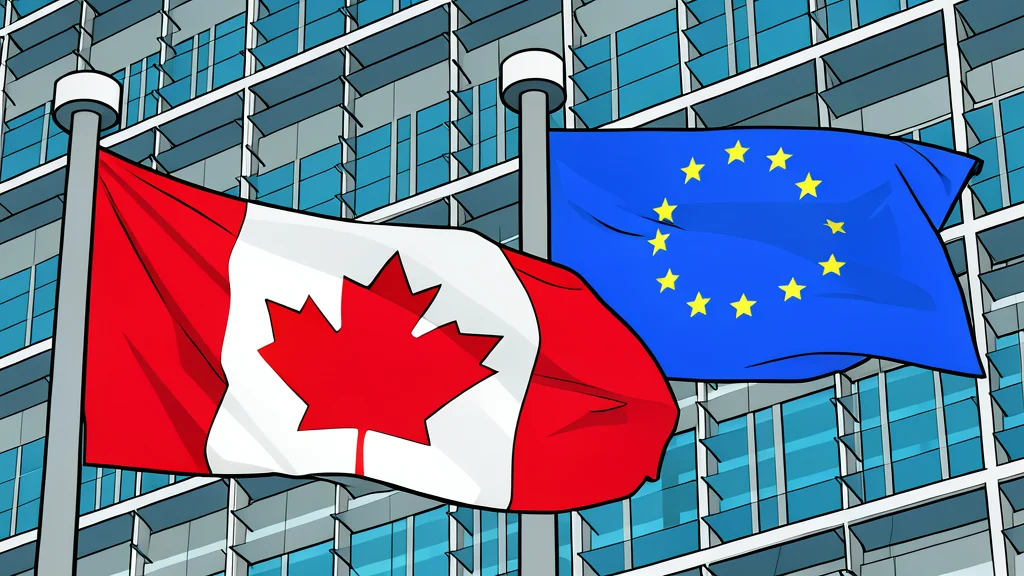
Ottawa proposes London join a new economic bloc with Brussels, citing shared values and shifting global dynamics.
Key points
- Canada invites the UK to join a new economic alliance with the EU, citing shared values.
- The proposal follows US-Canada trade tensions and US threats against EU-Canada ties.
- The alliance aims to include access to EU research, defense, and critical mineral supply chains.
Canada has formally invited the United Kingdom to participate in a new economic alliance being negotiated with the European Union. Finance Minister François-Philippe Champagne made the proposal during a recent interview with the BBC, emphasizing that while both nations remain sovereign, they are stronger when collaborating. The British government has not yet issued a public response to the invitation, leaving the status of the initiative in a state of diplomatic ambiguity.
The move follows earlier suggestions by European Commission President Ursula von der Leyen to offer Canada a new associate membership status. According to Champagne, Prime Minister Mark Carney’s recent trip to Strasbourg was aimed at building an alliance of the future, characterized by cooperation among middle powers. This approach seeks to move beyond traditional bilateral frameworks toward a broader network of like-minded nations focused on shared economic and security interests.
Strategic Shift Amid Trade Tensions
The proposal comes at a critical juncture in transatlantic relations. Canada and the United States have been engaged in a trade dispute since negotiations collapsed in August, leading to reciprocal tariff measures. Champagne stated that Ottawa’s response was measured and strategic, asserting that the conflict was not chosen by Canada but necessitated by the need to protect economic sovereignty. He described the current situation as a golden opportunity to diversify market access and reduce reliance on a single trading partner.
Washington has reacted negatively to the deepening ties between Brussels and Ottawa. According to reports, President Donald Trump has threatened further tariffs on the European Union if the associate membership plan is deemed hostile to U.S. interests. He has characterized the initiative as laughable and criticized Canada as a poor trading partner, highlighting the escalating friction that now defines economic relations across the North Atlantic.
Shared Values and Institutional Access
Champagne argued that Canada and the United Kingdom share fundamental values and a aligned vision of the global order, making them natural partners. He suggested that the changing world, particularly the shift in American policy, requires a new approach to partnership. The proposed alliance would include specific elements such as participation in European university and research schemes, mobility for young people, and Canadian supply of critical minerals and gas.
Both Ottawa and Brussels view this mechanism as a model that could serve other countries that may never become full EU members. Australia has been cited as a potential example of a nation that might benefit from such an associate status. This framework aims to enhance economic resilience and security through structured cooperation, offering a viable alternative to fragmented bilateral agreements.
UK Faces Post-Brexit Positioning Questions
The invitation places the United Kingdom in a delicate diplomatic position. Having renegotiated its own trade deal with the United States in June of last year, London must now weigh its post-Brexit stance toward Europe. Prime Minister Andy Burnham met with Carney in Liverpool last week, and Chancellor John Healey attended EU finance minister meetings in Dublin alongside Champagne. These interactions signal a growing alignment among leaders who are seeking to rebuild economic networks outside of traditional Atlanticist frameworks.
As Burnham prepares to meet President Trump at the UN General Assembly in New York, the outcome of these high-level discussions will be closely watched. The next steps in this diplomatic maneuvering will determine whether the proposed alliance gains traction or remains a rhetorical exercise. Observers from MercoPress note that the coming weeks will reveal whether these middle powers can forge a durable coalition in the face of rising protectionism.