Canadians Embrace EU Associate Membership Amid Trade Tensions
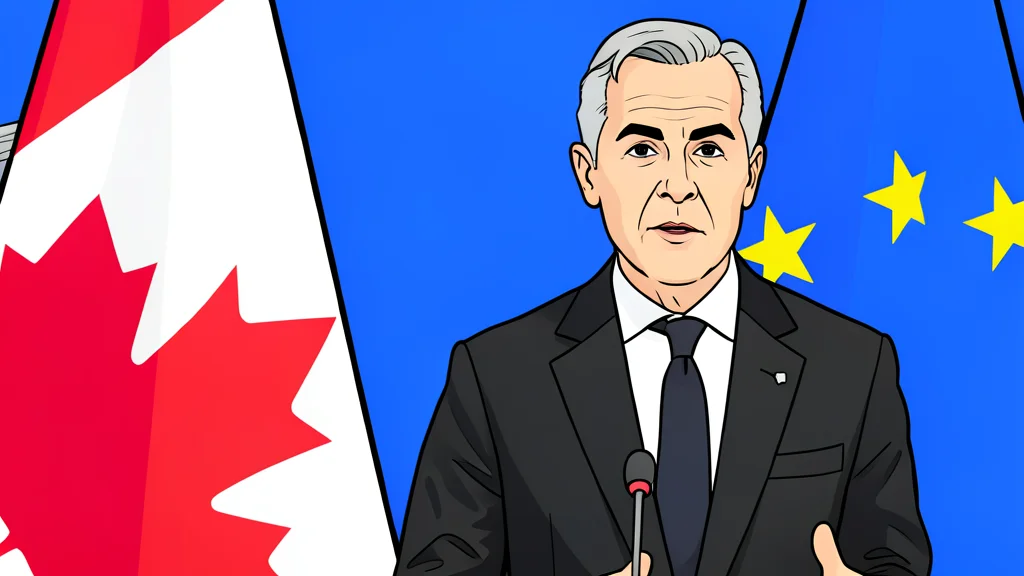
Amid escalating trade conflicts with Washington, Canadian public opinion has shifted sharply toward closer integration with Brussels, favoring a new framework for transatlantic cooperation.
Public sentiment in Canada has undergone a notable shift as the European Union moves to formalize a potential "associate membership" status for the country. This development emerges against the backdrop of a deteriorating trade relationship with the United States, where failed negotiations have led to the imposition of significant tariffs on Canadian goods. While Canada is not seeking full accession to the bloc, the prospect of a deepened institutional link with Europe has sparked widespread discussion and a sense of renewed transatlantic identity among citizens.
The initiative was brought to the forefront by European Commission President Ursula von der Leyen, who publicly outlined the possibility of such a partnership. In response, Prime Minister Mark Carney addressed the European Parliament in Strasbourg, welcoming the proposal as an opportunity to build an "alliance for the future." According to Carney, this partnership would span critical areas including critical minerals, defense, artificial intelligence, energy, and digital trade, aiming to create a robust framework for cooperation that extends beyond traditional economic ties.
Public support for European ties
Recent polling data indicates that this shift in policy direction aligns with a broad consensus among Canadians. A survey conducted by Abacus Data in early September found that a significant majority of respondents support closer integration with the EU while remaining outside the bloc. The data suggests that interest in facilitating transatlantic trade, travel, work, and study is high, with support for deeper cooperation on foreign policy and defense priorities rising sharply since the beginning of the year.
David Coletto, founder and CEO of Abacus Data, noted that this support is driven largely by a change in how Canadians view their relationship with the United States. According to Coletto, positive impressions of the EU have risen to 71 percent, whereas only 21 percent hold a favorable view of the US. He told Al Jazeera that many Canadians feel a sense of betrayal regarding the approach of the Trump administration to the bilateral relationship, which has accelerated the pivot toward European partners.
Washington reacts to new alliance
The proposed closer ties have drawn a sharp response from the White House. President Donald Trump has characterized the associate membership idea as laughable and warned of potential consequences for European economies. He stated that if he perceives the move as a hostile act, the United States may impose serious tariffs or halt trade with Europe on numerous items. This rhetoric underscores the high stakes involved in any realignment of trade partnerships across the Atlantic.
Despite the external pressure, officials in Ottawa and Brussels continue to explore the practical dimensions of the partnership. The focus remains on creating mechanisms that allow for smoother movement of people and goods, as well as coordinated strategies in emerging technology sectors. The dialogue suggests that both sides are looking to establish a durable framework that can withstand political volatility and provide stability for businesses and individuals on both sides of the ocean.
Future of transatlantic cooperation
As negotiations move forward, the specific legal and administrative details of the associate membership will be critical. The partnership aims to bridge the gap between full membership and standard trade agreements, offering a middle ground that allows for deep integration without the complexity of full political union. Observers will be watching closely to see how both sides navigate the technical challenges of aligning regulatory standards and how the relationship holds up against ongoing geopolitical pressures.