China Urges Europe to Avoid Trade Wars During Ministerial Call
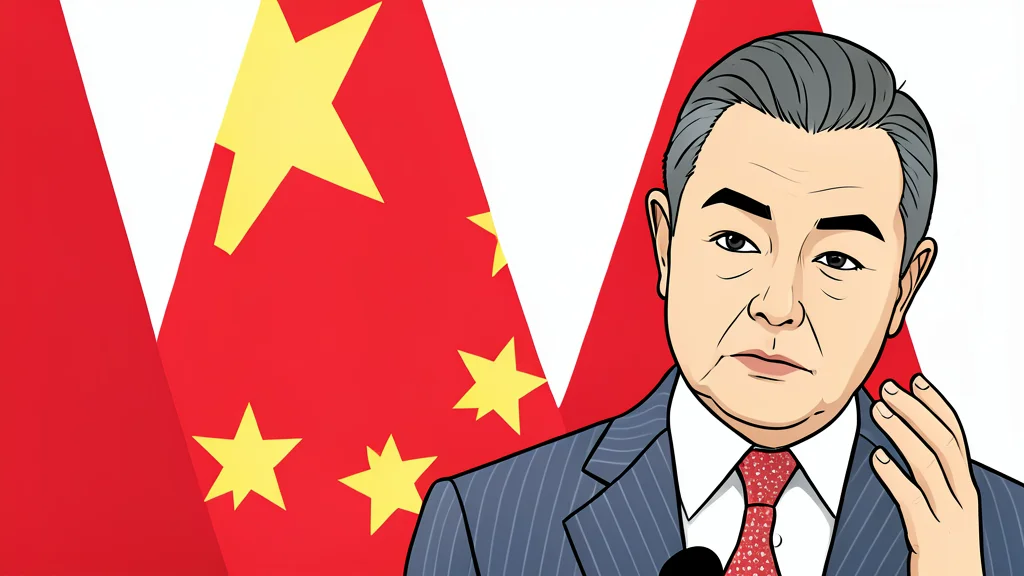
Chinese Foreign Minister Wang Yi told his German counterpart that dialogue is essential, warning against trade conflicts.
Key points
- Chinese Foreign Minister Wang Yi urged Germany to avoid trade wars and strengthen bilateral cooperation during a phone call.
- Germany expressed concerns over trade imbalances, citing industrial overcapacity and currency valuation as key issues.
- The ministers also discussed geopolitical topics, including the situations in Ukraine, Iran, and the Taiwan Strait.
Beijing has urged European counterparts to refrain from engaging in trade conflicts, emphasizing that such measures would be counterproductive for both sides. According to a statement released by the Chinese foreign ministry, Foreign Minister Wang Yi conveyed this message to German Foreign Minister Johann Wadephul during a recent telephone conversation. The remarks come amidst growing tensions over industrial overcapacity and currency valuation, which have become central to the debate on China-Europe economic relations.
The diplomatic exchange highlights a distinct divergence in approach between the two sides. While China frames the relationship as a partnership that benefits from cooperation, Germany has been a leading voice within the European Union expressing concern about unbalanced trade dynamics. The German foreign ministry noted that both ministers agreed on the importance of a stable global economy, though Berlin stressed that trade relations must be grounded in fair rules and a level playing field.
Divergent Views on Trade Fairness
Wang Yi described the strengthening of mutually beneficial bilateral cooperation as the correct path forward, arguing that it aligns with the interests of both parties. He specifically called for a rational and pragmatic approach from Germany, urging the EU to uphold free trade principles and reject protectionist tendencies. According to the ministry, the Chinese side has consistently advocated for moving toward solutions through dialogue rather than confrontation.
However, the German perspective places significant weight on the structural issues driving the trade imbalance. Berlin has cited industrial overcapacity and an undervalued currency as key concerns that need to be addressed. While acknowledging the shared interest in economic stability, German officials have emphasized that continued engagement requires adherence to international norms and equitable market conditions.
Broader Geopolitical Discussions Included
The conversation between the two ministers extended beyond economic issues to include broader geopolitical topics. According to the Chinese statement, the dialogue covered the situations in Iran and Ukraine, as well as the issue of the Taiwan Strait. Wang Yi expressed the hope that Germany would maintain a stance that promotes peace and stability in the region, creating the necessary conditions for continued high-level exchanges.
These remarks follow recent diplomatic activities that have heightened tensions in the region. Taiwan has increased its engagement with European nations in the past year, including visits by senior officials to the continent. Such actions have drawn sharp criticism from Beijing, which views these engagements as violations of its sovereignty claims and a source of friction in relations with European partners.
Future Diplomatic Engagements Remain Key
As both sides navigate these complex dynamics, the focus remains on whether dialogue can yield concrete results in reducing trade frictions. The upcoming months will likely see further interactions between Chinese and European officials, with the outcome of these discussions potentially shaping the trajectory of the trans-Pacific and trans-Atlantic economic landscape.
Observers will be watching closely for any shifts in policy or new initiatives aimed at addressing the underlying concerns of both parties. The ability of China and Europe to find common ground on trade rules and geopolitical stability will be a critical factor in determining the future of their strategic partnership.