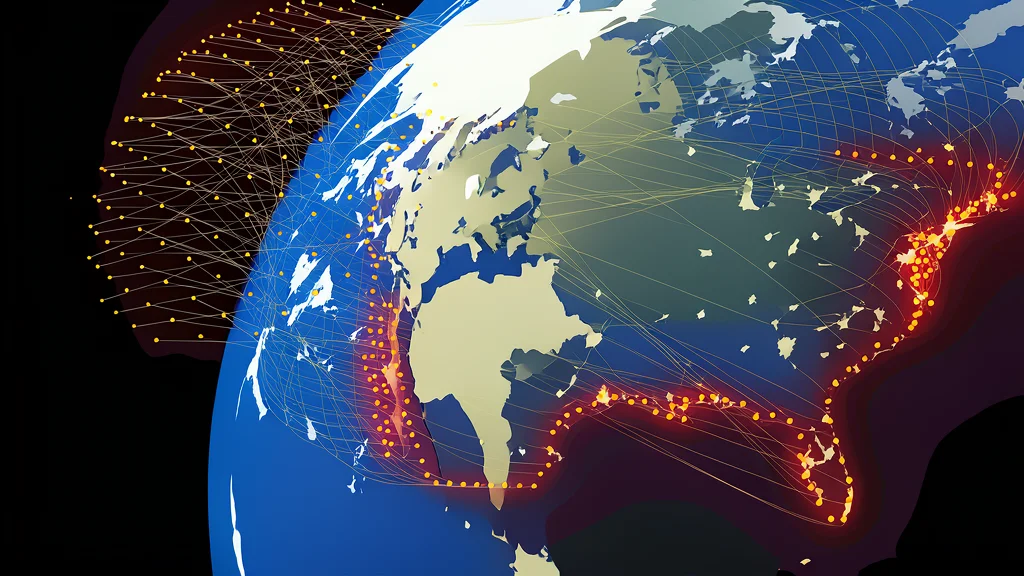
U.S. Confirms Presence of Orbital Military Capabilities

Washington has officially acknowledged the existence of space-based defensive systems, a move that has drawn immediate criticism from Beijing and Moscow and raised questions about the future of space governance.
The United States has publicly confirmed for the first time that the Space Force maintains weapons in orbit, marking a significant shift in transparency regarding military capabilities in space. Air Force Secretary Troy Meink made the disclosure during the Air, Space & Cyber Conference in National Harbor, Maryland, stating that the service now possesses on-orbit space control weapons. These systems are described as capable of defending joint forces against hostile actions, although officials have declined to specify whether the capabilities are kinetic or non-kinetic.
The announcement was made with careful wording, with Meink noting that the phrasing was deliberate to avoid revealing sensitive technical details. The Space Force indicated that such operations can serve both offensive and defensive purposes, affecting an adversary’s capabilities without explicitly detailing which specific systems are currently operational. This confirmation arrives as tensions grow over the militarization of space, with major powers increasingly focusing on protecting their own satellite assets from emerging threats.
International Reactions to Disclosure
Beijing responded sharply to the news, with Foreign Ministry spokesperson Guo Jiakun stating that China opposes the weaponization of space and an arms race in orbit. Similarly, Moscow expressed concern, with Kremlin spokesperson Dmitry Peskov reiterating Russia’s support for the complete demilitarization of space. Both nations view the U.S. confirmation as a step toward destabilizing the strategic balance, arguing that military assets in low Earth orbit could lead to accidental conflicts or a broader escalation of hostilities beyond the planet.
Legal Frameworks and Constraints
The current legal landscape governing space activity is rooted in the 1967 Outer Space Treaty, which prohibits the placement of nuclear weapons or other weapons of mass destruction in orbit. However, this treaty does not impose a blanket ban on conventional weapons, leaving a legal ambiguity that has allowed nations to develop dual-use technologies. According to the GN auto geopolitics/global: arms race analysis, this gap in international law has become a focal point for diplomatic friction, as the definition of what constitutes a weapon in space remains contested among treaty parties.
Strategic Implications for Security
U.S. officials have increasingly emphasized the need to protect critical satellite infrastructure, which underpins communications, navigation, and intelligence gathering. The confirmation of orbital weapons suggests a strategic pivot toward active defense, where the ability to neutralize hostile satellites is viewed as essential for national security. As China and Russia continue to develop their own counterspace systems, the U.S. position indicates a readiness to engage in space-based deterrence, potentially altering the rules of engagement for future conflicts involving space assets.