UN General Assembly Opens 81st Session Amid Calls for Trust Restoration
The United Nations General Assembly has opened its 81st session with a focus on rebuilding global confidence, as the new president warns that the institution must adapt to a world that has evolved significantly since its founding.
The United Nations General Assembly gavelled open its 81st session on Tuesday at UN Headquarters, marking the start of a year dedicated to restoring public trust in the multilateral system. Khalilur Rahman of Bangladesh, the incoming president, emphasized that the organization must evolve to remain relevant in an era defined by ongoing conflicts, humanitarian crises, and intensifying climate change. His address set a tone of urgent reform, acknowledging that the global landscape has shifted dramatically from the post-war context in which the UN was established.
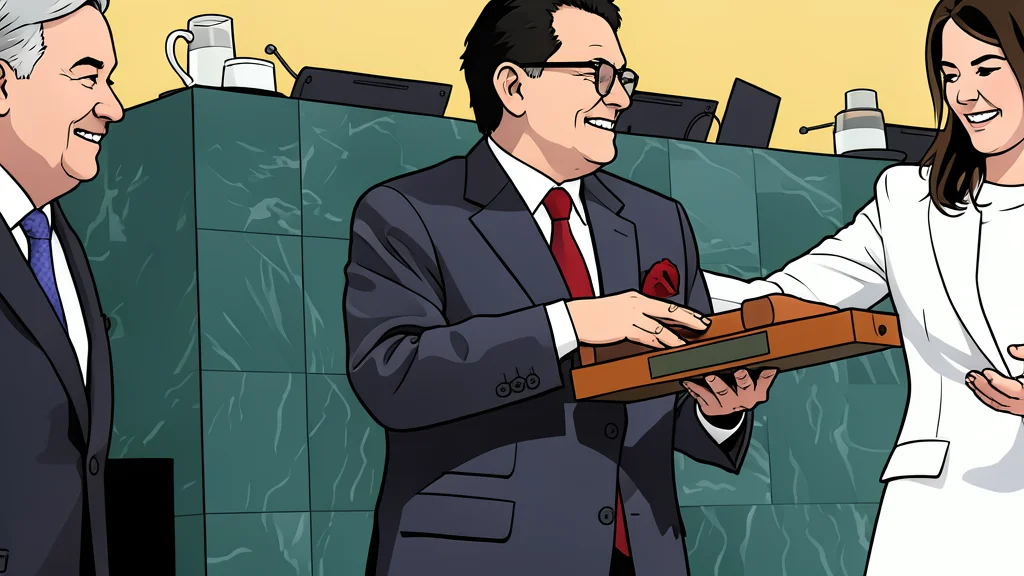
Rahman received the iconic Icelandic wooden gavel from outgoing president Annalena Baerbock, a symbolic transfer of authority that underscores the continuity of the institution despite its current challenges. He outlined a thematic framework for the year centered on 'Restoring trust, managing transformation,' arguing that the UN must deliver tangible results for all member states to maintain its legitimacy. The new leadership pledges to prioritize peace, sustainable development, and human rights, while also addressing the growing need for inclusive digital governance and climate resilience.
Addressing the Deficit of Global Trust
According to reports from GN geopolitics/un, the incoming president was explicit in stating that the current geopolitical climate is not comparable to 1945. He argued that the world has moved on, and the organization must match that trajectory to avoid obsolescence. This sentiment echoes concerns raised by UN Secretary-General António Guterres, who described rebuilding trust in the multilateral system as the defining challenge of the current era. Guterres noted that while the UN remains a crucial hub for global problem-solving, many of its core institutions are straining under the weight of persistent geopolitical divisions and a lack of coherent international cooperation.
The Secretary-General highlighted that international law and human rights are frequently flouted with impunity, further eroding faith in global cooperation. However, he expressed hope that through sustained diplomacy and dialogue, the Assembly could bridge the gaps in current geopolitics. The focus is on ensuring that the people of the world inherit a more peaceful and equitable future, despite the immediate pressures of nuclear escalation risks and deepening inequality. This forward-looking approach aims to transform the UN from a passive forum into an active engine of change.
Priorities for the Incoming Session
Rahman’s agenda for the 81st session places a strong emphasis on amplifying the voices of civil society and ensuring that no country is left behind in the pursuit of the 2030 Sustainable Development Goals. Key priorities include accelerating sustainable development, enhancing climate resilience, and strengthening the protection of refugees and migrants. Additionally, the new president has highlighted the need for inclusive innovation, particularly in the areas of digital governance and artificial intelligence, to safeguard the interests of the next generation. This holistic approach seeks to balance immediate humanitarian needs with long-term structural reforms.
Outgoing president Baerbock reinforced the necessity of the UN during the final meeting of the 80th session, arguing that no country would be better off without the organization. She pointed to the critical role of UN agencies, such as UNICEF in providing education and peacekeepers in ensuring safety, as evidence of the institution’s indispensable value. Her remarks served as a counterpoint to those who question the UN’s relevance, urging member states to consider the severe consequences of a world without such a global framework for cooperation and conflict resolution.
Looking Toward Leadership Transition
As the new session begins, attention also turns to the selection of the next UN Secretary-General, a process that will be crucial in determining the organization’s direction for the coming decade. The transition of leadership is seen as a pivotal moment for the UN to assert its capacity for adaptation and reform. Observers will be watching closely how the new president navigates the complex web of geopolitical interests and whether the Assembly can deliver on its promise of renewed multilateralism. The success of this session will likely set the stage for the broader effectiveness of the UN in addressing the world’s most pressing issues.
The forward question remains how effectively the UN can translate its stated priorities into actionable outcomes in a fragmented global environment. The coming months will test the institution’s ability to foster consensus among member states and to deliver tangible improvements in peace, security, and development. As the world faces unprecedented challenges, the 81st session of the General Assembly will be a critical arena for redefining the role of multilateralism in the 21st century.