UN General Assembly Opens with Guterres' Final Term
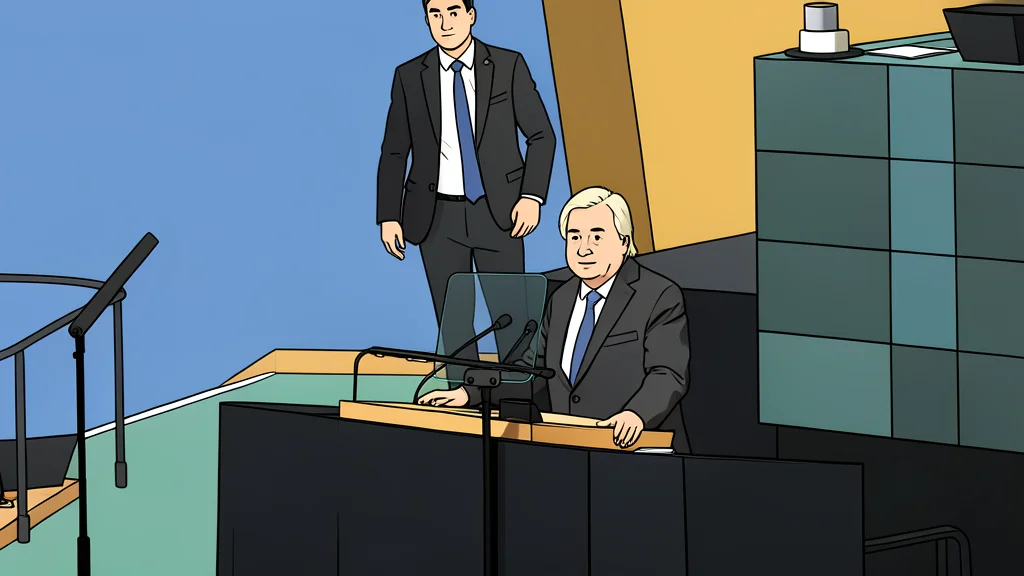
Leaders gather in New York for the UN General Assembly, facing divided priorities on Ukraine and the Middle East.
Key points
- António Guterres leads his final UN General Assembly week, advocating for ceasefires in Ukraine and the Middle East.
- Key leaders including Xi Jinping and Mahmoud Abbas will participate remotely due to visa denials or preference.
- U.S. restrictions limit the size of the Iranian delegation, while Russian participation is led by the Foreign Minister.
World leaders have arrived in New York for the United Nations General Assembly, convening during what Secretary-General António Guterres describes as an era of deep uncertainty. According to WUSF, this gathering marks the final high-level week of Guterres’ tenure, as his term is set to conclude at the end of the year. The schedule is densely packed, with remarks beginning Tuesday morning and continuing through September 28.
Guterres has indicated he will use his bilateral meetings to advocate for de-escalation in the Middle East and a ceasefire in Ukraine, which is now in its fifth year of full-scale invasion. However, diplomats and observers report low expectations for major diplomatic breakthroughs on these contentious issues during the session.
Diplomatic constraints shape attendance
Several key figures are absent or limited in their participation. The U.S. State Department reports that the Iranian delegation is smaller than in previous years, with strict visa restrictions placed on officials. Similarly, the Palestinian Authority President Mahmoud Abbas has been denied a visa for the second consecutive year, leading the assembly to allow his statement to be delivered via video link.
China’s President Xi Jinping will also address the body remotely, continuing a pattern of remote participation since 2020. Meanwhile, leaders from India, Germany, and South Africa are expected to send senior representatives in their place, creating what analysts describe as a fragmented diplomatic landscape.
Rival narratives define the agenda
The schedule features competing addresses from major powers. President Volodymyr Zelenskyy is slated to speak on Wednesday, seeking to rally international support for Ukraine as it prepares for another winter. He will be joined by Russian Foreign Minister Sergey Lavrov, who is expected to address the assembly later in the week, as President Vladimir Putin has not attended in person for over a decade.
Israeli Prime Minister Benjamin Netanyahu is also scheduled to speak, using the platform to defend his government’s actions regarding Iran and Gaza. This address is expected to be a focal point for political discourse, with protests anticipated despite the administration's dismissal of external legal pressures.
Watching for diplomatic signals
Despite the lack of expected formal agreements, the sidelines of the General Assembly often yield informal diplomatic opportunities. Observers are closely monitoring whether any direct channels open between U.S. and Iranian officials, or if new frameworks for security in the Strait of Hormuz emerge. The coming days will test the resilience of multilateral engagement amidst these divisions.