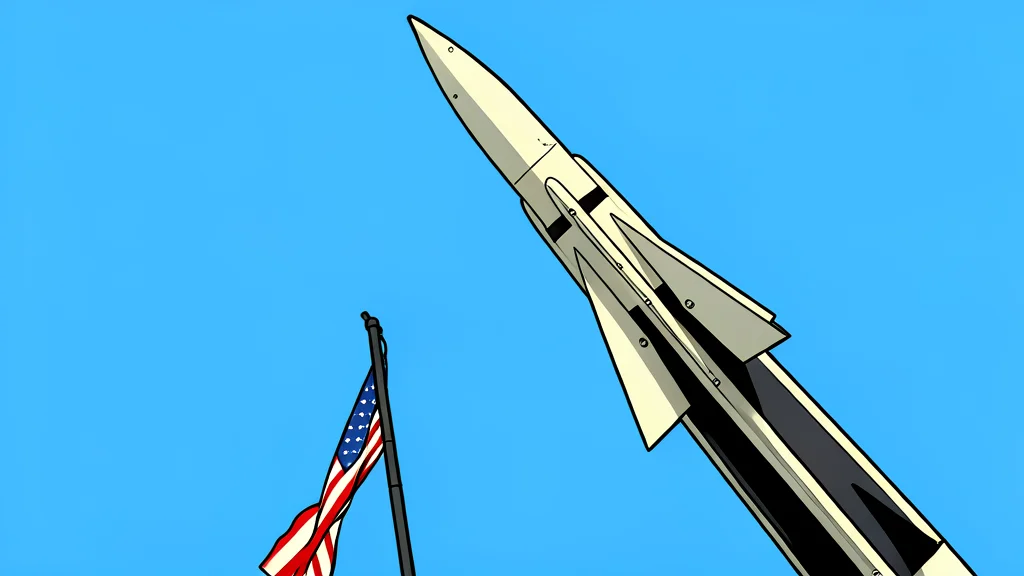
US Confirms Existence of On-Orbit Space Control Weapons

The United States has officially acknowledged the deployment of space-based defensive systems, a move that has prompted immediate diplomatic pushback from Beijing regarding the militarization of orbit.
The United States has officially confirmed for the first time that it possesses on-orbit space control weapons, marking a significant shift in how the nation addresses potential threats in the space domain. This acknowledgment was made by US Secretary of the Air Force Troy Meink during a recent address at the Air, Space and Cyber conference, where he stated that these systems are capable of defending the joint force against hostile adversary actions. The announcement follows years of growing concern over the development of counter-space capabilities by rival states, particularly Russia and China, which have been accused of developing technologies designed to interfere with satellite communications and operations.
While the specific nature of these weapons remains classified, the confirmation signals a formal recognition by Washington that space is now a distinct and contested military domain. The US Space Force, established in 2019 as the first new branch of the military since 1947, has long articulated a mission focused on achieving superiority in the space domain. According to the branch’s own mission statement, the creation of the Space Force was driven by the widespread recognition that space is a national security imperative, particularly in the face of growing threats from strategic competitors. This new confirmation aligns with that broader strategic posture, suggesting that passive defense is no longer viewed as sufficient.
Beijing Warns Against Space Arms Race
China responded swiftly to the American announcement, with a spokesperson urging the United States to stop expanding its military capabilities in outer space. According to the Chinese statement, Beijing is deeply concerned about the prospect of a space arms race and warned against preparing for war in the orbital domain. This reaction highlights the delicate diplomatic balance currently maintained between the two great powers, where accusations of aggressive militarization are frequently exchanged. The tension is not new, as the US Space Force has previously accused China of developing and operating space and counterspace capabilities as part of a broader military modernization strategy.
The geopolitical context for this development is rooted in recent incidents involving Russian satellites. Since the full-scale invasion of Ukraine in 2022, Russian assets have been accused of intercepting or jamming dozens of European communication satellites. These events have fueled concerns among Western allies that space is increasingly being used as a tool for information warfare and strategic disruption. In 2024, US officials announced suspicions that Russia was working on anti-satellite missiles that could be launched from space, although they noted at the time that there was no imminent danger posed by these specific threats. The current confirmation of US capabilities appears to be a direct response to this evolving threat landscape.
Legal Frameworks and Historical Context
The current situation exists within a complex legal framework that has struggled to keep pace with technological advancements. A 1967 treaty banned the production and placement of weapons of mass destruction in space, but it did not address the development of directed-energy weapons, kinetic interceptors, or other non-nuclear systems designed to disable satellites. As a result, nations have continued to work on tools that can attack rival nations’ satellite communications without violating the specific letter of the Outer Space Treaty. This legal gray area has allowed for a quiet but steady expansion of counter-space technologies, with both the US and China investing heavily in these capabilities.
Strategic Implications for Global Security
The confirmation of US space control weapons raises significant questions about the stability of the global security order. Space infrastructure is critical to modern warfare and civilian life, supporting navigation, communications, and intelligence gathering. The ability to deny or degrade these assets in a conflict could have cascading effects on both military operations and economic systems. As the US asserts its capability to defend against hostile actions, other nations may feel compelled to accelerate their own development of counter-space measures, potentially leading to a tit-for-tat dynamic in orbit.
Looking ahead, the focus will likely shift to diplomatic channels and international negotiations aimed at establishing norms for behavior in space. Observers will watch closely for any further disclosures from Washington regarding the specific types of weapons involved and the operational protocols governing their use. Additionally, the reactions from other space-faring nations, including India and Europe, will be crucial in determining whether a multilateral framework for space security can be established. The coming months may see increased testing activities or diplomatic statements as nations signal their positions on the future of space governance.