US Confirms On-Orbit Space Weapons in New Strategic Shift

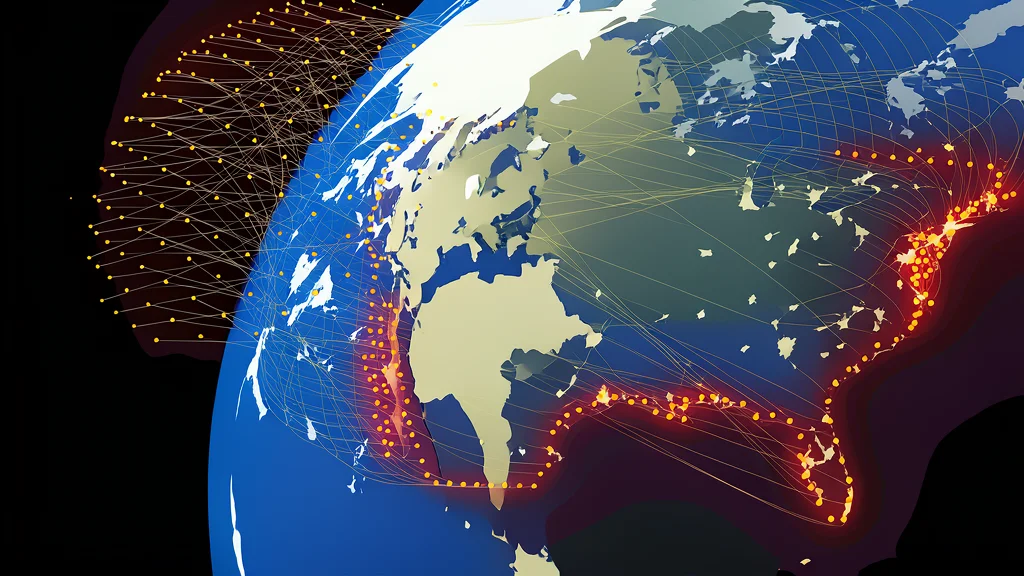
The United States has officially acknowledged the deployment of defensive space weapons, a move that signals a significant escalation in the global competition for orbital dominance and raises concerns about the militarization of the final frontier.
For the first time, the U.S. government has publicly confirmed that it possesses weapons capable of operating in orbit. Air Force Secretary Troy Meink announced at a conference in Maryland that the United States now holds on-orbit space control weapons designed to defend joint forces against hostile actions. This admission marks a departure from previous policies of ambiguity, where the existence of such capabilities was widely suspected by security analysts but never officially acknowledged by Washington.
The statement is being interpreted by observers as a strategic signal to major rivals, particularly Russia and China. According to Andrea Rotter of the Hanns Seidel Foundation, this confirmation indicates an accelerating arms race in space. She noted that more actors are developing capabilities to disrupt or destroy space systems, suggesting that the defensive posture of the U.S. is part of a broader trend of increasing militarization in the domain above Earth.
Historical Context of Orbital Capabilities
The creation of the U.S. Space Force during the first Trump administration framed space as a new warfighting domain. At the time, officials described the goal as deterring aggression and controlling the 'ultimate high ground.' However, the current confirmation of deployed weapons suggests a shift from potential deterrence to active capability. Experts point out that such technology can be both offensive and defensive, blurring the lines of traditional military engagement in outer space.
Other space powers have also developed technologies with dual-use potential. Russia has deployed satellites nicknamed 'matryoshka,' which can open in orbit to reveal sub-satellites. While these may be intended for repairs, Chatham House experts warned in 2020 that they could also be used to interfere with or destroy other satellites. In 2021, reports indicated that Russia successfully destroyed one of its own satellites using an anti-ballistic missile, a move that created significant space debris and raised international concern.
International Reactions and Legal Ambiguities
The international response has been one of caution and concern. At the International Space Conference in Paris, EU Defence Commissioner Andrius Kubilius warned that European space assets are under attack, citing radiofrequency interference and suspicious proximity operations. He noted that the war in Ukraine has served as a testing ground for new warfare technologies, including those applicable to the space domain, further complicating the geopolitical landscape.
Legal frameworks governing space conduct remain contested. The 1967 Outer Space Treaty prohibits the placement of nuclear weapons or other weapons of mass destruction in orbit. However, space law experts describe the current situation as a 'regulatory vacuum' regarding non-nuclear weapons. Depending on the specific nature of the U.S. systems, they may technically comply with existing treaties, yet the broader implication of armed satellites in orbit is drawing sharp criticism from global partners.
Diplomatic Pushback From Rival Powers
Both Russia and China have reacted with diplomatic pushback, emphasizing their desire to prevent space from becoming a battlefield. A Russian government spokesman called for the international community to continue working toward the complete demilitarization of space. Meanwhile, a spokesperson for China’s Ministry of Foreign Affairs urged the United States to stop expanding its military capabilities in outer space, framing the U.S. actions as preparations for war rather than defense.
The situation highlights a growing divergence between the strategic postures of the major powers. While the U.S. frames its actions as necessary for the protection of critical infrastructure, rivals view them as provocative steps that destabilize the delicate balance in orbit. According to the GN auto geopolitics/global: arms race assessment, this development underscores the increasing complexity of security threats in the twenty-first century, where the frontier of conflict has expanded beyond the atmosphere.
As the world grapples with this new reality, the focus shifts to how nations will negotiate rules for conduct in space. The potential for accidental escalation or deliberate conflict in orbit poses risks that extend far beyond the immediate military context, threatening the global infrastructure that relies on satellites for communication, navigation, and data. The coming months will be critical in determining whether diplomatic channels can contain this emerging domain of competition.