US Space Force Confirms Deployment of Orbital Defense Capabilities
The strategic landscape in outer space has shifted decisively as Washington acknowledges the existence of active defensive systems on orbit. This confirmation marks a significant escalation in the broader competition among major powers.
The strategic landscape in outer space has shifted decisively as Washington acknowledges the existence of active defensive systems on orbit. This confirmation marks a significant escalation in the broader competition among major powers, moving beyond theoretical capabilities to operational deployment. According to recent statements from senior military leadership, the United States now possesses on-orbit assets designed to protect critical satellite infrastructure from hostile actions. This development reflects a growing consensus among defense officials that the space domain is no longer a neutral environment but a contested arena where national security interests are directly at stake.
The move is widely viewed as a response to increasing capabilities demonstrated by Beijing and Moscow over the past decade. Both nations have conducted tests of anti-satellite technologies and developed ground-based systems capable of disrupting or destroying orbital assets. By formally recognizing its own offensive and defensive space control weapons, the United States signals that it will not remain passive in the face of these advancements. The implication is that the era of unilateral dominance in space is ending, replaced by a complex and fragile balance of power that carries significant risks for accidental escalation or miscalculation.
Official Acknowledgments of New Capabilities
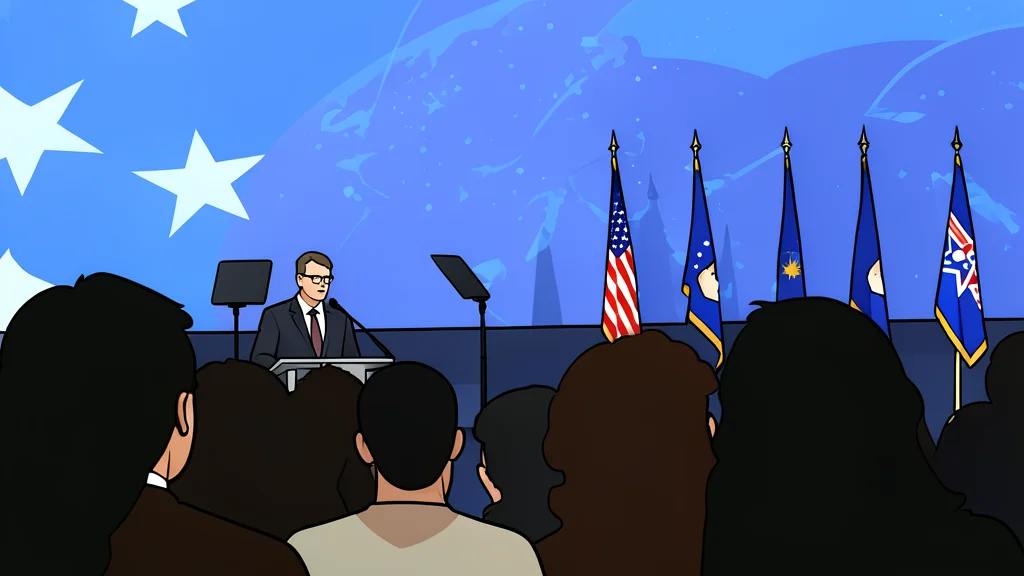
During a keynote address at the Air and Space Forces Association conference, U.S. Air Force Secretary Troy Meink stated that the United States now has space control weapons capable of defending the joint force against hostile adversary action. He emphasized that these systems are designed to counter aggressive maneuvers and emerging threats from other nations. In parallel, Chief of Space Operations Gen. Douglas Schiess affirmed that the Space Force uses active space-based weaponry to support national defense. Schiess described the current environment as increasingly contested, noting that adversaries possess technologies intended to disrupt or destroy satellites in orbit. These remarks represent a clear departure from previous ambiguity, where the existence of such systems was often denied or left unexplained.
Historical Context of Orbital Testing
The recent announcements follow a decade of kinetic anti-satellite tests that challenged long-standing norms in space governance. China’s successful test in 2007 broke an unwritten moratorium that had been in place since the 1980s, leading to a cascade of similar exercises by the United States, India, and Russia. The most recent notable event was Russia’s 2021 test, which generated more than 1,500 pieces of trackable orbital debris, a development that U.S. Space Command viewed as a direct threat to global space safety. Intelligence officials have also raised concerns about the potential deployment of nuclear anti-satellite weapons, which could result in the indiscriminate destruction of entire satellite orbits. These historical precedents underscore the technical feasibility of weapons that can neutralize critical space infrastructure, raising the stakes for any future conflict.
According to Gen. James Dickinson, commander of the U.S. Space Command, Russia is actively developing capabilities to deny access to space for the United States and its allies. He characterized recent tests as clear demonstrations of a pursuit of counterspace weapons that undermine strategic stability. The diversity of these threats, ranging from kinetic interceptors to cyber and laser systems, highlights the complexity of modern space warfare. As the capabilities of multiple actors expand, the risk of collision or conflict in orbit increases, making the need for international norms and verification mechanisms more urgent than ever.
Implications for Strategic Stability
The confirmation of U.S. space weapons is likely to spur further competition and testing by other nations. Meink dismissed concerns that this announcement would embolden adversaries, arguing that the race was already underway. However, many analysts caution that explicit acknowledgment of offensive capabilities may erode the trust necessary for cooperative space governance. With space becoming central to national security and war-fighting efforts, the domain represents essential eyes and ears for military operations. The inability to ignore threats from China and Russia has driven the U.S. to join the developing arms race, a move that may harden positions and reduce the space for diplomatic engagement.
Looking ahead, observers will watch for further technical disclosures regarding the nature of these deployed systems. The lack of detailed information leaves room for speculation about the specific technologies involved, whether they are kinetic, electronic, or directed energy. Additionally, the reactions from Beijing and Moscow will be critical in determining whether this period of escalation leads to a new stability or a dangerous spiral. The coming months may see increased testing or diplomatic initiatives aimed at establishing rules of engagement in the orbital environment. The situation remains fluid, with the potential for rapid deterioration if trust continues to erode among major powers.