Visegrad Group Backs India's Bid for UN Security Council Seat
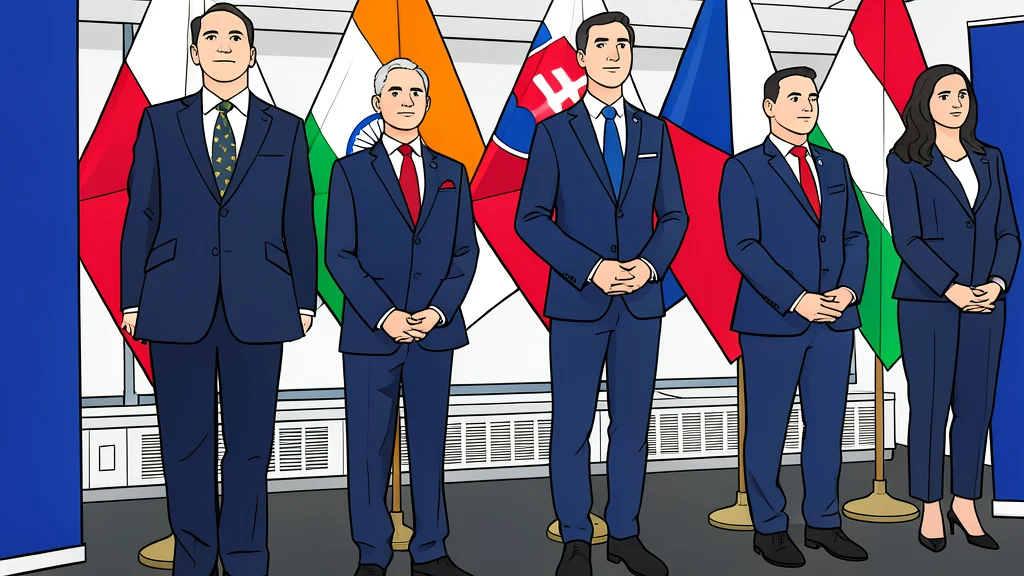
Hungary, Poland, Slovakia, and the Czech Republic have formally endorsed New Delhi's request for a permanent seat at the UN.
Key points
- The Visegrad Group countries formally endorsed India's bid for a permanent UN Security Council seat during the 81st General Assembly.
- India argues that the current Council structure is outdated and does not reflect the demographic and economic realities of the modern world.
- China remains the only permanent member to withhold explicit support, citing the need for a broader consensus among all UN member states.
India’s long-standing campaign for a permanent seat on the UN Security Council has received significant new diplomatic backing. According to reports from India Today, the four nations comprising the Visegrad Group have collectively voiced their support for New Delhi’s bid during high-level meetings in New York.
The endorsement came during the first V4-India meeting held on the sidelines of the 81st UN General Assembly. This development adds substantial weight to India's decades-old demand for structural reform of the global body, signaling that the initiative has gained traction beyond its traditional allies in the Global South.
Central European diplomats voice support
Hungary, Poland, Slovakia, and the Czech Republic articulated their position after meeting with External Affairs Minister S. Jaishankar. Slovak Foreign Minister Juraj Blanar stated that the group agrees India, as an emerging superpower in the Indo-Pacific region, must be at the table as a permanent member.
The statement underscores a shift in diplomatic alignment, with Central European countries explicitly linking India’s inclusion to the broader need for the UN to reflect contemporary geopolitical realities. This collective stance provides a unified front from a key European bloc, reinforcing the argument that the current composition of the Council is outdated.
Structural arguments for reform
India’s case rests on the premise that the world has changed significantly since the Security Council was established in 1945, while its membership structure has remained static. At the time of its creation, much of Asia and Africa was under colonial rule, and many current major powers were not sovereign states.
New Delhi argues that its population size, economic weight, and contributions to UN peacekeeping justify a permanent role. The country’s priorities paper for the current General Assembly suggests that the UN’s inability to respond effectively to modern conflicts has raised questions about the institution's efficacy and legitimacy.
Complexity of international consensus
India’s campaign is part of a broader G4 grouping with Brazil, Germany, and Japan, which have proposed expanding the Council from 15 to 25 or 26 members. While France, the United Kingdom, the United States, and Russia have expressed support for India’s bid in principle, the path to implementation remains complicated.
The five existing permanent members have not agreed on a single model for expansion, with disagreements persisting over veto powers and regional representation. China remains the sole permanent member withholding explicit backing, employing diplomatic ambiguity to block the bid through demands for broader consensus. Consequently, diplomatic support does not automatically translate into immediate structural change, leaving the timeline for reform uncertain.