Washington Confirms Deployment of Orbital Defense Systems
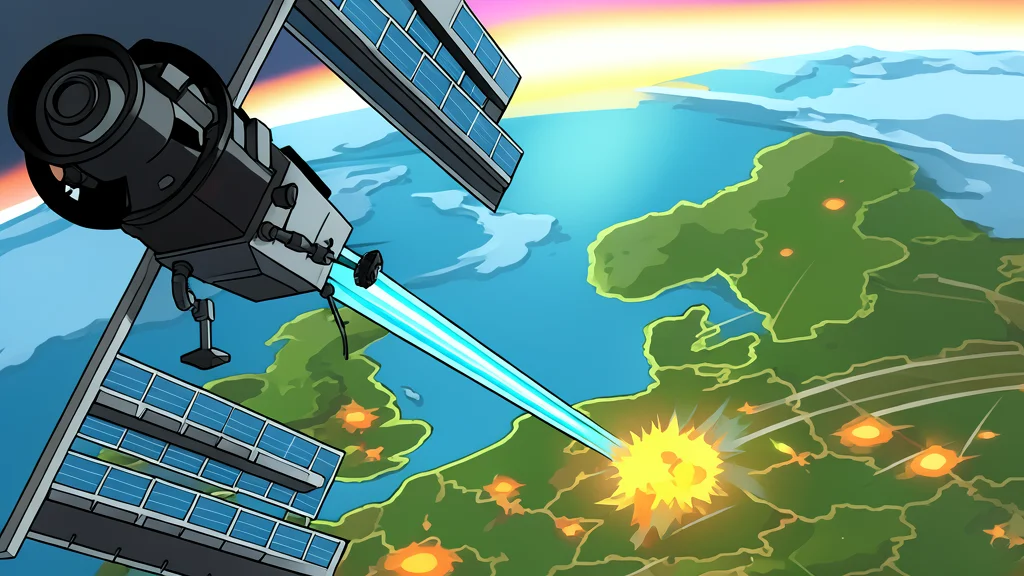
The United States has officially acknowledged the existence of deployed space-based weapons, a shift from theoretical deterrence to active capability that reshapes the strategic balance in orbit.
For decades, the concept of warfare in outer space remained largely theoretical, a distant warning about a future battlefield. On September 14, that abstraction became concrete as United States Air Force Secretary Troy Meink publicly confirmed that the nation has deployed on-orbit space control weapons. This admission marks a pivotal moment in military history, transitioning the discourse from potential readiness to the verification of active defensive capabilities in high orbit.
The following day, General Douglas Schiess, chief of the US Space Force, reinforced this disclosure by stating that American forces already operate weapons in orbit capable of defending the Joint Force against hostile actions. According to Schiess, the United States faces determined adversaries who are rapidly developing counterspace systems aimed at neutralizing the American space advantage. The official narrative frames these deployments not as offensive strikes, but as essential measures to protect the communications, navigation, and intelligence networks that underpin modern military operations.
Strategic Ambiguity as a Deterrent
Notably, Washington has withheld specific technical details regarding the nature of these systems. There is no public information confirming whether the weapons are kinetic, such as interceptors, or non-kinetic, such as electronic warfare or directed-energy devices. Officials describe the term 'space control' as deliberately broad, a choice that appears to be driven by deterrence strategy. By confirming the existence of the capability without defining its precise mechanics, the administration aims to ensure potential adversaries understand that a countermeasure exists, while preventing them from identifying specific vulnerabilities or developing targeted evasion tactics.
This approach mirrors historical nuclear deterrence strategies, where the uncertainty of the weapon's exact specifications serves to complicate an adversary's decision-making process. However, in the context of space, where infrastructure is critical and recovery is difficult, such ambiguity introduces significant risk. The lack of transparency means that other nations cannot distinguish between defensive and offensive capabilities, potentially lowering the threshold for conflict and making accidental escalation more likely in a domain where the rules of engagement are still being defined.
Accelerating the Global Arms Race
The implications of this admission extend beyond the United States, likely accelerating a global competition for space superiority. As reported in the GN auto geopolitics/global: arms race analysis, the confirmation of deployed weapons validates the concerns of rival nations who have already invested heavily in their own counterspace programs. This creates a feedback loop where each nation's defensive measures are perceived as offensive threats, prompting further investment in weaponry. The result is an unending cycle of escalation that threatens to transform the peaceful vacuum of space into a contested military theater.
The strategic landscape is shifting from a shared domain of scientific exploration to a fragmented zone of national security priorities. As more countries seek to secure their own orbital assets, the probability of collision, interference, or deliberate attack increases. The absence of clear international norms for the use of force in space leaves a regulatory vacuum that military powers are currently filling with unilateral actions. This dynamic suggests that the coming years will be defined by a complex interplay of deterrence, surveillance, and competition for dominance in the final frontier.
Watching for Escalation Signals
Looking ahead, observers should monitor the diplomatic responses from major spacefaring nations, particularly China and Russia, who have previously expressed concerns about militarization in orbit. Any announcements of new satellite constellations, testing of anti-satellite technologies, or changes in treaty adherence will serve as key indicators of the pace of this arms race. Additionally, the level of transparency provided by the US in future disclosures will determine whether the current stance of strategic ambiguity is maintained or if a new era of open confrontation begins.