BRICS Summit Exposes Limits of Geopolitical Cohesion
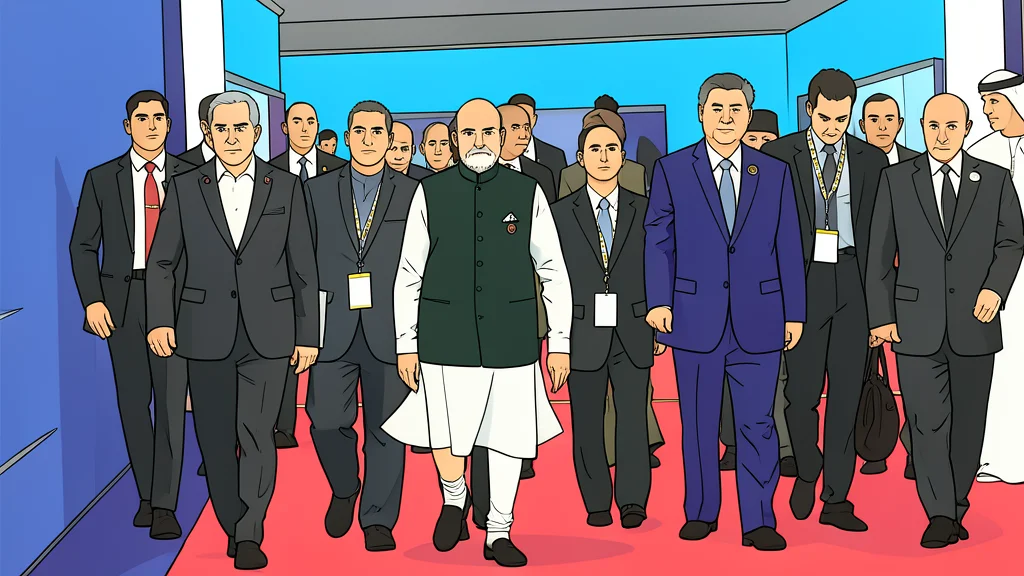
The New Delhi summit concluded without a unified stance on the Iran conflict, highlighting the difficulty of converting shared economic weight into coordinated geopolitical action.
The recent BRICS summit in New Delhi concluded with standard rhetoric on deepening economic ties, yet it was marked by a significant diplomatic silence. Despite the ongoing conflict involving Iran and the US-Israel coalition affecting the region, the bloc’s final declaration did not directly address the war or condemn the United States. According to Al Jazeera English, this omission allowed all members to remain within the same diplomatic framework, but it also laid bare the structural challenges the group faces in translating its collective economic influence into a unified geopolitical stance.
This lack of a common position is not an isolated incident. Earlier this year, foreign ministers from the bloc struggled to agree on a joint statement regarding the situation in Iran. The resulting document acknowledged internal disagreements and avoided naming specific actors, a compromise that revealed the political costs associated with the group’s recent expansion. The episode underscores that while BRICS has grown in size and global reach, it has also imported regional rivalries that limit its ability to act as a cohesive political force.
Internal Rivalries Constrain Diplomatic Power
The core issue stems from the diverse strategic interests of member states. For instance, Iran sought a strong condemnation of the US and Israeli military campaign, whereas the United Arab Emirates, a fellow member, prioritized language that acknowledged its own security concerns regarding Iranian actions. This collision of interests creates a built-in ceiling on how far the group can go in confronting conflicts that directly affect multiple members. Consequently, BRICS has increasingly functioned as a platform for managing disagreement rather than a mechanism for projecting unified power.
The central challenge for the bloc is not a lack of economic or diplomatic weight, but the difficulty of converting that weight into a single geopolitical instrument. The group’s enlargement has increased its global reach, yet it has also fragmented its internal cohesion. As a result, the organization often finds itself unable to reach a consensus on issues where its members have divergent national priorities, limiting its effectiveness in challenging the existing international order.
Strategic Autonomy Drives Member Calculations
Member states, particularly India, view BRICS primarily as a vehicle for strategic autonomy rather than an alliance against the United States. New Delhi seeks to maintain flexibility by engaging with Washington, participating in the Quad, and preserving deep ties with Russia and China. Turning BRICS into an anti-American bloc would undermine this strategic maneuverability, which is central to India’s foreign policy. Similarly, China and Russia have reasons to avoid transforming the group into a mechanism for direct confrontation, as they seek to reduce US structural advantages without triggering direct military or economic retaliation.
Other members, such as Brazil and Indonesia, add further layers of complexity to the group’s dynamics. Their focus on a more representative international system and greater influence for the Global South does not always align with the more confrontational approaches favored by some other members. This diversity of objectives ensures that BRICS remains a space for dialogue and cooperation on economic issues, but it limits its ability to act as a unified political bloc on sensitive geopolitical matters.
Future Challenges for Bloc Cohesion
As BRICS continues to expand, the tension between its economic ambitions and its political limitations will likely persist. The group must navigate the delicate balance between promoting a multipolar world order and managing the internal rivalries that hinder collective action. The coming months will test whether the bloc can find new ways to coordinate on critical issues without sacrificing the strategic flexibility that its members value.
Observers will closely watch how the group handles future regional conflicts and whether it can develop more robust mechanisms for consensus-building. The ability to translate economic power into geopolitical influence remains the central question for BRICS. While the bloc has made strides in fostering dialogue and cooperation, its effectiveness as a geopolitical actor will depend on its capacity to overcome internal divisions and present a unified front on the world stage.