Netanyahu's Nuclear Claims Clash with Public Intelligence Assessments
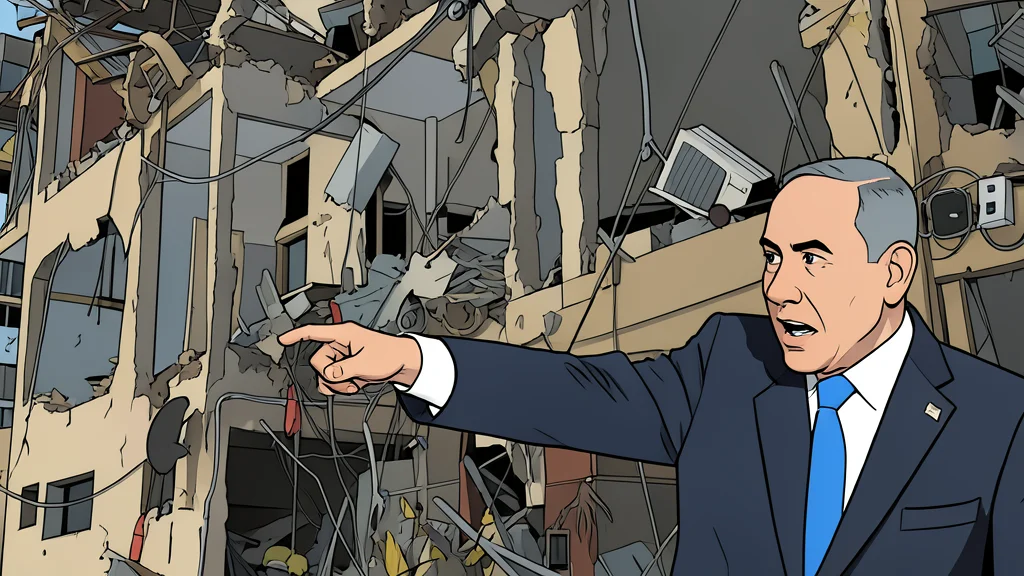
Prime Minister Benjamin Netanyahu has asserted that Israel faced imminent destruction from Iranian nuclear weapons, a claim that contrasts sharply with official intelligence reports indicating Tehran was not building a bomb.
Prime Minister Benjamin Netanyahu recently returned to a dramatic narrative during a Likud campaign event, asserting that Israel had been on the brink of destruction by Iranian atomic weapons. According to reports of the speech, Netanyahu stated that his government’s military actions prevented a catastrophe that would have erased the state entirely. He framed the recent campaigns against Iran as a decisive turning point that saved the nation, arguing that previous administrations lacked the will to act when the threat was most acute.
However, the specific claim that Iran possessed functional nuclear weapons goes beyond the consensus of public intelligence assessments available prior to the conflict. While there was no dispute that Iran had accumulated a significant stockpile of highly enriched uranium, experts and intelligence agencies have consistently distinguished between possessing fissile material and having a completed weapon. The assertion that Israel faced imminent annihilation from existing atomic bombs is not supported by the documented record of Tehran’s nuclear program status.
Distinction Between Material and Weapon
The International Atomic Energy Agency has noted that Iran held approximately 440 kilograms of uranium enriched to 60% as of mid-2025. While this level of enrichment is far beyond civilian requirements and technically close to weapons-grade, it does not equate to an assembled nuclear device. Producing a functioning bomb requires specialized engineering, component integration, and testing, steps that go beyond the mere accumulation of enriched fuel.
U.S. intelligence assessments from 2025 explicitly stated that Iran was not building a nuclear weapon and that the supreme leader had not authorized a weapons program. This assessment was reiterated in 2026, noting that while Iran’s enrichment capabilities had been severely damaged by recent strikes, the agency was monitoring for any signs that leadership might authorize a new weapons push. The language used by intelligence officials consistently separated the capability to pursue a bomb from the possession of one.
Internal Disagreements Over Intelligence Accuracy
Netanyahu’s escalating rhetoric has drawn sharp criticism from senior Israeli figures. Former Defense Minister Gadi Eisenkot stated that Iran had no nuclear bombs whatsoever, accusing the prime minister of frightening the public. Former Prime Minister Naftali Bennett also rejected the assertion, arguing that the evidence did not support the claim that Iran had already obtained weapons. A senior Israeli official with access to intelligence on Iran described the prime minister’s account as hysterical nonsense, noting that the weaponization program was far from completion and lacked necessary authorization.
Political Context and Strategic Narrative
The debate over the precise nature of the threat highlights a broader tension between political messaging and intelligence reporting. An Associated Press review noted that the claim of existing atomic bombs was unsupported by publicly available evidence from both the IAEA and U.S. agencies. As Netanyahu continues to frame the conflict as a matter of existential survival, critics argue that the gap between the political narrative and the documented intelligence record undermines trust in official communications regarding nuclear proliferation.
The forward question remains what to watch next as Israel seeks to verify the extent of damage to Iran’s nuclear infrastructure. Analysts are monitoring for signs of whether Tehran will attempt to restart its enrichment program or seek alternative paths to weapons capability. The discrepancy between the political portrayal of the threat and the technical reality of the nuclear program will likely remain a central issue in domestic Israeli politics and international diplomatic negotiations.