Pezeshkian Tells UN Iran Rejects Surrender via War
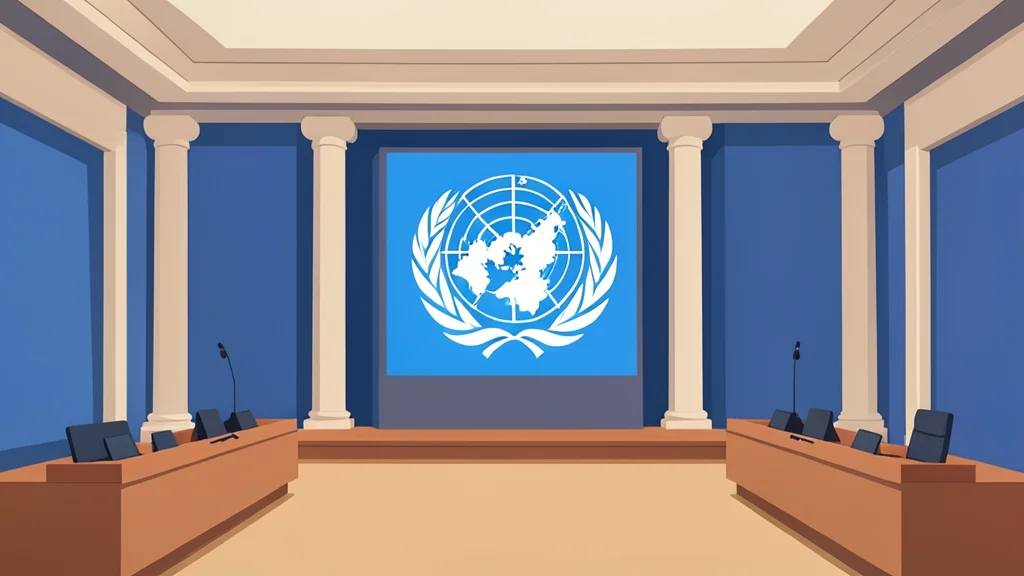
Iran's president addressed the UN General Assembly, asserting that Tehran has not initiated conflict but possesses the right to self-defense.
Key points
- President Pezeshkian stated Iran has never initiated war and remains open to negotiations while asserting its right to self-defense.
- The speech cited the deaths of over 80,000 in Gaza and specific attacks on Iranian schools as evidence of double standards in international law.
- Tehran maintains that its military capabilities are strictly for defensive purposes and that it does not seek to threaten regional stability.
Iranian President Masoud Pezeshkian addressed the 81st United Nations General Assembly, asserting that his nation cannot be compelled to surrender through military force. According to WANA News Agency, the president emphasized that Tehran has never initiated war and remains committed to diplomatic negotiations, while simultaneously clarifying that Iran does not fear defending its sovereignty.
The speech framed Iran’s position as one of reactive defense rather than aggression. Pezeshkian argued that the country has responded to attacks from the United States and Israel without targeting civilian populations, rejecting the characterization of Iran as a source of regional instability. He maintained that Iran’s military capabilities are strictly for defensive purposes and that the nation seeks security without threatening its neighbors.
Iran cites civilian casualties in address
During his remarks, Pezeshkian referenced specific incidents to counter accusations of terrorism. He cited the assassination of Hamas political bureau chief Ismail Haniyeh in Tehran, describing Iran as a victim of such acts rather than a perpetrator. The president also displayed images of the Shajareh Tayyebeh girls’ school in Minab and a sports hall in Lamerd, alleging that cluster bombs used in these attacks killed children who had done nothing wrong.
Pezeshkian stated that the United States and Israel targeted Iranian scientists, infrastructure, and civilians while simultaneously labeling Iran a state sponsor of terrorism. He described the use of advanced military equipment against schools and hospitals as a violation of international law, arguing that Iran’s response was limited to self-defense and did not seek to harm ordinary people in other countries.
Gaza context frames double standard critique
Shifting focus to the broader regional conflict, the president highlighted the humanitarian situation in Gaza. He stated that more than 80,000 people had been killed and hundreds of thousands displaced, describing the events as a form of genocide facilitated by modern technology. Pezeshkian questioned the international community’s approach, asking why those responsible for such destruction are often viewed as actors for security, while others are labeled terrorists.
The speech criticized a global order where powerful actors prioritize destruction over justice and democracy. Pezeshkian argued that Iran has become a target because it insists on independent living and refuses to bow to external pressure. He contended that a state unable to defend itself will eventually be crushed, necessitating the maintenance of sufficient power to ensure national survival.
Defense posture prioritized over regional dominance
Pezeshkian asserted that Iran has not attacked another country in two centuries and views its energy resources as tools for development rather than weapons for destruction. He rejected the notion that Iran seeks to dominate the region, stating instead that Tehran aims to contribute to regional security. The president emphasized that Iran’s military power is intended solely for defense and that the country does not require external permission to protect its citizens.
The address concluded with a statement on the role of the Iranian public in the nation's resilience. Pezeshkian noted that for seven months, citizens had taken to the streets to defend their country against what he described as insecurity encouraged by foreign powers. He declared that the people constitute Iran’s primary strength, and that the nation must be powerful enough to ensure its survival, responsible enough to avoid dominating others, and farsighted enough to seek security without creating insecurity for neighbors.